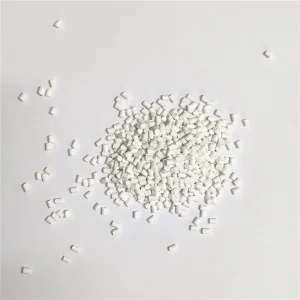
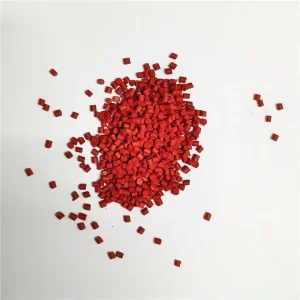
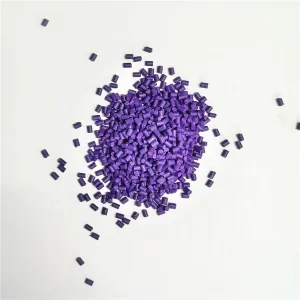
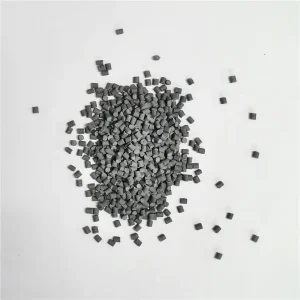
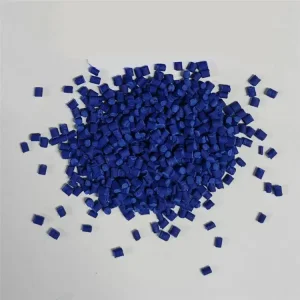
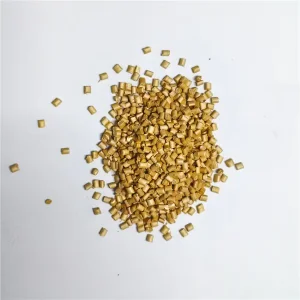
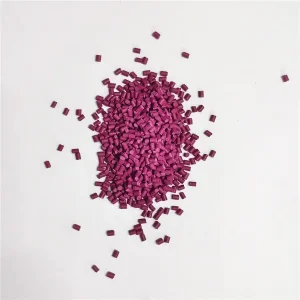
Engineered with superior pigment dispersion, high thermal stability (up to 260°C–300°C), and non-migratory carrier technologies.
In modern polymer manufacturing, achieving ultra-high whiteness, optical purity, and vivid color contrast is vital across consumer packaging, agricultural films, engineering thermoplastics, and recycled resin upgrading. Polymer substrates—such as Polyethylene (PE), Polypropylene (PP), Polyethylene Terephthalate (PET), Polystyrene (PS), and Acrylonitrile Butadiene Styrene (ABS)—naturally exhibit a slight yellowish cast due to thermal history, UV degradation, trace impurities, or catalyst residues. To neutralize this yellow hue, modern plastic compounding relies heavily on Optical Brightener Masterbatches (OBM), also recognized as Fluorescent Whitening Agents (FWAs).
The global Optical Brightener Masterbatch market is expanding exponentially, propelled by strict aesthetic specifications in cosmetic packaging, food-grade barrier films, medical consumables, and high-frequency textile fibers. As global sustainability directives enforce higher percentages of Post-Consumer Recycled (PCR) and Post-Industrial Recycled (PIR) resins into supply chains, yellow degradation has become a paramount challenge. Advanced custom optical brightener masterbatch suppliers bridge this gap by formulating concentrated, non-migratory additive masterbatches that restore PCR whiteness without compromising resin structural integrity.
Collaborating with specialized Custom Optical Brightener Masterbatch Companies & Suppliers allows plastic converters to eliminate dry-powder handling risks, prevent active ingredient plate-out, and maintain precise optical clarity across high-speed extrusion lines. Masterbatch formulation transforms raw powder additives into homogeneously dispersed, dust-free pellets compatible with primary carrier resins.
Understanding how optical brightener masterbatches work requires analyzing quantum fluorescence energy shifts. Unlike physical pigments or titanium dioxide ($\text{TiO}_2$) white pigments that function solely via specular reflectance and light scattering, fluorescent whitening agents operate through an energy conversion mechanism known as the Stokes Shift.
Active optical brightener molecules (e.g., Bis-benzoxazole derivatives) absorb invisible ultraviolet radiation within the electromagnetic spectrum range of 340 nm to 390 nm during daylight exposure or ambient UV lighting.
Absorbed UV photon energy promotes electrons from the ground state ($S_0$) to excited singlet states ($S_1$). Internal non-radiative conversion dissipates minor energy as heat, shifting energy to longer wavelengths.
Fluorescing back to ground state, the molecule re-emits visible light in the blue-violet region (420 nm to 470 nm). This blue emission compensates for yellow wavelengths, resulting in intense optical whiteness.
In standard color spaces ($L^*a^*b^*$), resin degradation causes a positive shift along the $+b^*$ axis (yellow direction). By introducing a custom optical brightener masterbatch, emitted blue light reduces $+b^*$ values toward zero while boosting overall lightness ($L^*$). The human visual system interprets this total reflectance exceeding 100% as radiant "dazzling" whiteness.
Selecting the optimal masterbatch depends on the chemical chemistry of the active agent, thermal degradation thresholds, and substrate compatibility:
| Active Chemical Agent | CAS Number | Melting Point (°C) | Max Processing Temp | Target Polymer Compatibility | Primary Industrial Use Cases |
|---|---|---|---|---|---|
| Optical Brightener OB | 7128-64-5 | 196°C – 203°C | 280°C | PE, PP, PS, ABS, EVA, PVC | Blown Film, Injection Molding, Transparent Sheets |
| Optical Brightener OB-1 | 1533-45-5 | 355°C – 360°C | 350°C | PET, Polyester Fibers, PA, PC, Engineering Resins | Synthetic Staple Fiber, PET Strapping, High-Temp Extrusion |
| Optical Brightener KCB | 5089-22-5 | 210°C – 212°C | 300°C | PE, PP, PVC, Synthetic Leather | Foamed Plastic Sheets, Film Packaging, Shoes Soles |
| Optical Brightener KSN | 5242-49-4 | 271°C – 275°C | 320°C | Polyester, PA, Polycarbonate, Film/Fibers | High-end Packaging, Blown Films, Recycled PCR Plastics |
In the global supply chain for custom functional masterbatches, modern China manufacturing hubs—exemplified by industrial leaders like Changzhou Jiazhou Plastic Products Co., Ltd.—offer unprecedented cost-performance ratios, rapid formulation turnarounds, and rigorous quality assurance infrastructure.
Compounding active optical brighteners at micron particle sizes requires exceptional shear dispersion to prevent agglomeration. Chinese masterbatch factories employ high L/D (Length/Diameter) co-rotating twin-screw extruders equipped with underwater pelletizing units. This guarantees that every masterbatch pellet contains identical concentrations of active chemical components, preventing streaking or optical specks in finished plastic parts.
China is home to the world's largest chemical precursor synthesis ecosystem for organic fluorescent whitening agents. Direct access to high-purity OB, OB-1, and custom carrier resins (LLDPE, LDPE, PP, Universal Polymers) allows Chinese suppliers to minimize raw material procurement overhead and safeguard continuous supply availability during global market disruptions.
Leading Changzhou factories integrate automated gravimetric feeding systems, high-precision spectrophotometers, melt flow indexers (MFI), and differential scanning calorimetry (DSC). Every masterbatch lot undergoes strict testing for thermal stability, optical density shift, and moisture content (kept under 0.1%), ensuring seamless batch-to-batch consistency.
Whether client requirements demand standard 1% to 10% concentration ratios or multi-functional masterbatches combining optical brighteners with UV stabilizers, slip agents, or antioxidants, Chinese manufacturers deliver custom-matched solutions with agile minimum order quantities (MOQs) and rapid lead times.
Widely utilized in agricultural mulch film, stretch wrap, courier shipping bags, and shopping bags. Custom optical brightener masterbatches eliminate yellowing caused by high-temperature blowing while increasing gloss and transparency in thin-gauge Polyethylene films.
Applied in household appliance housings, automotive interior trim, medical disposables, and cosmetic packaging. Brightener masterbatch ensures brilliant surface finish, conceals weld lines, and elevates perceived product value.
Essential for PP/PET non-woven fabrics, carpet fibers, synthetic bristles, and industrial strapping lines. Highly dispersed masterbatch prevents spinneret clogging and fiber breakage during high-speed spinning.
Procurement directors and polymer engineers evaluating Custom Optical Brightener Masterbatch Companies & Suppliers must rigorously audit technical parameters prior to issuing enterprise supply contracts:
The carrier resin of the masterbatch must match or possess a slightly higher Melt Flow Index (MFI) than the target base polymer. Mismatched carrier rheology leads to micro-phase separation, melt fracture, and uneven fluorescence distribution across extruded parts.
Over-dosing active brightener or selecting an incompatible molecular structure triggers chemical migration to the plastic surface (blooming or chalking). Sourcing partners must formulate precise active concentration limits to prevent migration over extended shelf-life periods.
Processing PET or PA at temperatures exceeding 280°C using standard OB masterbatch causes chemical decomposition, resulting in severe discoloration. B2B buyers must specify exact extrusion temperatures so suppliers can utilize high-heat OB-1 or KSN formulations.
Masterbatches intended for food-contact packaging, toys, or medical devices must strictly comply with global standards including FDA 21 CFR, EU REACH, RoHS, and EN71-3, backed by independent SGS/TÜV test reports.
Full range of custom PE color, white, and additive masterbatches for enterprise buyers worldwide.