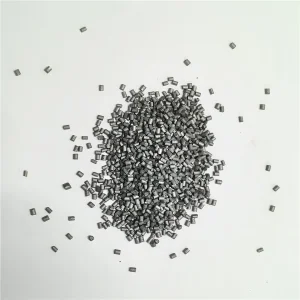
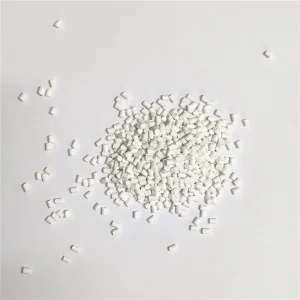
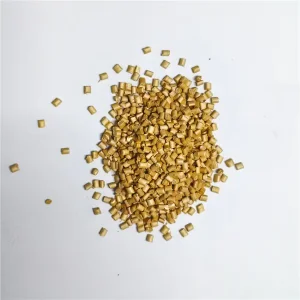
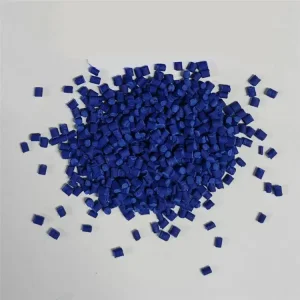
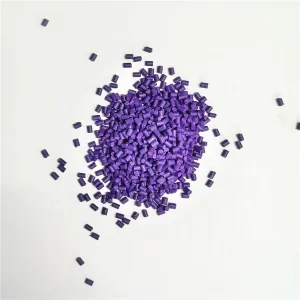
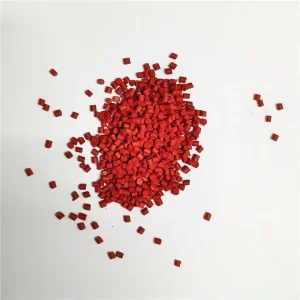
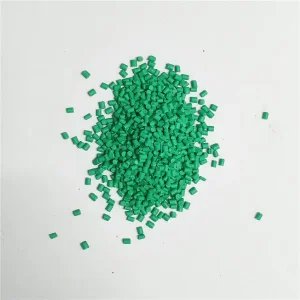
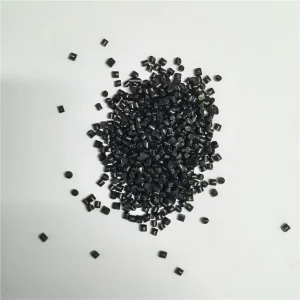
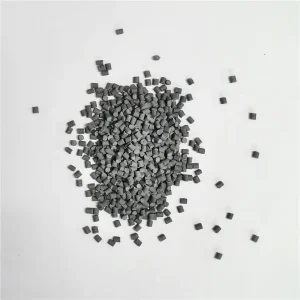
Engineered for precise polymer compatibility, high thermal dispersion, and consistent mechanical resilience across blown film and cast extrusion lines.
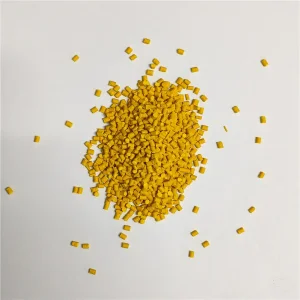
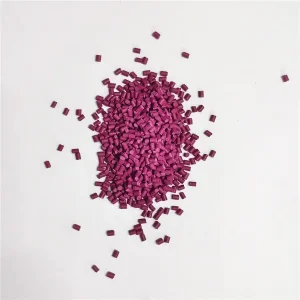
Exploring market dynamics, regulatory pressure, supply chain logistics, and material science shifts in low-density polyethylene tackification.
The global flexible packaging market, valued at over $250 Billion, relies immensely on specialized linear low-density polyethylene (LLDPE) and low-density polyethylene (LDPE) stretch and cling films. At the nucleus of high-performance film manufacturing is Polyisobutylene (PIB) cling masterbatch. Traditionally, film extruders suffered operational downtime, liquid dosing pump failures, and resin slip inconsistency when attempting direct liquid PIB injection. Today, polymer masterbatch compounding companies have elevated PE cling film masterbatch into an exact chemical delivery vehicle.
Macro trends show a rapid transition toward high-efficiency 5-layer, 7-layer, and 9-layer co-extrusion blown and cast film machinery. This shift requires customized cling masterbatches designed for precise layer isolation. Extruders demand tackification additives that migrate exclusively to the designated outer film skin (cling layer) while maintaining absolute zero tack on the inside layer (release layer) to prevent roll blocking during storage in high-ambient temperature regions such as Southeast Asia, the Middle East, and Latin America.
| Market Metric | Industrial Pallet Wrap | Food Service Cling Wrap | Agricultural Silage Wrap |
|---|---|---|---|
| Primary Polymer Matrix | C6/C8 mLLDPE | LDPE / LLDPE Blends | C8 LLDPE / EVA |
| Target PIB Dosage | 4.0% - 7.0% | 2.5% - 4.5% | 6.0% - 9.0% |
| Migration Window | 24 - 48 Hours | 12 - 24 Hours | 48 - 72 Hours |
| Key Compliance | ASTM D5458 Cling Force | FDA 21 CFR / EU 10/2011 | UV Stability (En 13201) |
Understanding molecular weight distribution, amorphous domain exclusion, and melt flow balancing in polyethylene matrices.
Polyisobutylene (PIB) is an amorphous liquid elastomer with a molecular weight (Mw) between 1,000 to 2,500 g/mol. Because PIB is incompatible with the semi-crystalline lattice of polyethylene, it is rejected by the cooling polyethylene crystals during film solidification and gradually migrates (exudes) to the amorphous surface regions over a 24-to-72-hour period.
Our masterbatch utilizes ultra-low density, high melt flow index (MFI 20-30 g/10min) LLDPE carrier resins. This ensures complete homogenizing during extrusion melt blending without lowering the tensile yield strength or tear resistance of the primary film substrate.
Liquid PIB is susceptible to thermo-oxidative degradation at high extrusion processing temperatures (>220°C). Custom formulations incorporate high-molecular-weight hindered phenolic antioxidants and phosphite processing stabilizers to prevent discoloration, smoke generation, and viscosity loss.
How leading masterbatch suppliers ensure zero batch-to-batch variation and maximum tack performance.
Screening prime virgin mLLDPE carrier resins for optimal crystal density and melt flow match.
Multi-zone twin-screw side-stream liquid dosing under high shear & vacuum degassing.
Micro-pellet formation with specialty non-tack surface conditioning to prevent pellet clumping.
EN 13900-5 compliance testing to ensure particle dispersion purity below 5-micron threshold.
ASTM D5458 testing measuring 180° lap shear tack force on automated cast test films.
Optimizing layer thickness, slip migration control, and functional masterbatch combinations.
Designed for power-pre-stretch equipment reaching up to 300% elongation without film necking or tearing. Cling masterbatch is restricted to 15% layer volume on the outer skin, combining high tack retention with quiet unwind dynamics.
Combines high optical clarity, anti-fog performance, and rapid cling initiation. Uses ultra-pure food contact compliant PIB masterbatch formulations meeting US FDA 21 CFR 177.1520 and EU No 10/2011 plastic food contact regulations.
Engineered to withstand extreme outdoors UV exposure for up to 12-24 months. Contains a synergistic package of Hindered Amine Light Stabilizers (HALS), carbon black or pigments, and high-tack PIB masterbatch to maintain air-tight bale sealing.
Adapting masterbatch formulations to global ambient climates and circular economy demands.
Environmental factors heavily dictate PIB migration rates. In cold storage environments (0°C to 4°C), standard PIB migration slows dramatically, resulting in poor initial cling performance. Custom suppliers formulate fast-migrating low-viscosity tackifier grades specifically for cold-chain food wrap applications in North America and Northern Europe.
Conversely, in tropical climates (Middle East, Southeast Asia), high ambient temperatures accelerate migration, which can cause excessive roll edge bleeding, telescoping, and core collapse. For these markets, controlled-release PIB masterbatches with higher polymer viscosity matrices are deployed to regulate surface exudation over extended storage periods.
Expert technical insights regarding PE cling masterbatch compounding, processing, and application troubleshooting.
High-concentration PE masterbatch supplies for blown film, injection molding, profile extrusion, and technical plastic applications.