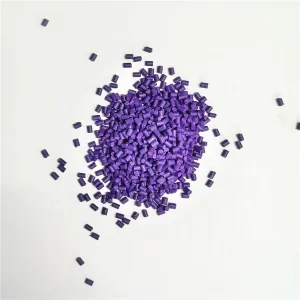
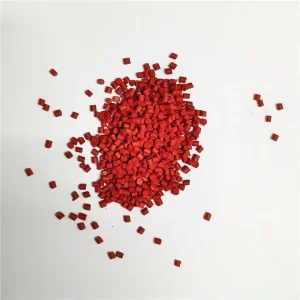
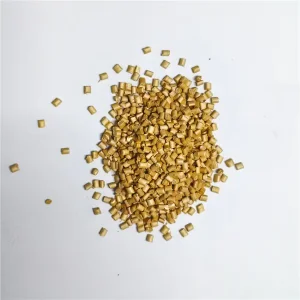
Explore our primary color concentrated PE masterbatches engineered specifically for profile extrusion, blown film, and high-impact injection molding applications.
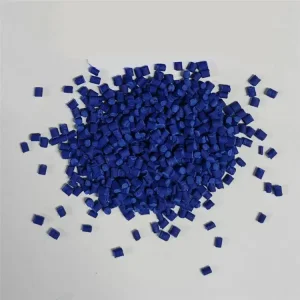
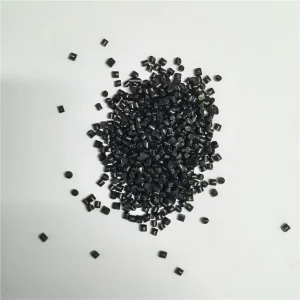
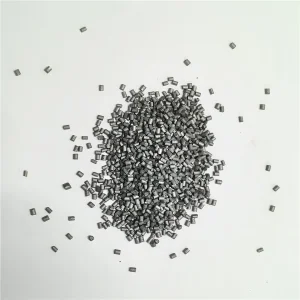
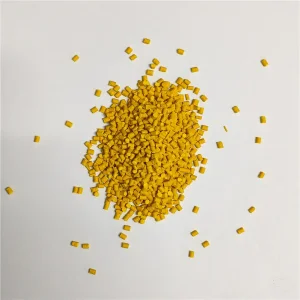
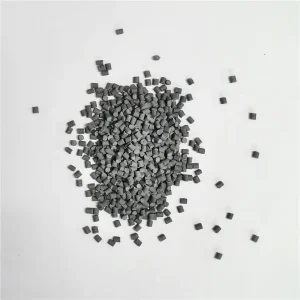
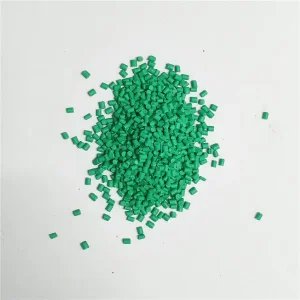
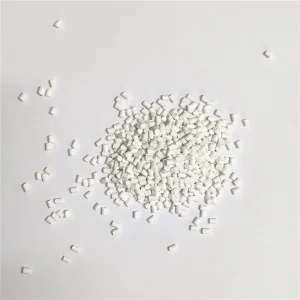
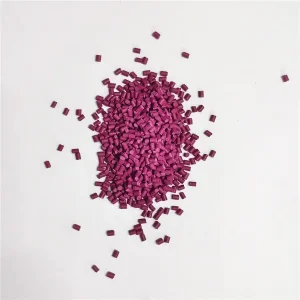
Understanding the chemical requirements, shear dynamics, and carrier polymer matching for advanced polyethylene decorative extrusions.
In modern building construction, architectural design, and industrial polymer engineering, Custom PE Decorative Profile Masterbatch serves as a foundational chemistry layer. Polyethylene (PE)—encompassing High-Density Polyethylene (HDPE), Linear Low-Density Polyethylene (LLDPE), and specialized Metallocene PE (mPE)—is widely utilized in decorative profile extrusions due to its exceptional impact resistance, low moisture absorption, chemical inertness, and recycling compatibility. However, compounding decorative profiles presents severe polymer physics challenges: raw pigments can act as stress concentrators, compromise UV integrity, induce warping, or trigger melt fracture during high-speed extrusion.
Matching the Melt Flow Index (MFI) of the masterbatch carrier resin with the profile substrate is paramount. Formulations utilize customized PE carriers with tailored molecular weight distributions (MWD) to eliminate interfacial shear viscosity mismatches, preventing surface sharkskin and die-buildup during extrusion.
Agglomerated pigment particles weaken mechanical strength and create localized color streaks. Through co-rotating twin-screw extruder technology equipped with specialized kneading blocks, organic and inorganic pigments are reduced to sub-micron primary particle sizes, fully encapsulated by dispersing wax matrixes.
Beyond chromatic aesthetic requirements, custom decorative masterbatches integrate complex additive packages: Hindered Amine Light Stabilizers (HALS), UV absorbers, primary/secondary antioxidants (Irganox/Irgafos series), anti-scratch slip agents, and processing aids for long-term outdoor durability.
Macroeconomic shifts, environmental regulations, and technical demands across North American, European, and Asia-Pacific decorative profile markets.
The international demand for decorative PE profiles—ranging from exterior Wood-Plastic Composite (WPC) decking, architectural trim, exterior wall cladding, and window perimeter seals to interior co-extruded trims—is experiencing robust growth. According to global polymer industry analytics, the transition from traditional timber and heavy PVC toward fully recyclable Polyethylene decorative solutions is accelerating rapidly.
| Global Region | Primary Decorative Application | Key Technical Requirement | Regulatory / Compliance Driver |
|---|---|---|---|
| North America | WPC Outdoor Decking & Railings | Extreme UV Stability (ASTM G154), Non-Fading Wood Tone | California Prop 65, Heavy-metal free, Zero Lead |
| European Union | Co-extruded Architectural Trim & Cladding | Low VOC Emission, Precise Color Match (ΔE < 0.5) | REACH SVHC, RoHS 2.0, Eco-label Circularity |
| Asia-Pacific | Urban Residential & Commercial Paneling | High Thermal Resistance (260°C Processing), Anti-blooming | GB/T National Standards, Flame Retardancy (UL94) |
| Middle East & LATAM | High-Impact Outdoor Perimeter Extrusions | Thermal-Oxidative Degradation Resistance, High Loading | High Ambient Temperature Endurance & Desert Sand Abrasion |
To remain competitive, global buyers requirement companies and factories that can supply custom masterbatch formulations capable of maintaining color hue fidelity under extreme weathering conditions while simultaneously reducing total operational processing costs.
A deep dive into high-loading pigment chemistry, thermal stability, carrier resin selection, and surface morphology control.
During profile extrusion, shear stress inside the barrel generates localized thermal spikes. High-concentration Masterbatches manufactured by Changzhou Jiazhou Plastic Products utilize inorganic pigments (e.g., Rutile Titanium Dioxide, Complex Inorganic Color Pigments - CICPs, Micronized Carbon Black) alongside high-performance organic pigments (Phthalocyanines, Quinacridones). These pigments possess intrinsic heat stability rated up to 260°C - 300°C, ensuring zero thermal discoloration or molecular cracking during high-speed extrusion profiles.
Formulating a high-loading masterbatch (up to 40%-70% pigment loading) requires sophisticated interfacial chemistry. Low-molecular-weight polyethylene waxes (PE Wax), oxidized waxes, and zinc/calcium stearates act as internal lubricants. They wet the surface of pigment crystallites, lower interfacial tension between pigment agglomerates and the PE matrix, and guarantee that the colorant is fully dispersed without clogging extrusion melt filter packs.
Modern architectural profiles often require visual textures that emulate expensive metallic alloys, natural timber, or brushed stone. Custom PE decorative masterbatch formulations integrate specialty effect pigments:
Real-world deployment of specialized PE decorative masterbatches across diverse industrial and architectural manufacturing sectors.
Outdoor decking profiles endure relentless exposure to solar UV radiation, thermal cycling, and moisture. Masterbatches tailored for WPC utilize high-concentration UV stabilization packages (HALS 944 / Chimasorb 119) integrated with anti-fungal additives. This prevents micro-cracking, chalking, and color fading over decades of exterior exposure.
Co-extrusion technology applies a thin, ultra-durable PE outer shell over a recycled composite core. Decorative masterbatches designed for core-shell extrusion require precise viscosity matching to prevent cap-layer thinning or delamination, delivering intense opaque coloration with minimal layer thickness.
Indoor residential trims demand zero-VOC, odor-free, non-migrating masterbatches. Utilizing ultra-pure virgin PE carriers combined with non-toxic inorganic pigments ensures compliance with indoor air quality regulations while providing scratch-resistant, satin-smooth aesthetic surface finishes.
Flexible PE and TPE/TPO profile extrusions used in automotive door seals and solar panel framing require non-bleeding, non-blooming color masterbatches. Formulations maintain flexibility, oil resistance, and consistent sealing performance under extreme compression stress.
Why partnering with established Chinese masterbatch factories provides unmatched technical quality, cost efficiency, and global supply stability.
Located in Changzhou, Jiangsu Province—one of China's premier polymer compounding and chemical processing hubs—Changzhou Jiazhou Plastic Products Co., Ltd. exemplifies supply chain efficiency and technical superiority. Operating a modern 6,000 m² production plant with 16+ years of specialized compounding experience, Jiazhou delivers critical advantages to global plastic manufacturers:
Direct bulk procurement partnerships with global petrochemical giants ensure top-tier virgin PE resins, prime titanium dioxide, and high-purity additives at stabilized cost structures, shielding global buyers from market volatility.
Equipped with advanced Konica Minolta spectrophotometers and lab-scale twin-screw extrusion test lines, custom Pantone or RAL color matches are formulated and sample-verified within 3 to 5 business days.
Every production batch undergoes comprehensive melt flow index testing, filter pressure value (FPV) dispersion analysis, thermogravimetric analysis (TGA), and spectrophotometric color tolerance inspection (ΔE < 0.5).
Ensuring seamless integration with your extrusion lines while adhering strictly to international safety and environmental regulations.
All custom PE decorative profile masterbatch formulations supplied by Changzhou Jiazhou comply strictly with global regulatory standards:
Our technical sales engineering team provides full process support to eliminate operational defects during profile extrusion:
Expert answers to common engineering questions regarding PE masterbatch selection, dosing, dispersion, and outdoor durability.
We utilize virgin LLDPE, LDPE, or HDPE carriers tailored specifically to match your host profile resin's Melt Flow Index (MFI). This ensures complete polymer miscibility, prevents delamination in co-extruded profiles, and preserves full mechanical strength.
We formulate using Complex Inorganic Color Pigments (CICPs) rated 7-8 on the Blue Wool Scale, combined with synergistic Hindered Amine Light Stabilizers (HALS) and UV absorbers. Our outdoor formulations pass accelerated weathering tests (ASTM G154 Xenon Arc / QUV) up to 3,000+ hours with Delta E color drift under 1.5.
Depending on pigment concentration and profile wall thickness, standard dosing ranges from 1% to 4%. For thin co-extruded cap layers, higher concentration masterbatches (3% - 5% loading) are recommended to achieve complete opacity.
Yes, certain organic pigments (such as Phthalocyanine Blue/Green) can act as nucleating agents, inducing asymmetric polymer crystallization and profile warping. We formulate decorative profile masterbatches using non-nucleating organic or inorganic pigments specifically to prevent profile distortion.
Upon receiving your physical profile sample, target Pantone code, or RAL reference, our lab completes spectrophotometric matching within 3 to 5 business days. Mass production orders are typically dispatched within 10 to 15 days via our Changzhou manufacturing hub.
Yes. We design specialized masterbatch formulations incorporating processing antioxidants and compatibilizers that neutralize impurities in post-consumer or post-industrial recycled PE, restoring surface gloss and tinting uniformity.
Explore additional high-concentration masterbatch solutions designed for injection molding, blown film, and custom extrusion processing.