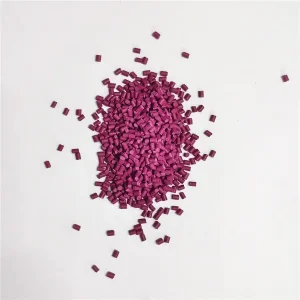
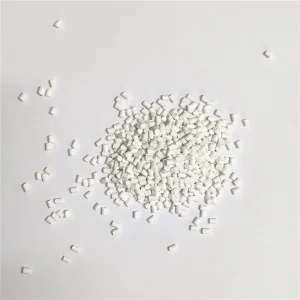
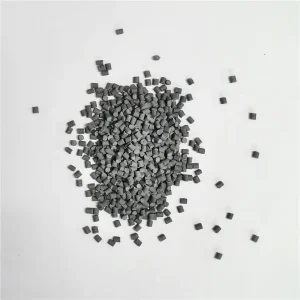
Explore our high-concentration, thermal-stable PE carrier masterbatches manufactured for specialized extrusion, injection molding, and gas pipeline applications.
Understanding the critical performance metrics required for long-term hydrostatic strength, UV resistance, and micro-dispersion in gas distribution systems.
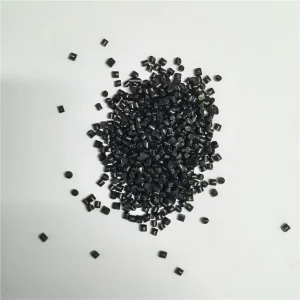
In the global energy and municipal infrastructure sectors, Polyethylene (PE) pipes—specifically PE80 and PE100 grades—have largely replaced traditional ductile iron and steel for natural gas distribution. The operational environment of gas pipes demands zero tolerance for structural defects, environmental stress cracking, or photo-oxidative degradation. The core compound responsible for protecting these pipes against solar ultraviolet radiation while guaranteeing long-term hydrostatic strength (50+ year design life) is specialized PE Gas Pipe Black Masterbatch.
Masterbatches must deliver precise carbon black content (2.0% to 2.5% mass ratio in the final pipe) with microtome dispersion ratings ≤ 3 according to ISO 18553 standards.
Advanced formulations incorporate synergistic antioxidant packages (primary phenolic + secondary phosphite) ensuring OIT values exceed 20 minutes at 200°C.
Utilizes low-structure, high-purity Carbon Black with primary particle sizes between 15nm and 25nm, eliminating agglomerates that induce stress concentration sites.
Information Gain Insight: Unlike standard utility film or agricultural pipe masterbatches, gas pipe black masterbatch requires extreme rheological matching with bimodal PE100-RC resins. Impurities such as ash content must remain strictly below 0.05%, and volatile matter under 0.15% to prevent void formation under high pressure extrusion.
How Changzhou Jiazhou Plastic Products Co., Ltd. leverages advanced compounding technology and regional eco-clusters to deliver superior global masterbatch solutions.
China has established itself as the global hub for high-performance masterbatch compounding due to complete integration between petrochemical resin production and advanced twin-screw extrude manufacturing. Leading this industrial capability, Changzhou Jiazhou Plastic Products Co., Ltd. (operating from a modern 6,000 m² production facility in Jiangsu Province) represents over 16 years of compounding expertise.
The manufacturing efficiency of custom PE gas pipe black masterbatch relies heavily on four technical pillars:
Comprehensive property parameters matching ISO 4437 / EN 1555 pressure pipe standards for gas line applications.
| Property Parameter | Test Standard | Technical Specification Target | Industrial Significance |
|---|---|---|---|
| Carrier Resin Type | ISO 1183 | LLDPE / HDPE Virgin Matrix | Ensures 100% molecular compatibility with PE80/PE100 pipe grades |
| Carbon Black Loading | ISO 6964 | 40% - 50% (± 1.0%) | High concentration allows economical let-down ratios (5.0% LDR to achieve 2.0%-2.5% net CB) |
| Carbon Black Particle Size | ASTM D3849 | 18 nm - 22 nm (P-type CB) | Optimal UV absorption coefficient preventing photo-oxidation |
| Dispersion Rating | ISO 18553 | Rating ≤ 3.0 (Grade A1 / A2) | Prevents local stress concentration centers that cause pipe crack initiation |
| Melt Flow Rate (190°C/21.6kg) | ISO 1133 | 8.0 - 15.0 g/10min | Matches the viscosity curve of bimodal pipe resins to prevent melt fracture |
| Oxidative Induction Time (OIT) | ISO 11357-6 | > 30 Minutes at 200°C | Guarantees long-term thermal oxidation protection during processing & aging |
| Moisture Content | ASTM D6980 | < 0.02% (200 ppm) | Eliminates micro-voids, bubbles, and pinholes in extruded pipe walls |
Field deployment matrix for black PE masterbatch across high-stress civil and industrial utility projects.
Exposed to severe mechanical stress, soil movement, and thermal fluctuations. Masterbatch formulated with highly dispersed carbon black ensures high notch resistance (PE100-RC compliance) and zero slow crack growth (SCG) failure over decades of underground service.
Trenchless installation rubs pipe surfaces against abrasive rock and soil. The inclusion of special anti-scratch additives inside custom PE masterbatch maintains the protective black outer skin integrity without compromising internal pressure ratings.
Gas pipes used in surface connections or tropical climates require exceptional weatherability. Our PE black masterbatch screens 99.9% of UV radiation in the 280–400 nm wavelength, protecting against polymer chain scission.
Key qualification criteria when selecting custom masterbatch factories to ensure operational reliability and regulatory safety.
Procuring raw materials for gas pipe extrusion involves stringent compliance audits. A minor flaw in masterbatch quality can lead to cataclysmic pipe rupture, resulting in environmental hazards and massive legal liabilities. Enterprise buyers must evaluate potential masterbatch manufacturers against the following audit criteria:
The FPV test measures the pressure rise across a fine mesh screen pack (e.g., 15 microns) during extruding masterbatch. A low FPV value (< 1.5 bar/g) guarantees that carbon black agglomerates and un-melted impurities are virtually non-existent, protecting fine extruder dies from clogging and preventing micro-fractures in pipe walls.
Fluctuations in Melt Flow Index (MFR) cause wall thickness variations (eccentricity) in high-speed pipe extrusion lines. Reliable factories maintain carrier resin consistency within a tight window of ± 0.5 g/10min MFR.
Ensure the manufacturer strictly complies with REACH, RoHS, and local gas utility standards. Raw materials should be fully traceable back to raw pigment and base resin lots.
Key innovations driving the next generation of polyolefin pipeline coloring and modification systems.
As gas utilities transition toward hydrogen-blended natural gas, masterbatch formulations are evolving to resist hydrogen permeation and prevent radical oxidative degradation in hydrogen-rich environments.
Leading factories are introducing bio-based PE carriers derived from sugarcane ethanol, lowering the net carbon footprint of masterbatch production while maintaining identical physical performance.
Incorporation of multi-walled carbon nanotubes (MWCNTs) alongside traditional carbon black to impart antistatic charge dissipative properties for specialized industrial gas lines.
Expert technical answers regarding masterbatch dosing, quality control, and extrusion troubleshooting.
Below 2.0%, the carbon black particles cannot form an interconnected light-blocking network, leaving the polymer vulnerable to UV-induced chain scission. Above 2.5%, carbon black acts as a physical contaminant, reducing long-term hydrostatic ductility and causing brittle failure mode under high internal pressure.
Utility black masterbatches often use recycled carrier resins and coarse furnace carbon black (particle size > 40nm) with high ash content. Gas pipe black masterbatch exclusively uses virgin LLDPE/HDPE carriers, high-purity P-type furnace carbon black (18-22nm), and incorporates high-dosage antioxidants (OIT > 30 mins) to satisfy ISO 4437 specifications.
The carrier resin must have an equal or slightly higher Melt Flow Index (MFR) than the base pipe resin to ensure uniform melting and distribution. If the carrier resin has too high a viscosity, micro-gel un-melts form; if too low, mechanical properties of the final pipe drop significantly.
Surface defects are typically caused by moisture absorption in raw materials, high volatile content, or agglomerated carbon black particles. Using a masterbatch manufactured with vacuum degassing twin-screw extruders and moisture levels < 0.02% prevents moisture expansion and die-build-up during extrusion.
View our additional specialized masterbatch product formulations optimized for film blowing, injection molding, and custom profile extrusion.