Precision Pigment Dispersion, Advanced Oxidative Stability & Carrier Engineering for HDPE, PE100, and PE-RT Infrastructure Piping Systems
Explore our industrial-grade masterbatch formulations specifically optimized for high-pressure pipe extrusion, blown film, and technical injection molding.
Understanding the critical Rheological, Hydrostatic, and Thermal Dynamics in Custom PE Pipe Manufacturing
In modern industrial infrastructure, polyolefin piping systems—specifically high-density polyethylene (HDPE), PE80, PE100, PE100-RC (Resistance to Crack), and Polyethylene of Raised Temperature Resistance (PE-RT)—represent the backbone of global water distribution, natural gas transmission, agricultural irrigation, and industrial fluid transport. Achieving a 50-year design service life under sustained hydrostatic pressure requires absolute material purity and precise masterbatch formulation.
A specialized custom PE pipe extrusion masterbatch company & factory must bridge the gap between pure pigment synthesis and structural polymer engineering. Unlike decorative injection molding masterbatches, pipe-grade masterbatches function as critical additive delivery matrices that directly influence long-term hydrostatic strength (LTHS), slow crack growth (SCG) resistance, pigment dispersion index, and oxidative degradation resistance (OIT).
During single-screw or twin-screw extrusion of PE pressure pipes, masterbatch pellets undergo intensive thermal and mechanical shear stress. Improperly dispersed pigments or mismatched carrier resins introduce sub-micron micro-voids, pigment agglomerates, and localized stress concentration points. These flaws drastically accelerate notch sensitivity and lead to premature hydraulic failure under cyclic pressure pulsing.
Four structural engineering pillars that distinguish our masterbatch formulations in demanding extrusion environments
Our manufacturing lines utilize co-rotating twin-screw extruders with specialized L/D ratios of up to 48:1. Incorporating multi-stage kneading blocks and dynamic vacuum degassing zones guarantees 100% breakdown of organic/inorganic pigment clusters, eliminating moisture-induced microporosity during high-speed pipe co-extrusion lines.
Formulated with high-potency sterically hindered phenols (Irganox 1010/1076) paired with organo-phosphite stabilizers (Irgafos 168), our pipe masterbatches protect virgin polymer chains from thermal-induced chain scission during extrusion while retaining structural resilience over a 50+ year operational lifespan.
Compliance with global food-contact and drinking water standards is non-negotiable. Our custom masterbatches employ heavy-metal-free organic pigments and non-migratory process aids, preventing chemical leaching into potable water networks and meeting NSF/ANSI 61, REACH, RoHS, and FDA 21 CFR standards.
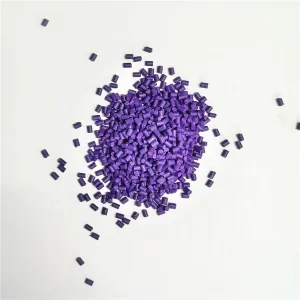
Designed specifically for co-extruded identification stripes (Blue for water, Yellow for gas, Purple for reclaimed water), our color masterbatches offer exceptional melt-strength consistency, preventing line bleeding or thickness variation even at extrusion line speeds exceeding 40 meters per minute.
Custom-tailored masterbatch formulations built for rigorous real-world municipal, industrial, and agricultural environments
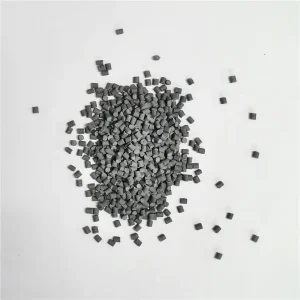
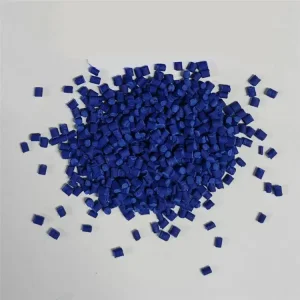
Our High-Concentration Blue Masterbatch and Black Carbon Masterbatch formulations provide exact Color Matching (RAL 5005 / RAL 5012) for solid blue pipes or co-extruded stripes. Zero heavy-metal leaching ensures taste and odor neutrality under long-term chlorine dioxide contact.
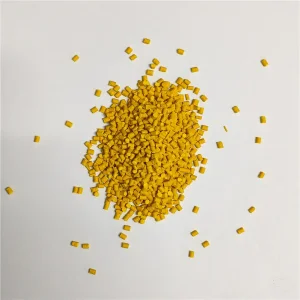
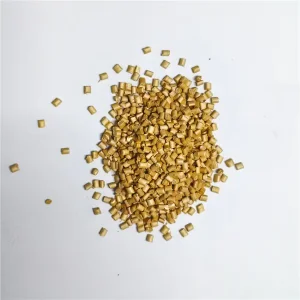
Engineered for high weather resistance and chemical inertia against natural gas odorants (mercaptans). Formulated with cadmium-free, lightfast organic yellow pigments (Color Index Yellow 138/180) to maintain bright signal visibility under prolonged sun exposure during warehouse storage.
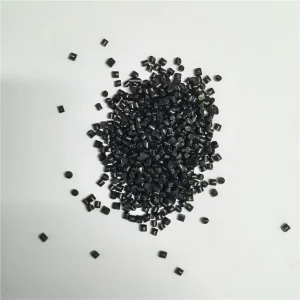
Utilizes ultrafine carbon black particles (<20 nm) with enhanced anti-clogging surface treatment. Prevents die-build-up during ultra-thin wall wall extrusion (<0.2 mm) while ensuring total opacity to block internal algae growth in drip irrigation lines.
High thermal stability color masterbatches capable of resisting continuous operation temperatures up to 95°C without color migration or oxidative embrittlement. Maintains flexible ductility during low-temperature installation winter conditions.
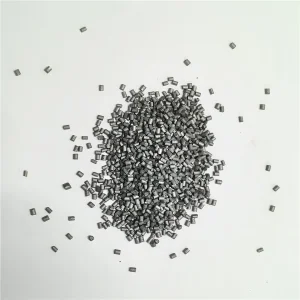
Compounded with UHMWPE-compatible carriers and sacrificial antioxidants to resist aggressive chemical slurries, abrasive mineral tailings, and extreme saltwater hydrostatic pressure environments.
Formulated with internal siloxane slip additives and anti-static agents to lower friction coefficients inside microducts, enabling long-distance optical fiber cable blowing performance.
Leveraging Changzhou’s Petrochemical Cluster for Unrivaled Scale, Quality Precision, and Global Delivery Efficiency
Located in Changzhou, Jiangsu Province, our production facility sits at the heart of China’s advanced polymer compounding corridor. We benefit from direct vertical integration with premier virgin PE resin suppliers (SINOPEC, CNPC, Borealis joint ventures), guaranteeing stable raw material pricing and uninterrupted supply chain continuity even during global material volatility.
Equipped with high-precision spectrophotometers (Datacolor 800 series) and computerized gravimetric dosing units, our R&D lab turns around custom color matching and MFI tuning within 3 to 5 working days. Mass production lead times are benchmarked at 15 days for standard containerized shipments.
Rigorous test parameters defining high-performance PE pipe masterbatch batches
| Property Parameter | Test Standard / Method | Black Pipe Masterbatch | Color Pipe Masterbatch (Blue/Yellow) | White Pipe Masterbatch |
|---|---|---|---|---|
| Carrier Resin Base | ISO 1133 / ASTM D1238 | LLDPE / HDPE Carrier | HDPE / LLDPE Carrier | LLDPE Carrier |
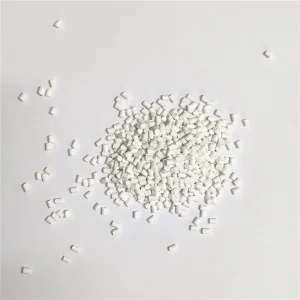
| Pigment Loading (%) | Gravimetric / Ash Test | 40% - 50% Carbon Black | 30% - 45% Organic Pigment | 60% - 70% Rutile TiO2 |
| Carbon Black Particle Size | ASTM D3849 (TEM) | 18 nm – 25 nm (P-Type) | N/A | N/A |
| Melt Flow Index (190°C/5kg) | ISO 1133 (g/10 min) | 0.5 – 3.0 g/10min | 1.0 – 5.0 g/10min | 2.0 – 8.0 g/10min |
| Oxidative Induction Time (OIT) | ISO 11357-6 (200°C, O2) | > 45 Minutes | > 30 Minutes | > 25 Minutes |
| Moisture Content (%) | Karl Fischer (ISO 15512) | < 0.05% (< 500 ppm) | < 0.05% (< 500 ppm) | < 0.05% (< 500 ppm) |
| Heat Resistance (°C) | EN 12877-2 | 280°C - 300°C | 260°C - 280°C | 280°C - 300°C |
Explore additional high-concentration colors engineered for injection molding, extrusion profiles, and protective films.
Aligning polyolefin additive technologies with international pressure pipe standards and environmental directives
Compliance with EN 12201 (Water) and EN 1555 (Gas) demands strict verification of pigment dispersion, thermal stability, and long-term hydrostatic pressure resistance. Our masterbatches adhere to EU REACH SVHC restrictions and commission regulation (EU) No 10/2011 for plastic materials intended to come into contact with food and drinking water.
Under ASTM F714 and NSF/ANSI Standard 61, materials used in potable water lines must undergo rigorous toxicological evaluation. Our heavy-metal-free white, blue, and black masterbatches pass heavy metal extraction testing (Lead, Cadmium, Mercury, Hexavalent Chromium free) for North American municipal utility requirements.
Extrusion lines operating in the GCC region face continuous ambient temperatures above 45°C and severe UV radiation. Our custom UV-stabilized black and color pipe masterbatches incorporate Hindered Amine Light Stabilizers (HALS) and high-surface-area carbon black to withstand severe desert environmental degradation.
Addressing core extrusion, rheology, and quality assurance queries from polymer process engineers and procurement directors