Explore our factory-direct, high-concentration polyethylene masterbatch series engineered for film blowing, injection molding, and continuous extrusion applications.
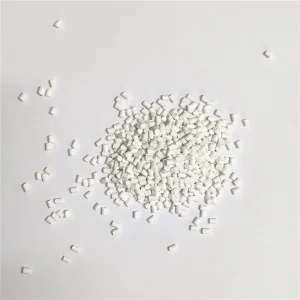
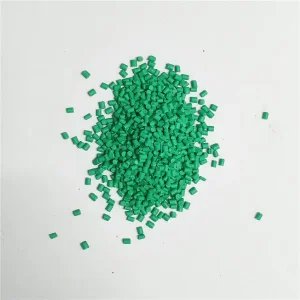
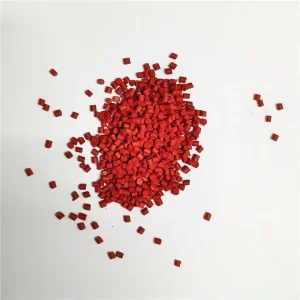
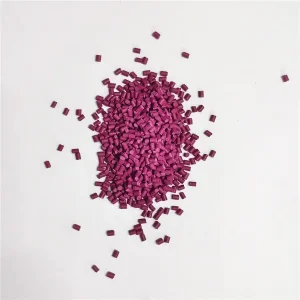
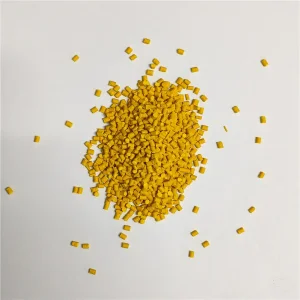
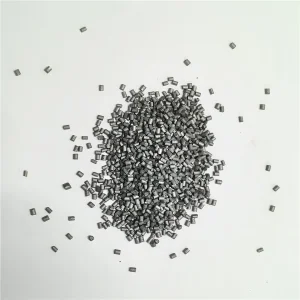
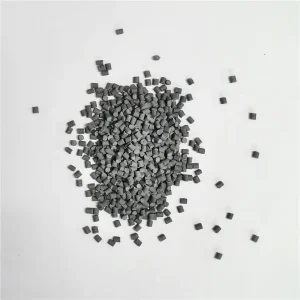
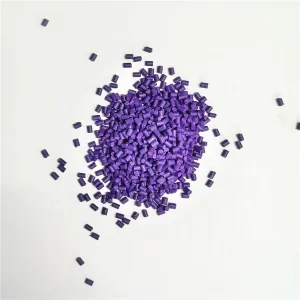
Understanding the rheological interactions between low-density polyethylene (LDPE), linear low-density polyethylene (LLDPE), and high-density polyethylene (HDPE) film matrices and engineered masterbatch compounds.
To ensure zero phase separation during high-speed film blowing, custom PE masterbatch carrier resins are selected with an MFI tuned precisely 2.0 to 5.0 g/10min higher than the base virgin polymer resin. This eliminates melt fracture, fish-eyes, and surface roughness across film gauges down to 6 microns.
Under DIN EN 13900-5 testing, our specialized film-grade masterbatches maintain an FPV threshold of < 0.8 bar/g using a 14-micron screen pack. This ultra-fine particle dispersion prevents screen pack clogging in continuous 24/7 extrusion lines and eliminates micro-pinholes in barrier bags.
By encapsulating organic and inorganic pigments (such as rutile Titanium Dioxide TiO2 and Phthalocyanine Blue) with specialized hyper-dispersants and silane coupling agents, we achieve up to 70% pigment loading while retaining maximum tensile strength and tear resistance.
China's Changzhou plastic masterbatch manufacturing ecosystem combines raw material integration, state-of-the-art twin-screw extrusion technology, and rigorous E-E-A-T compliant quality assurance.
Chinese masterbatch factories benefit from immediate proximity to top-tier petrochemical polymer refineries (Sinopec, CNPC) and chemical pigment giants (Lomon Billions). This vertical integration secures premium virgin LDPE/LLDPE carrier resins and chloride-process rutile TiO2 at unmatched cost efficiencies, passing down a 15%–25% procurement savings to international plastic bag manufacturers without compromising purity.
Leading OEMs in Changzhou operate in-house 3-layer and 5-layer blown film test lines. Every batch of custom masterbatch is evaluated for melt pressure stability, bubble stability, tinting strength, and heat-seal strength before dispatch. Factory-installed optical grain scanners ensure zero un-dispersed agglomerates larger than 20 microns.
Equipped with Datacolor spectrophotometers and computer-aided formulation algorithms, Chinese masterbatch engineers deliver precise spectrophotometric matching against Pantone, RAL, or physical resin samples within 3 to 5 business days. Flexible MOQ options allow global converters to optimize inventory turnover.
China's export-oriented factories operate strictly under ISO 9001:2015 quality management systems. Formulations comply with EU No 10/2011, FDA 21 CFR 177.1520, RoHS 3.0, REACH SVHC, and EN 71-3, ensuring compliance for food-contact, medical, and retail plastic bag applications worldwide.
Emerging innovations in nano-dispersion, circular economy compatibilizers, and multi-functional additive masterbatches are redefining performance benchmarks for plastic bag producers.
As bag manufacturers down-gauge film thickness to reduce material consumption, standard masterbatch particles cause bubble tears and pinhole vulnerabilities. Next-generation masterbatches utilize micro-fluidized dispersion technology to shrink pigment agglomerates below 1 micron, enabling ultra-thin 6-micron garbage bags and stretch films to maintain high opacity and puncture strength.
With global sustainability mandates requiring 30%+ Post-Consumer Recycled (PCR) content in plastic packaging, advanced masterbatches incorporate specialized maleic anhydride grafted PE (PE-g-MAH) compatibilizers. These additives neutralize polymer cross-contamination, reduce gel formation, and restore melt homogeneity in recycled LLDPE/HDPE plastic bags.
Modern converters are transitioning from purchasing individual additive masterbatches to unified multi-functional compounds. By combining custom pigment shades with Erucamide slip agents, synthetic silica anti-blocking agents, and HALS UV stabilizers into a single pellet, manufacturers streamline material handling and prevent dosing errors.
Precision-formulated masterbatches tailored to the distinct mechanical, optical, and thermal demands of diverse plastic bag categories.
Courier bags require absolute opacity to protect privacy and prevent visual inspection under strong light. Our custom solution utilizes a dual-layer strategy: an outer layer formulated with 70% high-opacity White Masterbatch featuring rutile TiO2 for maximum whiteness and gloss, combined with an inner layer containing 50% Jet-Black PE Masterbatch with P-type Carbon Black to block 100% of light transmission while maintaining high heat-seal strength on automatic bag-making machines.
Industrial fertilizer and resin bags demand high mechanical durability and resistance to prolonged sunlight exposure. Our specialized masterbatches integrate Hindered Amine Light Stabilizers (HALS) and UV-Absorbers into high-density polyethylene carriers. This prevents photo-oxidative degradation, maintaining over 85% of initial tensile and drop-impact strength even after 2,000 hours of accelerated Xenon arc weathering testing.
For retail carrier bags produced on automated high-speed conversion lines (exceeding 300 bags/min), maintaining a low Coefficient of Friction (COF) is vital. Our custom color masterbatches are engineered with controlled-migration Erucamide slip agents and non-migratory synthetic silica. This ensures stable COF (< 0.2) without causing ink adhesion failure during flexographic or rotogravure printing.
Food contact and produce bags require ultra-pure, non-toxic pigment formulations free of heavy metals, primary aromatic amines (PAAs), and volatile organic compounds (VOCs). Utilizing FDA-compliant low-migratory pigment bases, our masterbatch ensures complete compliance with global food safety standards while providing consistent optical clarity or vibrant tinting.
Navigating international chemical safety legislation, food-contact directives, and circular plastic mandates for seamless export compliance.
| Regulatory Standard | Target Region | Key Technical Requirement | Masterbatch Compliance Metric |
|---|---|---|---|
| FDA 21 CFR 177.1520 | North America | Olefin Polymers & Food Contact Safety | Extraction limits < 2.6% in n-hexane; Heavy Metal Free |
| EU Regulation No 10/2011 | European Union | Plastic Materials Intended to Contact Food | Overall Migration Limit (OML) < 10 mg/dm²; SML Approved |
| RoHS Directive 2011/65/EU | Global / EU | Restriction of Hazardous Substances | Pb, Cd, Hg, Cr(VI), PBBs, PBDEs < 1000 ppm (Cd < 100 ppm) |
| REACH SVHC (EC 1907/2006) | European Union | Substances of Very High Concern Verification | Zero Candidate List SVHC substances exceeding 0.1% w/w |
| EN 13432 / OK Compost | Global / EU | Industrial Composting Compatibility | Heavy Metal limits compliant with biodegradable carrier resins |
A 4-stage technical audit guide for procurement officers and quality directors evaluating masterbatch suppliers for high-volume blown film production.
Verify carrier polymer compatibility. Ensure the masterbatch MFI matches substrate resins (LDPE MFI 0.3–2.0; LLDPE MFI 1.0–3.0) to prevent die swell, melt fracture, and uneven wall thickness.
Demand DIN EN 13900-5 FPV certification (< 1.0 bar/g). High filter pressure values indicate undispersed pigment agglomerates that will cause bubble bursts in thin film lines.
Evaluate Let-Down Ratios (LDR). High-concentration masterbatches (e.g., 60%–70% TiO2) allow dosing rates as low as 1.5% to 3.0%, reducing overall raw material cost per metric ton of extruded film.
Confirm moisture control (< 0.15% H2O) and heavy-duty moisture-barrier aluminum packaging to prevent hydrolytic degradation and foaming during extrusion.
In-depth technical answers addressing common processing challenges in polyethylene plastic bag film blowing and extrusion.
Color streaks and micro-pinholes are primarily caused by poor pigment dispersion, mismatched carrier resin Melt Flow Index (MFI), or excessive moisture content in the masterbatch. When pigment agglomerates exceed 20–30 microns, they disrupt the polymer melt lattice as it exits the blown film die, causing localized shear thinning, bubble instability, and pinholes. Our custom PE plastic bag masterbatches utilize high-shear twin-screw compounding and hyper-dispersant surface modifiers. This ensures a narrow pigment particle size distribution (< 5 microns) and an FPV rating below 0.8 bar/g, completely eliminating streaks and pinholes even in ultra-thin 6-micron films.
For LLDPE multi-layer film co-extrusion, the masterbatch carrier resin MFI should ideally be 20% to 50% higher than the substrate resin under standard test conditions (190°C / 2.16 kg). For example, if your base LLDPE resin has an MFI of 1.0 g/10min, the masterbatch carrier should possess an MFI between 2.0 and 4.0 g/10min. This slight rheological differential allows the colorant to melt faster than the surrounding virgin matrix, ensuring homogenous melt blending and uniform color distribution across all co-extruded layers (ABA or ABC).
Titanium dioxide (TiO2) concentration directly governs opacity and whiteness index. High-grade masterbatches typically contain 50% to 70% Rutile TiO2. Higher loading allows plastic bag manufacturers to achieve complete light-blocking opacity at lower let-down ratios (e.g., 2% instead of 5%). However, if raw TiO2 is poorly coated, excessive inorganic loading can migrate to the film surface, weakening impulse heat-seal strength and seam integrity. Our masterbatches feature alumina/silica surface-treated rutile TiO2 combined with special wax dispersants, ensuring 100% opacity retention without sacrificing heat-seal strength or seal-bar adhesion.
Yes. When formulating for PCR LDPE/HDPE blends, recycled polymers often contain impurities, cross-linked gels, and residual moisture that degrade tensile and tear resistance. Our specialized PCR masterbatches incorporate reactive maleic anhydride compatibilizers and thermal antioxidants (Irganox 1010/168 equivalents). These additives neutralize free radicals formed during melt reprocessing, repair polymer chain scission, and improve interfacial bonding between virgin masterbatch carriers and PCR substrates, maintaining over 90% of virgin film tensile strength.
The optimal Let-Down Ratio (LDR) depends on film thickness and desired color opacity. For standard high-concentration masterbatches (50%–70% pigment loading):
• Shopping Bags (15–30 microns): 1.5% to 2.5% LDR.
• Courier Mailer Bags (Co-extruded 50–70 microns): 2.0% to 4.0% LDR.
• Thin Agricultural Sheeting (< 10 microns): 1.0% to 1.8% LDR.
Using higher concentration masterbatches lowers logistical freight costs and reduces storage footprint while enabling precise gravimetric dosing on modern film extruders.
Migratory slip agents (such as Oleamide or Erucamide) and amine-based anti-static agents function by blooming to the film surface to lower COF or dissipate electrical charges. If additive dosing is too high or migration speed is uncontrolled, a thick chemical layer forms on the surface, preventing solvent-based or water-based inks from bonding during corona treatment. Our multi-functional additive color masterbatches utilize controlled-migration Erucamide blended with non-migratory synthetic silica anti-blocking agents. This balances a low COF (< 0.2) with surface tension stability (> 38 dynes/cm), ensuring excellent ink adhesion and crisp graphics on printed poly bags.
Select from our benchmarked masterbatch formulations engineered to meet international color consistency, thermal endurance, and regulatory standards.
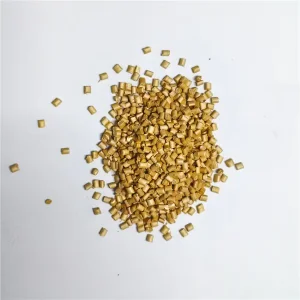
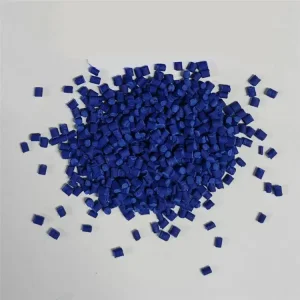
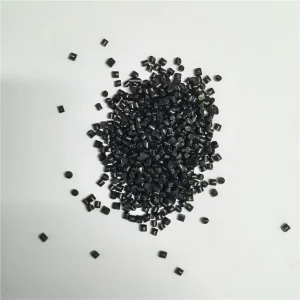
Partner with Changzhou's leading color masterbatch manufacturer. Our senior polymer engineers provide instant technical consultations, spectrophotometric color matching within 3 days, and free lab sample dispatches for your blown film production trials.