Engineered for extreme opacity, thermal stability up to 260°C, and defect-free film blowing & sheet extrusion.
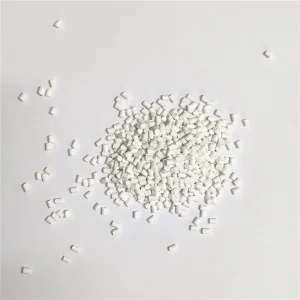
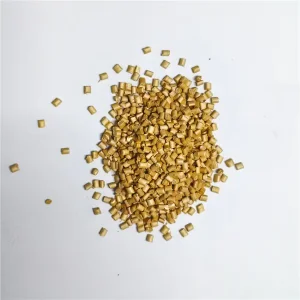
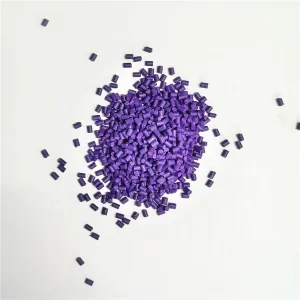
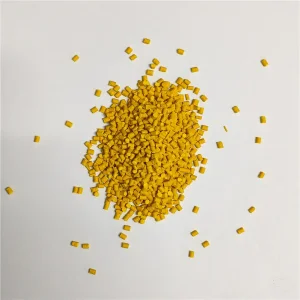
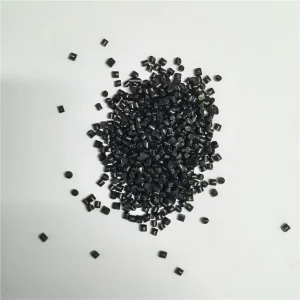
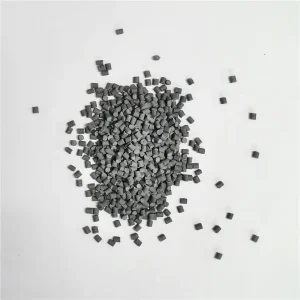
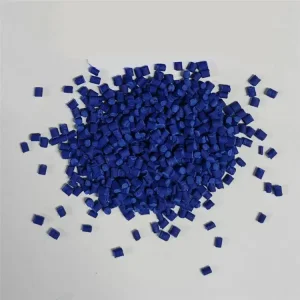
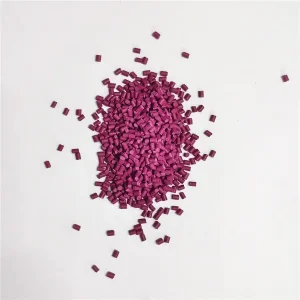
Navigating Circular Economy Regulations, High-Speed Extrusion Yields, and Micro-Particle Dispersion Integrity.
Global brand owners are aggressively converting multi-layer laminate structures into 100% recyclable Polyethylene (PE) mono-material films. This architectural evolution requires masterbatch formulations that integrate seamlessly into LLDPE, LDPE, and HDPE matrices without impairing mechanical tear strength, optical brilliance, or downstream mechanical recycling streams aligned with RecyClass and APR guidelines.
Modern continuous blown film and cast film lines operate at speeds exceeding 400 m/min. Inadequate dispersion of pigments or fillers leads to micro-cavitation, melt fracture, elevated filter pressure value (FPV), and plate-out (die build-up). Our customized masterbatches utilize tailored wax-free dispersing aids and controlled Melt Flow Indexes (MFI) to optimize rheological compatibility.
Label film substrates demand persistent surface tension (> 42 dynes/cm) for high-definition flexographic, digital, and gravure ink adhesion. Inferior additive migration can cause corona treatment decay. Our PE label masterbatches are formulated with zero-blooming organo-modified stabilization additives to preserve printability over extended storage.
A side-by-side technical evaluation highlighting why specialized film-grade masterbatches are vital for high-value pressure-sensitive label (PSL) and in-mold labeling (IML) operations.
| Performance Parameter | Standard Commercial Grade Masterbatch | Jiazhou Engineered PE Label Masterbatch | Industrial Advantage & Impact |
|---|---|---|---|
| Carrier Resin Compatibility | Generic Recycled PE / Universal EVA Carrier | Prime Virgin Metallocene LLDPE / Custom MFI Balanced PE | Prevents delamination, preserves optical transparency, eliminates gel formation. |
| Filter Pressure Value (FPV) | > 2.5 bar/g (High agglomeration risk) | < 0.8 bar/g (Sub-micron particle dispersion) | Extends screen pack life, minimizes production downtime by up to 40%. |
| Thermal Resistance Rating | 180°C - 220°C (Risk of gasification/discoloration) | 260°C - 300°C Continuous Heat Resistance | Supports high-temperature cast extrusion and rapid heat-sealing cycles. |
| Additive Migration & Blooming | High blooming rate (Impairs corona & glue layer) | Controlled-Migration / Non-Blooming Additive Suite | Ensures 100% ink transfer efficiency and long-term adhesive bond strength. |
| Heavy Metals & Regulatory Compliance | Basic RoHS testing, uncertified trace impurities | FDA 21 CFR, EU 10/2011, REACH SVHC, Heavy-Metal Free | Full compliance for direct food, pharmaceutical, and cosmetic primary packaging. |
Exploring the precise rheological matching, surface physics, and carrier matrix optimization that power our label film solutions.
In multi-layer co-extrusion film architectures (e.g., ABA or ABC structures), the Melt Flow Index (MFI) of the masterbatch must closely match the base resin of the targeted skin or core layer. Standard masterbatch suppliers often use off-spec carriers that induce viscosity mismatch, resulting in interfacial instability and thickness variation across the web.
At Changzhou Jiazhou Plastic Products Co., Ltd., our engineering team custom-formulates PE label masterbatches using narrow-molecular-weight-distribution (NMWD) metallocene LLDPE carriers. This guarantees:
Modern PE label films require an exact equilibrium between friction control, static dissipation, and surface printability. A miscalculated slip agent concentration will bleed to the surface, causing printing failure and pressure-sensitive adhesive deadening.
Our proprietary masterbatches combine active pigment chemistry with tailored functional packages:
Meeting rigorous global food contact standards while adapting formulas for distinct geographical processing climates.
For European converters, our PE masterbatches strictly conform to EU Regulation No 10/2011 on plastic materials intended to come into contact with food. Additionally, pigments are heavy-metal free (EN 71-3 compliant) and fully vetted for NIR (Near-Infrared) sorter transparency, ensuring black masterbatches can be detected and sorted in automated recycling plants.
Engineered to meet U.S. FDA 21 CFR 177.1520 requirements for olefin polymers. Designed to withstand demanding transport temperatures across North American supply chains without additive blooming or adhesive transfer failures in pressure-sensitive labels (PSL).
Exporters serving APAC, Latin America, and Middle Eastern regions face extreme thermal oxidative stress and high humidity. Our localized formulations incorporate specialized anti-hydrolysis agents and thermal stabilizers that prevent moisture pickup and keep masterbatch pellets free-flowing in tropical silo storage.
From high-speed In-Mold Labeling (IML) to pressure-sensitive squeeze bottles, discover our application-specific masterbatch optimizations.
IML applications demand absolute flatnesses, anti-static properties, and rapid thermal fusion with the container wall during injection or blow molding cycles.
Used extensively in personal care, cosmetics, and household chemical squeeze bottles requiring high flexibility and squeezability without label wrinkling or cracking.
Providing high opacity, tear strength, and tamper-evident barrier performance for transit packaging and branded protective sleeves.
Pioneering sustainable carrier matrices, AI-driven color matching, and digital passport compliance.
Developing specialized compatibilizers within the masterbatch matrix that absorb impurities and neutralize odor volatile organic compounds (VOCs) inherently present in post-consumer recycled PE streams.
Integrating spectrophotometer cloud data directly into continuous compounding extruders, enabling real-time color adjustment ($\Delta E < 0.2$) and zero-waste color transition during manufacturing batch shifts.
Formulating masterbatches using certified bio-based polyethylene (derived from sugarcane waste) embedded with tracer technology for instant digital product passport (DPP) scanning and origin verification.
High-concentration custom colors and special functional masterbatches tailored to your exact resin matrix.
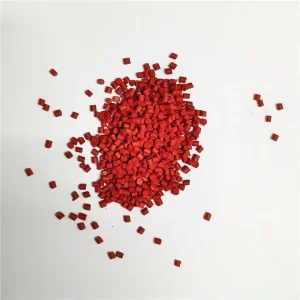
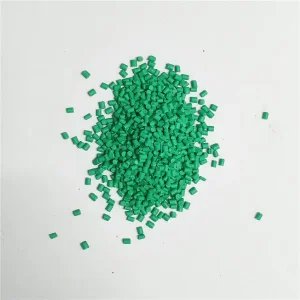
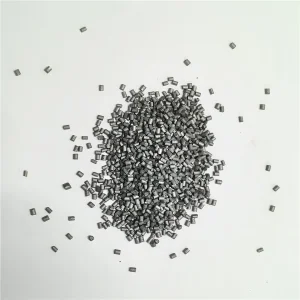
Expert answers regarding processing parameters, additive compatibility, and quality assurance for PE plastic label film masterbatch.
For standard blown film extrusion requiring high opacity (such as courier bags or squeezable label facestocks), an LDR of 2% to 5% is standard. For ultra-thin blown films (below 25 microns) or high-speed in-mold labeling (IML) films where opacity must exceed 85%, we recommend a masterbatch with 60%-70% TiO₂ loading at an LDR of 4% to 6%. Testing using a benchtop spectrophotometer ($\Delta E < 0.5$) is recommended to lock in batch consistency.
Die build-up occurs when low-molecular-weight additives, un-dispersed pigment agglomerates, or volatile waxes separate from the polymer melt at the die exit lip. Jiazhou PE Label Masterbatches utilize high-purity metallocene LLDPE carriers and fully reacted fluoropolymer Processing Aids (PPA). This coats the interior die wall, reducing shear stress and eliminating plate-out during continuous 72-hour extrusion runs.
No. Standard low-grade masterbatches often contain cheap fatty acid amide lubricants that migrate uncontrollably to the film surface, causing rapid decay of surface energy (dynes/cm) and ink delamination. Jiazhou custom label film masterbatches use non-migrating, highly stable dispersion systems. This ensures film surfaces maintain > 42 dynes/cm surface tension post-corona discharge for superior ink anchoring.
Yes. Our food-grade masterbatches are manufactured in isolated compounding lines compliant with FDA 21 CFR 177.1520 and European Union Regulation (EU) No 10/2011. Every batch is tested for heavy metal limits (Pb, Cd, Hg, Cr VI), phthalates, and primary aromatic amines (PAA), providing complete compliance documentation for global food packaging converters.
Our high-performance series features a continuous heat resistance rating of 260°C to 300°C. This exceptional thermal window prevents thermal degradation, color shifting, or gasification during high-temperature cast extrusion, flame treatment, or high-speed heat sealing operations.
We maintain a rigorous quality assurance protocol using Konica Minolta spectrophotometers to benchmark every production lot against target master standards. Our allowable tolerance is strictly capped at $\Delta E < 0.5$. Furthermore, retain samples from every shipped lot are cataloged for 3 years to ensure seamless re-order matching.