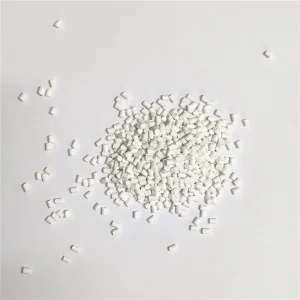
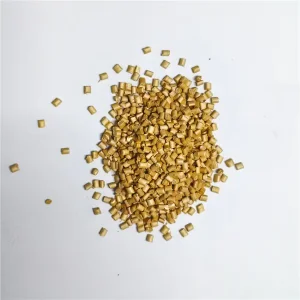
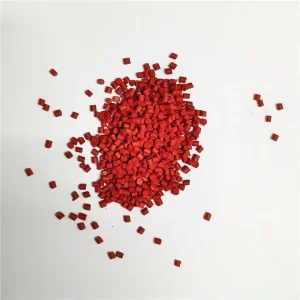
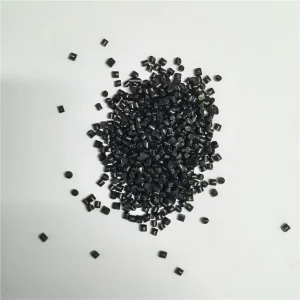
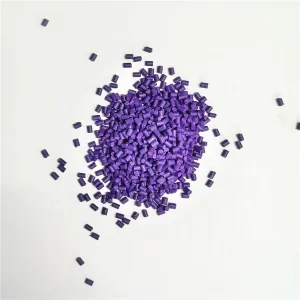
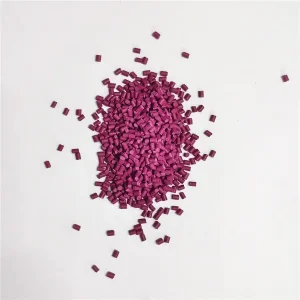
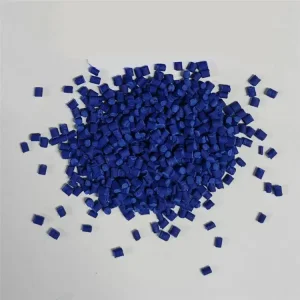
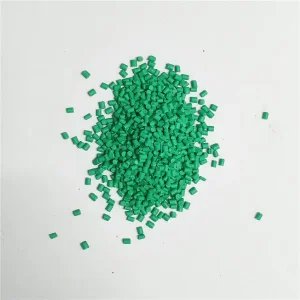
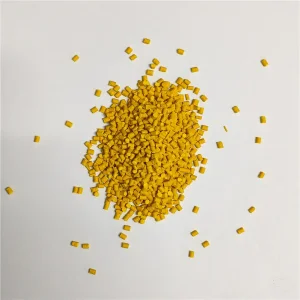
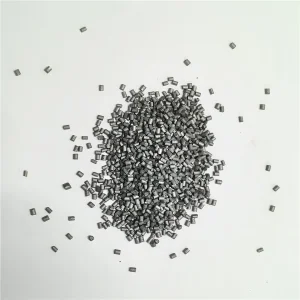
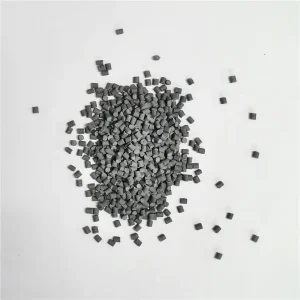
Engineered with high pigment loadings (up to 70%), minimal Filter Pressure Values (FPV < 0.5 bar/g), and non-migrating carrier matrices optimized for high-throughput converter lines.
An authoritative analysis of carrier-resin synergy, regulatory compliance paradigms, and global supply chain integration for custom color concentrates.
The global market for Polyethylene (PE) Color Masterbatches represents a pivotal cornerstone within modern polymer processing technologies. As plastic converters transition toward higher throughput, thinner gauge down-gauging in blown films, and intricate multi-cavity injection molding, the standard for color concentrates has shifted from basic physical blending to high-precision micro-rheological engineering. Modern industrial buyers, compounding engineers, and global procurement directors require masterbatch formulations that deliver absolute color consistency ($\Delta E < 0.5$ under CIELAB color space), robust lightfastness (Blue Wool Scale 7–8), and minimal melt flow index (MFI) disturbance to the primary polymer matrix.
Custom Polyethylene color masterbatch companies must navigate an increasingly complex matrix of global regulatory frameworks, including EU REACH Annex XVII, FDA 21 CFR 177.1520 for food contact materials, Heavy Metals Packaging Directive 94/62/EC, and China’s GB 4806 series. The integration of high-purity inorganic pigments—such as micronized Rutile Titanium Dioxide ($TiO_2$) and high-structure Carbon Black (furnace process)—alongside specialty organic pigments (Phthalocyanines, Quinacridones, and Perylenes) demands deep expertise in interfacial physics and wax-assisted surface wetting.
Matching masterbatch carrier resins (LDPE, LLDPE, HDPE, or EVA) to the target polymer matrix is critical. Optimized melt flow behavior prevents interfacial tension, delamination, and mechanical degradation in extruded films or injection-molded structural components.
Our masterbatches feature heat-stabilizer packages (hindered phenols and phosphites) allowing continuous thermal resistance up to 260°C–300°C without color shift, molecular degradation, or plate-out on extruder screws and mold cavities.
Formulated to color Post-Consumer Recyclate (PCR) and Post-Industrial Recyclate (PIR) streams. High tinting strength neutralizes inherent yellowing or graying in recycled polyolefins, maintaining structural integrity.
Deep engineering insights into twin-screw co-rotating compounding, shear-stress breaking, and dispersion measurement standards.
The performance of custom PE color masterbatches depends heavily on the breakdown of primary pigment agglomerates into primary particles or sub-micron aggregates. In un-dispersed systems, pigment clusters act as stress concentrators, leading to film breakage, pinholes, reduced tensile strength, and color streaking. Professional masterbatch compounding relies on continuous twin-screw extruders featuring high length-to-diameter ($L/D$) ratios ranging from 40:1 to 48:1, equipped with specialized kneading blocks and reverse-conveying elements.
According to DIN EN ISO 23900-5, the Filter Pressure Value (FPV) serves as the industry gold standard for evaluating pigment dispersion quality. By passing a melted mixture of polyolefin and masterbatch through a standard mesh filter screen (e.g., 14 $\mu m$ or 25 $\mu m$), the pressure differential ($\Delta P$) is recorded. A low FPV ($< 0.5 \text{ bar/g}$) confirms superior dispersion, making the masterbatch suitable for ultra-thin blown films (down to 8 microns), fine-denier monofilaments, and high-speed multi-cavity injection molding machines.
Inorganic pigments such as Titanium Dioxide ($TiO_2$ Rutile) require specialized inorganic surface treatments (Alumina/Silica) and organic coating (polyols or silanes) to prevent moisture absorption and ensure instant dispersion in low-density polyethylene matrices.
High-performance organic pigments feature small primary particle sizes (<0.1 $\mu m$) with high surface areas. Utilizing low-molecular-weight polyethylene waxes (PE wax) lowers interfacial tension, coating the pigment particles before shear energy is applied in the melt zone.
By selecting non-bleeding organic chromophores and incorporating UV stabilizers (HALS and Benzotriazoles), our custom formulations resist environmental weathering, outdoor exposure, and chemical migration into contact media.
Pioneering smart colorants, NIR-sortable black concentrates, and bio-based carrier chemistry for next-generation polymer manufacturing.
As the plastics industry shifts toward a circular economy, masterbatch compounding is undergoing a major technological transformation. Key innovations driving masterbatch R&D include:
Standard Carbon Black absorbs NIR spectra, preventing automated optical sorting systems in recycling plants from identifying black plastic packaging. Next-gen NIR-sortable black masterbatches use special organic pigments or tailored carbon structures that reflect NIR wavelengths, allowing easy automated sorting of HDPE and PP containers.
To meet sustainability demands, manufacturers are developing masterbatches using bio-based polyethylene (derived from sugarcane ethanol) as well as compostable polyesters (PLA, PBAT, PBS). These carriers ensure full end-of-life compostability or carbon-neutral footprints for eco-conscious packaging.
Combining color with functional additives in a single pellet—such as Anti-Static, Anti-Block, Slip, Anti-Oxidant, and UV Protection—reduces dosing errors at the converter's hopper, optimizes inventory management, and improves melt homogenity during processing.
Tailored technical solutions engineered for specific polymer conversion methods and demanding end-use environments.
Key Challenges: Bubble instability, gel formation, pinholes, die buildup, color variation.
Jiazhou Solution: Ultra-fine filtered PE masterbatch with narrow MFI distribution, zero volatile organic compound (VOC) additives, and controlled bulk density for uniform feeding in agricultural films, courier packaging, and food bags.
Key Challenges: Dimensional warping, anisotropic shrinkage, sink marks, color streaks.
Jiazhou Solution: Non-nucleating organic color formulations designed to maintain isotropic shrinkage in large crates, automotive components, housewares, and industrial containers.
Key Challenges: Long-term hydrostatic strength (LTHS) retention, environmental stress cracking resistance (ESCR), UV degradation.
Jiazhou Solution: High-density polyethylene (HDPE) based masterbatches containing 20–25% P-type Carbon Black, offering optimal UV protection for municipal water, gas, and agricultural drip irrigation piping.
Explore our full line of specialized masterbatches, manufactured under strict ISO quality controls for global plastic processors.
Expert technical advice on masterbatch selection, dosing protocols, and processing issue resolution.
For standard PE blown film applications, the recommended Let-Down Ratio (LDR) typically ranges from 1% to 4%, depending on pigment concentration and required opacity. High-concentration white masterbatches containing 60–70% Rutile $TiO_2$ yield high opacity at a 2% addition rate, while specialized color masterbatches may require 3% to 5% for deep, solid colors.
Plate-out occurs when low-molecular-weight additives, waxes, or un-dispersed pigments migrate to the surface of screws, barrels, or mold cavities under elevated temperatures. We eliminate plate-out by formulating masterbatches with high-thermal-stability carrier resins, fully reacted organosilicone dispersants, and heat-resistant pigments rated up to 280°C–300°C.
If the masterbatch carrier's MFI is significantly lower than the virgin resin, it will not melt and homogenize properly, leading to color specks and streaks. Conversely, if the MFI is too high, it can lower the mechanical strength of the final part. Our PE masterbatches use carrier resins with MFIs calibrated to match standard LDPE, LLDPE, and HDPE processing windows (1 to 20 g/10 min at 190°C/2.16 kg).
Rutile $TiO_2$ features a higher refractive index (2.73) compared to Anatase (2.55), delivering superior hiding power, outdoor weatherability, and UV degradation resistance. Anatase is less abrasive and softer, making it suitable for specific fiber applications, but Rutile remains the gold standard for high-performance PE films, sheets, and molded parts.
Yes. All custom food-grade PE masterbatches are manufactured using FDA 21 CFR 177.1520 and EU Regulation No 10/2011 compliant pigments, carrier resins, and processing aids. Formulations undergo rigorous migration testing to verify zero chemical leaching into aqueous, acidic, or fatty food simulants.