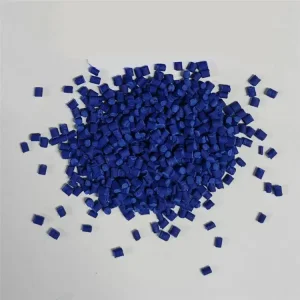
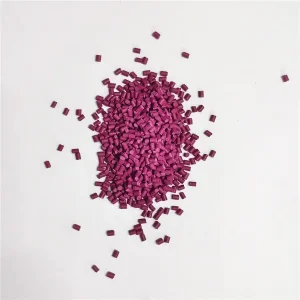
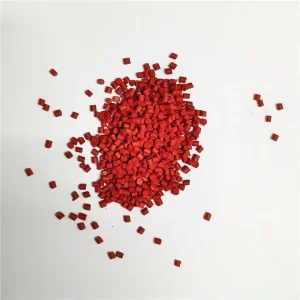
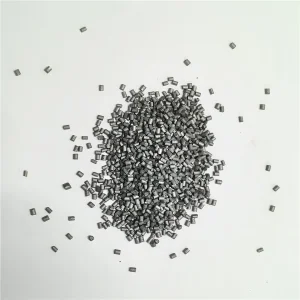
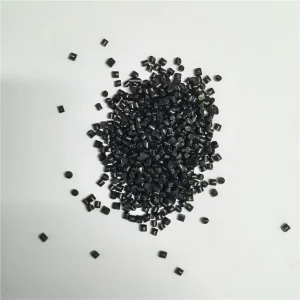
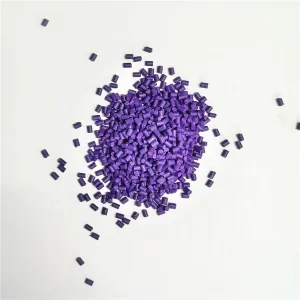
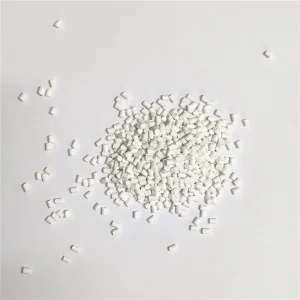
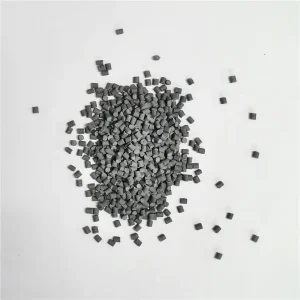
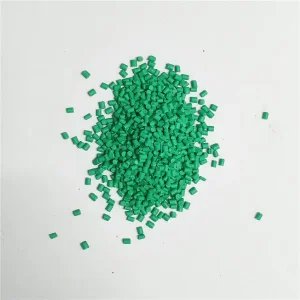
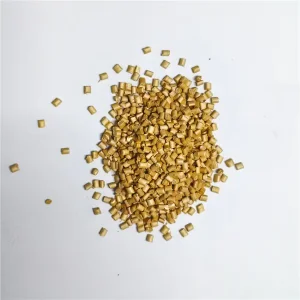
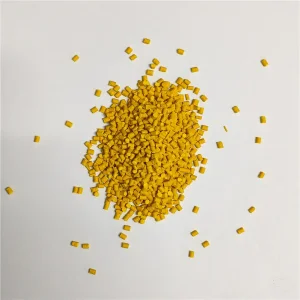
Explore our premium-grade PE masterbatches formulated for blowing film, injection molding, profile extrusion, and high-speed melt spinning.
In-depth polymer compounding engineering designed to mitigate melt fracture, eliminate pinholes, and optimize chromatic strength.
A fundamental failure in masterbatch engineering stems from resin carrier mismatch. Custom polyethylene pigment concentrates utilize specified low-density polyethylene (LDPE), linear low-density polyethylene (LLDPE), or high-density polyethylene (HDPE) carrier matrices carefully paired to match the target polymer's Melt Flow Index (MFI). Proper matching eliminates phase separation, delamination, and surface haze during high-shear injection or extrusion.
Raw organic and inorganic pigments naturally aggregate into clusters exceeding 50 microns. Our continuous co-rotating twin-screw extrusion technology exerts high-intensity shear stress, breakdown of primary pigment particles to sub-micron dimensions (<5μm). This guarantees optical clarity in ultra-thin agricultural films and prevents micro-clogging in multi-filament spinning nozzles.
Polyethylene processing temperatures often range between 180°C and 280°C. Standard color concentrates undergo thermal degradation leading to color shifts and polymer chain scission. We incorporate synergistic Hindered Amine Light Stabilizers (HALS) and primary/secondary phenolic antioxidants to shield both the pigment molecule and the polyolefin matrix from degradation.
When engineering a Custom Polyethylene Pigment Concentrate, chemical interaction between carrier resins, wetting agents, dispersion additives, and colorants must be balanced. In blown film production, poor dispersion leads to "specks" or "fish-eyes" that degrade tensile strength and dart-drop impact resistance. In injection molding, pigment migration causes blooming, surface haze, or plate-out on expensive mold cavities.
Our formulation protocol utilizes low-molecular-weight polyethylene waxes (PE Wax) combined with hydrophobic surface treatments. This lowers melt viscosity surrounding pigment particles during the compounding phase, enabling complete wetting of high-surface-area pigments such as Phthalocyanine Blue, Isoindoline Yellow, and high-jetness Carbon Black.
How shifting global regulations, circular economic mandates, and smart manufacturing are transforming colorant sourcing.
With global sustainability frameworks demanding 25% to 50% Post-Consumer Recycled (PCR) resin integration in rigid and flexible packaging, color matching has become exponentially complex. PCR polyethylene naturally exhibits yellowing, grey undertones, and batch variation. Modern pigment concentrates must feature high-tinting strength and optical brighteners to neutralize base resin yellowing without overloading melt index.
Flexible packaging manufacturers are down-gauging film thickness from 50 microns down to 12 microns to minimize plastic waste. Thin films demand extraordinary pigment dispersion. A single 10-micron agglomerate will rupture a 12-micron film, causing costly line stops. Concentrates must undergo rigorous pressure filter test (FPV) evaluations before release.
Global procurement teams must comply with stringent regulatory frameworks including US FDA 21 CFR, EU No 10/2011, China GB 4806, RoHS 3.0, and REACH SVHC restrictions. B2B buyers now mandate complete heavy-metal-free, primary aromatic amine (PAA)-compliant color formulations for direct food contact and pharmaceutical applications.
A strategic roadmap for global procurement directors, quality assurance managers, and plastics processing engineers.
Selecting a long-term partner for custom polyethylene pigment concentrates requires going beyond unit price per kilogram. Sophisticated buyers analyze manufacturing capability, colorimetric precision, batch stability, and supply chain transparency.
Enterprise buyers demand strictly controlled CIELAB color space values (ΔE*ab ≤ 0.3 to 0.5) verified via spectrophotometers under multiple illuminants (D65, F11, A) to prevent metamerism.
FPV (measured in bar/g) quantifies dispersion quality. Low FPV values (< 1.5 bar/g) guarantee smooth extrusions, lower breaker plate clogging, and longer screen-pack operational lifespans.
Verification of zero lead, cadmium, hexavalent chromium, or mercury content. Complete halogen-free options for high-voltage cable insulation and electronic enclosures.
Retention of color integrity across extended residence times in high-temperature extrusion barrels (up to 300°C) without gaseous volatile generation or streak formation.
Leveraging state-of-the-art automated compounding lines, gravimetric dosing, and strategic port logistics from Changzhou.
At Changzhou Jiazhou Plastic Products Co., Ltd., human error is eliminated through fully automated gravimetric multi-component dosing systems. Raw organic pigments, PE carrier resins, and processing aids are weighed continuously with milligram accuracy before entering high-intensity mixers.
Changzhou Jiazhou operates a modern 6,000 m² chemical compounding center engineered for high-throughput polyolefin masterbatch manufacturing.
Specific masterbatch formulations custom-tailored to unique plastics conversion processes.
Used in heavy-duty shipping sacks, agricultural UV-stabilized mulch films, barrier packaging, and courier bags. Our polyethylene pigment concentrates provide high opacity, anti-blocking properties, zero pinhole defects, and flawless sealability without interfering with corona surface treatment.
Ideal for crates, pallets, household containers, and automotive interior/exterior trims. Formulated with high flowability and low warp technology, ensuring uniform color distribution without inducing differential shrinkage or warping in thick-walled molded parts.
Engineered for HDPE personal care bottles, chemical drums, and jerrycans. Delivers superior environmental stress crack resistance (ESCR), non-migratory pigment stability, and high chemical resistance against aggressive surfactants and solvents.
Expert insights addressing common engineering, formulation, and procurement queries.
Direct manufacturer supply with custom color matching, low minimum order quantities, and full technical support.