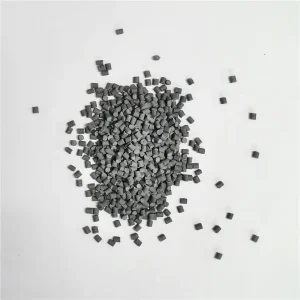
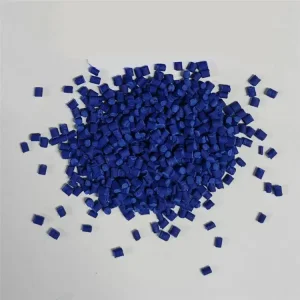
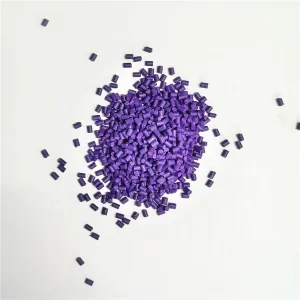
Custom PP Masterbatch Companies & Suppliers

Engineering Technical Precision, High Color Concentration & Global Compliance for Polymer Manufacturing

MFI Custom Matching RoHS & REACH Compliant Heat Stability up to 260°C ISO 9001:2015 Certified

Featured Masterbatch Formulations

Explore our high-dispersion, heat-resistant Polyolefin color formulations designed for injection molding, blown film, and profile extrusion.
China High Concentration PE Red Masterbatch Bright Color 260°C Heat Resistant
View Product Details
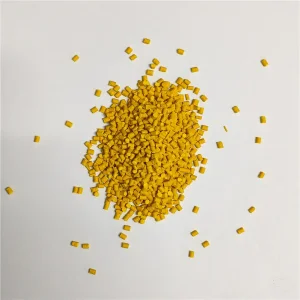
Cheap High Concentration PE Yellow Masterbatch Non-toxic Anti-migration
View Product Details
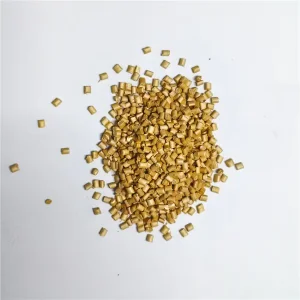
Custom High Concentration PE Gold Masterbatch Anti-fading Heat Resistant
View Product Details
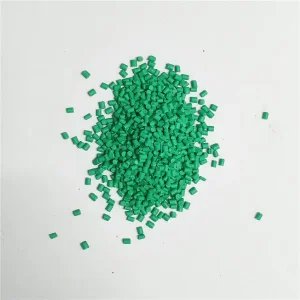
China High Concentration PE Green Masterbatch Anti-fading Heat Resistant
View Product Details
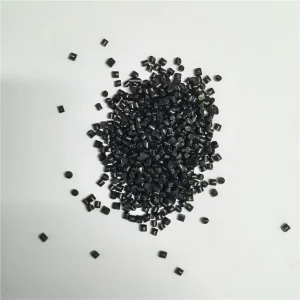
High-Quality High Concentration PE Black Masterbatch Eco-friendly 260°C Heat Resistant
View Product Details
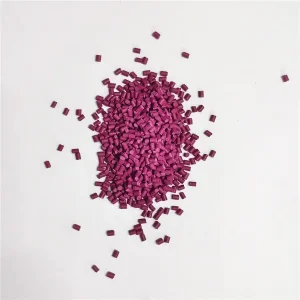
Cheap High Concentration PE Rose Red Masterbatch Anti-fading Heat Resistant
View Product Details
Custom High Concentration PE Grey Masterbatch Non-migration Heat Resistant
View Product Details
High-Quality High Concentration Blue Masterbatch PE Carrier
View Product Details

Technical White Paper: Polymer Science & Customization

A comprehensive analysis of carrier resin compatibility, rheological alignment, pigment dispersion physics, and industrial processing efficiency in modern Polypropylene compounding.

In modern industrial polymer compounding, the selection and engineering of a Custom Polypropylene (PP) Masterbatch is a critical determinant of final product integrity, aesthetic consistency, and mechanical performance. Polypropylene, characterized by its semi-crystalline structure, high chemical resistance, and variable Melt Flow Index (MFI), presents distinct processing dynamics compared to polyethylene (PE) or engineering polymers. Working with qualified custom PP masterbatch suppliers requires a deep understanding of polymer physics, rheological matching, pigment-carrier interactions, and thermal degradation thresholds.

Key Engineering Insight: Achieving Delta E (ΔE) color variance below 0.3 across high-speed extrusion lines demands precise carrier resin MFI alignment. A mismatch between carrier resin viscosity and base resin melt flow leads to phase separation, flow lines, altered impact strength, and premature filter screen clogging.

1. Carrier Resin Rheology & Rheology Matching Parameters

The primary prerequisite for a high-performance custom PP masterbatch is ensuring that the carrier resin matrix perfectly matches or seamlessly blends with the target host polymer. Polypropylene is categorized into three major structural classes: Homopolymer PP (PPH), Random Copolymer PP (PPR), and Block/Impact Copolymer PP (PPB). Each variant exhibits vastly different melting points, crystallinities, and mechanical responses under shear stress.

Homopolymer PP (PPH)

Formulated with high tensile strength and thermal resistance. Ideal for industrial strapping, woven sacks, monofilament yarn, and rigid container extrusion requiring high stiffness and thermal stability.

Random Copolymer (PPR)

Engineered for maximum optical clarity and lower processing temperatures. Essential for medical diagnostics, transparent food containers, and hot-water pressure pipe fittings.

Impact Copolymer (PPB)

Incorporates rubbery ethylene-propylene phase for extreme low-temperature impact resistance. Widely used in automotive bumpers, battery casings, and industrial crates.

2. Pigment Concentration Physics & Twin-Screw Compounding Technology

Achieving pigment loading ratios up to 50–70% while maintaining sub-micron particle dispersion requires advanced co-rotating twin-screw extruder technology with customized Length-to-Diameter (L/D) ratios ranging from 40:1 to 48:1. During compounding, the primary pigment agglomerates must undergo three sequential physical transformations: wetting, dispersion (breakdown via intense shear), and stabilization (preventing re-agglomeration).

Technical Parameter Standard Commercial Grade Custom Precision Grade Testing Methodology
Pigment Loading Efficiency 20% - 35% 40% - 70% (High Density) TGA Thermal Gravimetric Analysis
Color Difference (ΔE) < 1.0 - 1.5 ≤ 0.3 - 0.5 (Tight Tolerance) CIELAB Spectrophotometer (D65/10°)
Filter Pressure Value (FPV) > 2.5 bar/g ≤ 0.8 - 1.2 bar/g (Ultra-Fine) EN 13900-5 Standard Test
Heat Resistance Threshold 200°C - 220°C 260°C - 300°C (Extended Dwell) DIN 53772 Thermal Stability Test
Light Fastness (Blue Wool Scale) Grade 4 - 5 Grade 7 - 8 (Outdoor/UV Grade) ISO 105-B02 Xenon Arc Exposure

China's Masterbatch Manufacturing & Global Supply Chain Synergy

How leading Chinese custom masterbatch suppliers combine raw material upstream integration, agile R&D turnaround, and cost optimization to empower enterprise buyers worldwide.

16+
Years Industry Expertise
100+
Global Export Markets
≤0.3
Strict Color Delta E
260°C
Thermal Resistance Cap

Upstream Raw Material Integration

China hosts the world's largest petrochemical compounding hubs, providing direct access to premium virgin Polypropylene resins (Sinopec, PetroChina), titanium dioxide (TiO2) processing, and organic/inorganic pigment synthesis. This eliminates multi-tier middleman margins.

Rapid Color Matching & Prototyping

Utilizing advanced X-Rite spectrophotometers and automated dosing systems, specialized Chinese manufacturers achieve custom Pantone/RAL color matching within 48 to 72 hours, delivering physical test samples globally within 5 working days.

Total Cost of Ownership (TCO) Optimization

By maximizing pigment concentration levels (reducing required let-down ratios from 4% down to 1%–2%), enterprise buyers drastically diminish shipping costs per unit of final polymer product, optimizing total operational expenditures.

Localized Application Scenarios & Engineering Case Studies

How tailored PP masterbatch formulations solve specialized physical, environmental, and regulatory challenges across key industrial manufacturing sectors.

Automotive Interiors & Exterior Trim

Automotive grade PP masterbatches demand zero fogging, low volatile organic compound (VOC) emissions, and extreme light fastness (Blue Wool Scale Grade 8). Additives include UV stabilizers (HALS), long-term thermal stabilizers (AO), and anti-scratch agents tailored for PP copolymer dashboard modules, door panels, and bumper trim components.

Food Packaging & Thin-Wall Containers

Compliance with FDA 21 CFR 177.1520 and EU Regulation No 10/2011 is paramount. Custom PP masterbatches for food containers utilize high-clarity Random Copolymer carriers, non-migratory organic pigments, and nucleating additives to boost crystallization rates, enabling faster cycle times in high-speed injection molding machines.

Medical Diagnostics & Non-Woven Fabrics

Meltblown and spunbond PP non-woven fabrics for medical gowns, filtration masks, and hygiene applications require ultra-low Filter Pressure Value (FPV ≤ 0.5 bar/g). Custom masterbatches are micronized to guarantee uniform fiber spinning down to sub-micron filaments without thread breakage or die buildup.

Home Appliances & Electronics Enclosures

Requires combined flame-retardant (UL94 V-0 rated), anti-static, and aesthetic masterbatch formulations. Custom color formulations eliminate weld line visibility in complex molded housings while protecting sensitive internal electronics from electrostatic discharge (ESD).

Global Regulatory Frameworks & Sustainability Trends

Navigating environmental directives, circular economy integration, and next-generation masterbatch technologies.

1. International Regulatory Compliance Standards

Procuring custom PP masterbatch from tier-1 suppliers necessitates absolute adherence to international safety guidelines. Leading Chinese exporters maintain full certification profiles to ensure frictionless cross-border distribution:

  • RoHS Directive 2011/65/EU & (EU) 2015/863: Verification of heavy metal absence (Lead, Mercury, Cadmium, Hexavalent Chromium, PBBs, PBDEs, and Phthalates).
  • REACH Regulation (EC) No 1907/2006: Continuous screening for Substances of Very High Concern (SVHC) ensuring zero restricted chemical migration.
  • FDA 21 CFR 177.1520: Strict compliance for Olefin polymers intended for direct contact with food phase matrices.
  • ISO 9001:2015 & ISO 14001:2015: Audited quality control and environmental management systems governing batch-to-batch consistency.

2. Next-Generation Innovations: Sustainable & Circular Masterbatches

The global masterbatch market is undergoing a structural transition toward circular plastic economies. Industry-leading suppliers are implementing cutting-edge formulation strategies to align with international decarbonization goals:

NIR-Sortable Black Masterbatch

Traditional carbon black absorbs Near-Infrared (NIR) radiation, rendering automated optical sorting at recycling plants impossible. Custom NIR-sortable black masterbatches utilize specialty organic pigments that reflect NIR wavelengths, enabling automated automated sorting of PP packaging waste.

PCR & PIR Carrier Integration

Integrating Post-Consumer Recycled (PCR) and Post-Industrial Recycled (PIR) PP resins as carrier mediums. Advanced stabilization packages prevent thermo-oxidative degradation during repeated melt processing cycles.

Nano-Enhanced Functional Additives

Incorporating sub-micron nanocellulose, graphene, or glass microspheres into custom PP masterbatches to drastically enhance structural flexural modulus, thermal deflection temperature (HDT), and barrier performance.

Complete Polyolefin & PE/PP Masterbatch Product Catalog

Browse our additional specialized high-concentration masterbatch products engineered for universal polyolefin applications.
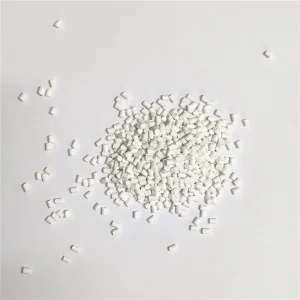
High-Quality High Concentration PE White Masterbatch Non-toxic Weather Resistant
View Product Details
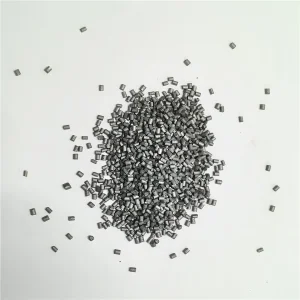
Custom High Concentration PE Silver Masterbatch Anti-fading High Weather Resistance
View Product Details
China High Concentration PE Purple Masterbatch Anti-fading Stable Color
View Product Details
High-Quality High Concentration PE Black Masterbatch Eco-friendly
High-Quality High Concentration PE Black Masterbatch Eco-friendly 260°C Heat Resistant
View Product Details
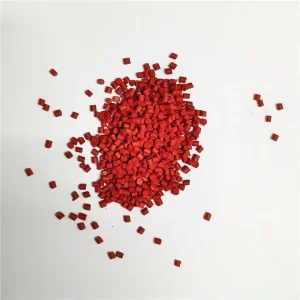
China High Concentration PE Red Masterbatch Bright Color
China High Concentration PE Red Masterbatch Bright Color 260°C Heat Resistant
View Product Details
Custom High Concentration PE Gold Masterbatch Anti-fading
Custom High Concentration PE Gold Masterbatch Anti-fading Heat Resistant
View Product Details
China High Concentration PE Green Masterbatch Anti-fading
China High Concentration PE Green Masterbatch Anti-fading Heat Resistant
View Product Details
High-Quality High Concentration Blue Masterbatch PE Carrier
View Product Details

Frequently Asked Questions (FAQ) & Strategic Sourcing Guide

Expert insights addressing technical compounding inquiries, order logistics, quality assurance, and custom formulation workflows.

Q1: What is the recommended Let-Down Ratio (LDR) for custom PP masterbatch?
The typical Let-Down Ratio (LDR) ranges from 1% to 4%, depending heavily on pigment concentration, opacity requirements, and final wall thickness. For high-concentration custom formulations (e.g., 50–70% pigment loading), an LDR of 1%–2% is frequently sufficient, yielding substantial material cost savings without sacrificing optical density or mechanical properties.
Q2: Can PE-carrier masterbatches be used in Polypropylene (PP) resin processing?
While Polyethylene (PE) carrier masterbatches can physically blend with PP at low addition rates (1%–2%) due to polyolefin similarity, it is not recommended for high-stiffness or elevated-temperature applications. PE has a lower melting point than PP, which may lower the Heat Deflection Temperature (HDT) and tensile modulus of the PP host resin. For critical components, utilizing a matching PP homopolymer or copolymer carrier is optimal.
Q3: How do custom PP masterbatch manufacturers ensure zero color shift during high-temp processing?
Thermal stability up to 260°C–300°C is achieved by selecting high-grade inorganic pigments (e.g., Cadmium, Titanium Dioxide, Ultramarine) or high-performance organic pigments (e.g., Phthalocyanines, Quinacridones) combined with primary (hindered phenols) and secondary (phosphites) antioxidants. This prevents thermal degradation and color fading during long dwell times in hot runner injection systems.
Q4: What technical documentation is provided with international custom masterbatch shipments?
Standard international shipments include a Certificate of Analysis (CoA) specifying MFI, moisture content, and Delta E tolerances, a Safety Data Sheet (SDS / MSDS) compliant with GHS standards, Technical Data Sheets (TDS), and formal compliance declarations for RoHS, REACH SVHC, FDA, and Heavy Metal restrictions (COSMICS/CONEG).
Q5: How does carrier resin MFI affect high-speed thin-wall injection molding?
In thin-wall injection molding, the carrier resin MFI must be equal to or slightly higher than the base resin MFI (typically 25 to 60 g/10min at 230°C/2.16kg). If the carrier MFI is too low, high melt viscosity causes flow hesitation, structural stress concentration, sink marks, and uneven color distribution across the molded part.
Q6: What is the typical lead time for custom color matching and mass production export?
Custom lab matching takes 2 to 4 working days upon receiving target color standards (Pantone, RAL, or physical plastic swatches). Once samples are approved by the client, full-scale batch manufacturing (1 to 20 Metric Tons) is completed within 7 to 12 calendar days, followed by immediate port shipping dispatch.