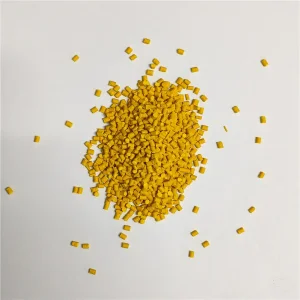
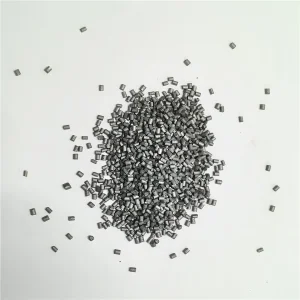
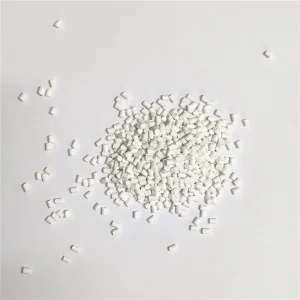
Explore our immediate-ship ready stock PE carrier color masterbatches formulated with up to 70% pigment loading, superior 260°C+ thermal resistance, and gel-free dispersion chemistry.
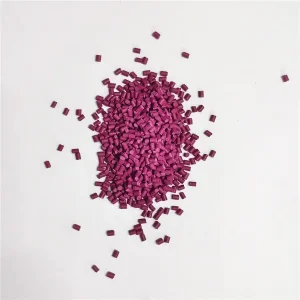
An in-depth analysis of carrier resin rheology, pigment wetting mechanics, thermal stabilization, and the technological paradigm shift driving zero-defect polyolefin processing.
In thermoplastic processing, the selection of the carrier matrix is the foundational variable governing pigment dispersion quality. A primary cause of extrusion defects—such as melt fracture, shark-skinning, gel specks, and color streaking—is the rheological mismatch between the masterbatch carrier resin and the main virgin polymer matrix.
Our engineering methodology utilizes premium Low-Density Polyethylene (LDPE), Linear Low-Density Polyethylene (LLDPE), and High-Density Polyethylene (HDPE) carrier bases with precisely engineered Melt Flow Indices (MFI ranging from $8\text{ g}/10\text{min}$ up to $45\text{ g}/10\text{min}$ at $190^\circ\text{C}/2.16\text{kg}$). By selecting a carrier resin with an MFI slightly higher than that of the processing polymer, we ensure rapid melting, zero interfacial tension, and complete phase homogenization under low shear stress.
Pigment agglomerates (primary particles bonded into clusters of $10\text{ }\mu\text{m} - 50\text{ }\mu\text{m}$) cause catastrophic failure in ultra-thin film blowing and fiber spinning. Achieving sub-micron particle breakdown requires intense specific mechanical energy (SME) during compounding.
We operate high-torque co-rotating twin-screw extruders featuring an extended Length-to-Diameter ratio (L/D ratio of 48:1 to 52:1) equipped with specialized kneading blocks, reverse-conveying elements, and triple-venting vacuum degassing systems. This guarantees steric stabilization of organic pigments (Phthalocyanines, Quinacridones, Isoindolines) and inorganic oxides ($TiO_2$, Iron Oxides, Carbon Black), breaking agglomerates down below $1.5\text{ }\mu\text{m}$ to yield flawless optical brilliance and maximum tinting strength.
Elevated processing temperatures ($240^\circ\text{C} - 300^\circ\text{C}$) in injection molding and high-speed film extrusion often lead to thermal degradation of organic colorants, causing discoloration, gas generation, and loss of mechanical integrity.
Our custom masterbatch formulations integrate synergistic secondary antioxidants (Phosphites) and primary Hindered Phenolic stabilizer packages. Furthermore, for non-migratory requirements in food packaging and pharmaceutical containers, we incorporate high-molecular-weight dispersing waxes (PE Wax and Zinc Stearate complexes) that prevent pigment blooming, exudation, or plate-out on cold mold surfaces, ensuring long-term color fastness and zero migration.
As global environmental mandates enforce strict circular economy frameworks and zero-single-use plastic regulations, masterbatch manufacturing must evolve beyond traditional coloration. Our ongoing R&D initiative centers on four critical pillars:
Tailored PE carrier masterbatch engineering solving critical production bottlenecks in blown film, injection molding, profile pipe extrusion, and multi-layer packaging.
Ultra-thin blown film application ($8\text{ }\mu\text{m} - 50\text{ }\mu\text{m}$) demands absolute purity and complete pigment dispersion. Even tiny agglomerates lead to film bubble rupture, pinholes, and reduced puncture resistance.
In injection molding of complex automotive components, household appliances, and bottle closures, dimensional stability, non-warping behavior, and short cycle times are paramount.
Polyethylene pipes for water distribution, gas transportation, and cable ducting require extended operational lifespans exceeding 50 years under harsh outdoor weathering conditions.
Combining automated gravimetric dosing, digital twin batch monitoring, and a 5,000 Metric Ton ready-stock buffer to insulate global supply chains from price volatility and lead-time delays.
Our Changzhou production hub operates fully automated Industry 4.0 compounding infrastructure. Raw materials, pigments, and functional additives are fed via multi-component gravimetric loss-in-weight feeders linked to centralized PLC/SCADA enterprise control systems.
This continuous automated metering eliminates human error, guaranteeing batch-to-batch color repeatability with a color variance metric of $\Delta E < 0.5$ under Datacolor spectrophotometer verification under standard light sources (D65, TL84, A).
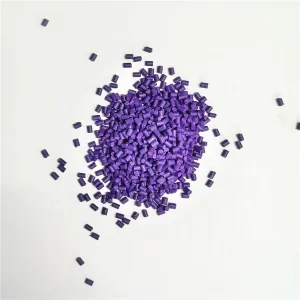
In today's fast-moving market, unexpected demand spikes or raw polymer resin price spikes can stall manufacturing operations. We maintain a constant warehouse inventory of 5,000 Metric Tons across our standard PE carrier product matrix (White, Black, Blue, Red, Yellow, Green, Grey, Gold, Silver, Rose Red, Purple).
By sourcing directly from our China production plant, overseas enterprise buyers reduce overall Total Cost of Ownership (TCO) by up to 25% compared to regional compounders while enjoying immediate container shipment within 48 hours.
Meeting strict international food contact, environmental, and chemical safety standards for seamless export across North America, Europe, Asia-Pacific, and the Middle East.
| Compliance Standard | Regulatory Scope | Technical Benchmark / Certification Details | Primary Industrial Verticals |
|---|---|---|---|
| FDA 21 CFR 177.1520 | Food Contact Polyolefin Resins | Certified heavy metal-free (< 100ppm combined Pb, Cd, Hg, Cr VI) and low extraction limits. | Food Packaging, Beverage Caps, Dairy Containers |
| EU REACH (EC 1907/2006) | Chemical Safety & SVHC Screening | Free of Substances of Very High Concern (SVHC candidate list fully tested by SGS/TÜV). | European Retail Packaging, Consumer Goods |
| RoHS 3.0 (Directive 2015/863) | Restriction of Hazardous Substances | Zero PBDEs, PBBs, phthalates (DEHP, BBP, DBP, DIBP < 0.1%). | Electronics Housings, Wire & Cable Insulation |
| EN 71-3 Safety of Toys | Heavy Metal Migration Limits | Exceeds strict migration limits for 19 soluble elements in children's products. | Toys, Infant Products, Direct-Skin Contact Goods |
| ISO 9001:2015 / ISO 14001 | Quality & Environmental Systems | Full lot traceability with archived retained samples for 36 months per batch. | Automotive Tier-1 Parts, Industrial Extrusion |
Every batch of masterbatch undergoes mandatory analytical testing before warehouse release. Our QA lab is outfitted with advanced testing equipment including Konica Minolta CM-3600d Spectrophotometers, Melt Flow Indexers (ISO 1133), Pressure Filter Testers (EN 13900-5), Carbon Black Content Analyzers, and Thermogravimetric Analyzers (TGA).
In addition to our ready-stock line, our color engineers offer rapid OEM matching against Pantone, RAL, or physical resin target samples. Custom formulations are engineered within 3 to 5 business days, accompanied by full technical data sheets (TDS) and safety data sheets (SDS).
Compare polymer carrier grades, pigment loading percentages, thermal thresholds, and let-down ratios to optimize your production setup.
| Masterbatch Grade / Color | Carrier Base | Pigment Content (%) | Heat Stability (°C) | Light Fastness (1-8) | MFI (g/10 min) | Recommended LDR (%) |
|---|---|---|---|---|---|---|
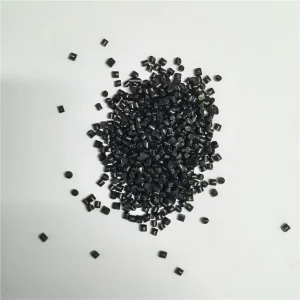
| PE Black Masterbatch | LDPE / LLDPE | 30% - 50% Carbon Black | 260°C - 300°C | 8 (Excellent) | 12 - 25 | 1.0% - 3.0% |
| PE White Masterbatch | LDPE / HDPE | 50% - 70% Rutile $TiO_2$ | 260°C - 280°C | 7 - 8 (High) | 15 - 30 | 1.0% - 4.0% |
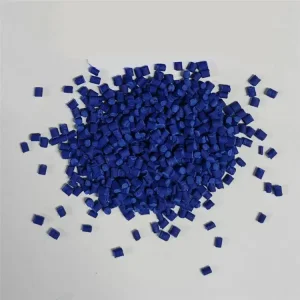
| PE Blue Masterbatch | PE Universal | 35% Phthalocyanine Blue | 260°C | 7 - 8 | 18 - 25 | 1.5% - 3.0% |
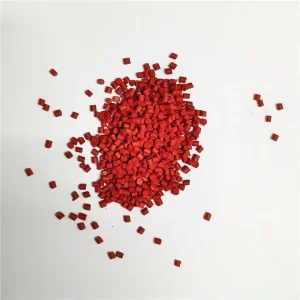
| PE Red / Rose Red Masterbatch | PE Carrier | 30% Organic Red | 260°C | 6 - 7 | 15 - 22 | 2.0% - 4.0% |
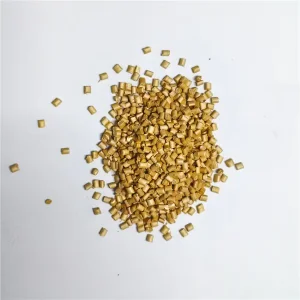
| PE Gold / Silver Masterbatch | LLDPE | 25% Metallic Pearlescent | 240°C - 260°C | 6 - 7 | 20 - 35 | 2.0% - 5.0% |
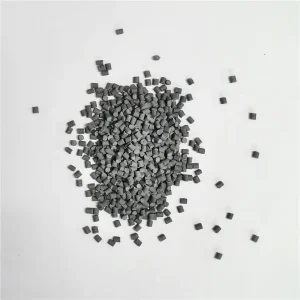
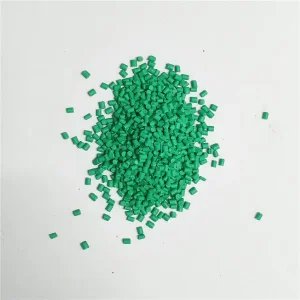
| PE Green / Yellow / Grey | LDPE Carrier | 30% - 40% Inorganic/Organic | 260°C | 7 - 8 | 15 - 28 | 1.5% - 3.0% |
Direct technical insights addressing common engineering challenges, melt compatibility, let-down ratios, and ordering logistics.
PE (Polyethylene) carriers offer identical chemical structures to matrix resins like LDPE, LLDPE, HDPE, and PP. Universal carriers (such as EVA or lower-grade SAN) can introduce non-compatible resin phases, reducing impact strength, clarity, and interfacial adhesion. A PE carrier ensures 100% molecular compatibility, zero surface delamination, and uncompromised tensile properties.
The Let-Down Ratio (LDR) depends on pigment concentration and required wall thickness/opacity. For high-concentration masterbatches (e.g., 50% $TiO_2$ or 40% Carbon Black): Blown film ($10\text{ }\mu\text{m} - 30\text{ }\mu\text{m}$) typically uses $2.0\% - 4.0\%$ LDR. Injection molding (wall thickness $> 1.5\text{mm}$) requires only $1.0\% - 2.0\%$ LDR. The formula is: $\text{Masterbatch Weight} = \text{Total Polymer Weight} \times \text{LDR}\%$.
Gel specks stem from un-melted carrier resin, degraded polymer cross-linking, or coarse pigment agglomerates. We eliminate this by utilizing low-molecular-weight PE carriers with high MFI, multi-stage 400-mesh screen pack filtration during compounding, and maintaining a strict Filter Pressure Value (FPV $< 0.8\text{ bar/g}$).
When processing temperature exceeds an organic pigment's thermal threshold, the pigment molecules decompose, causing color shifts (e.g., yellowing or dullness) and releasing volatile gases (resulting in silver streaks or voids). Our thermal-grade PE masterbatches incorporate secondary phosphite antioxidants to preserve chromatic purity up to $260^\circ\text{C} - 300^\circ\text{C}$.
Yes. LLDPE/LDPE carriers blend readily into Polypropylene matrices at low let-down ratios ($1\% - 3\%$). Because PE melt temperatures are lower than PP, the PE carrier melts early in the extruder barrel, acting as a lubricant phase that facilitates rapid, uniform pigment distribution across the PP matrix.
Stored in unopened original moisture-barrier bags in a cool, dry warehouse away from direct sun exposure ($< 35^\circ\text{C}$), PE masterbatches have an official shelf life of 24 months. For hygroscopic functional grades, pre-drying at $70^\circ\text{C} - 80^\circ\text{C}$ for 2 hours before processing is recommended.
Ready-stock buffers remove typical 2-to-3 week production lead times. Enterprise buyers can lock in volume pricing, reduce safety stock inventory carrying costs in domestic warehouses, and request immediate container dispatch within 48 hours.
Rutile $TiO_2$ possesses a higher refractive index ($2.73$) than Anatase ($2.55$), offering significantly superior opacity, tinting strength, and UV weather resistance. We exclusively utilize surface-treated Rutile $TiO_2$ for maximum hiding power and non-chalking performance in outdoor films.
Color migration occurs when low-molecular-weight pigments dissolve and diffuse through the polymer matrix. We use high-molecular-weight organic pigments paired with non-migratory PE waxes, certified under plasticized PVC/PE extraction tests according to DIN 53775.
Standard ready-stock grades (Black, White, Blue, Red, Yellow, Green, Grey) carry a flexible MOQ starting at $25\text{ kg}$ (1 bag) for testing, with pallet loads ($1,000\text{ kg}$) for commercial shipments. Custom Pantone/RAL matching carries an MOQ of $500\text{ kg} - 1,000\text{ kg}$ depending on formulation complexity.
Full product spectrum engineered for high weatherability, non-toxic food compliance, non-migration properties, and precise shade repeatability.