
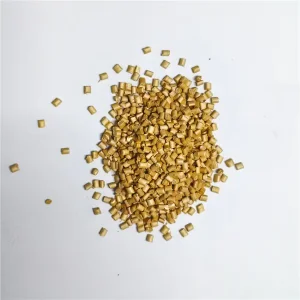
High-concentration, heat-stabilized, and anti-fading formulations engineered specifically for blown film, injection molding, and complex profile extrusion.
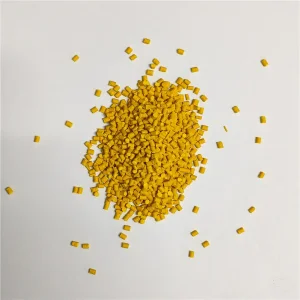
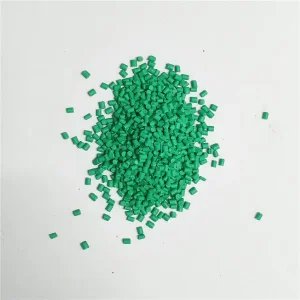
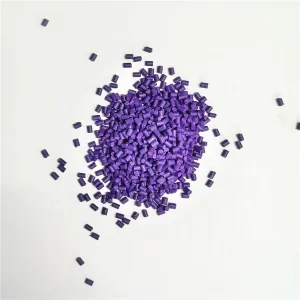
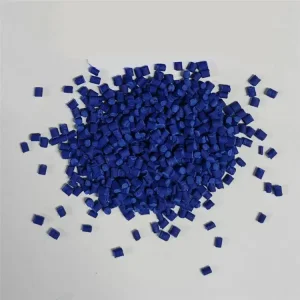
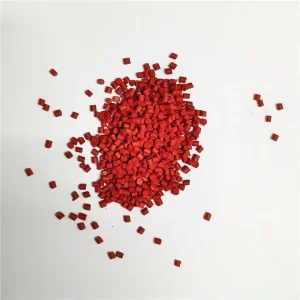
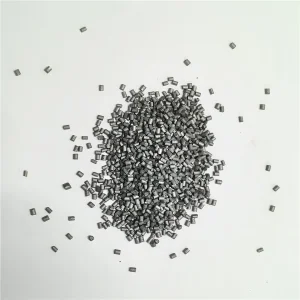
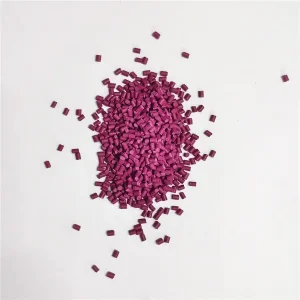
Navigating the paradigm shift toward Post-Consumer Recycled (PCR) and Post-Industrial Recycled (PIR) Polyethylene compounding.
The global transition toward a circular plastics economy has driven exponential demand for recycled polyethylene (rPE). However, processing Post-Consumer Recycled (PCR) HDPE, LLDPE, and LDPE poses severe rheological challenges. Reclaimed polymers suffer from thermal history degradation, wide Melt Flow Index (MFI) variance, residual contaminants, and inconsistent base colors. Modern masterbatch manufacturers must provide advanced, multi-functional additive formulations that restore virgin-equivalent mechanical and optical integrity.
During primary conversion and subsequent reprocessing, rPE undergoes chain scission and cross-linking. This manifests as decreased Environmental Stress Crack Resistance (ESCR), tensile drop, melt fracture (sharkskinting), and off-odors caused by volatile organic compounds (VOCs). Standard masterbatches designed for virgin resins fail to address these structural deficits, creating a critical market requirement for custom-engineered special masterbatches optimized specifically for re-granulated streams.
As global regulations mandate 30% to 50% PCR content in packaging films, agricultural pipes, and blow-molded containers, converter profitability relies on specialized masterbatch technology. Masterbatches formulated by Changzhou Jiazhou Plastic Products Co., Ltd. bridge the operational gap by delivering high pigment loading, reactive compatibilization, thermal oxidation resistance, and processing aids inside a single uniform pellet system.
E-E-A-T Technical Insight: Traditional color matching relies on fixed resin carriers. In contrast, custom recycled PE special masterbatches utilize engineered carrier resins with dynamic viscosity matching (MFI ranges between 0.5 to 20 g/10min), preventing phase separation and melt fracture during high-speed blown film and injection processes.
Under the hood of advanced masterbatch compounding: Solving MFI imbalance, degradation, and yellowing indices in recycled PE resins.
Recycled PE streams often contain trace polyolefin cross-contaminants, such as Polypropylene (PP) or Ethylene Vinyl Acetate (EVA). To eliminate structural weakness at interfacial boundaries, our custom masterbatch formulations integrate Maleic Anhydride Grafted Polyethylene (MAPE) and targeted block copolymers. These functionalized additives chemically anchor heterogeneous polymer domains, maintaining impact strength, dart drop resistance, and tensile elongation at break in PCR blown films.
Reprocessing PE subjects the polymer to secondary and tertiary shear-thermal stress. Without intervention, peroxide radicals break carbon chains or form gel-producing cross-links. Jiazhou's special masterbatches incorporate a synergistic dual-antioxidant system: Primary sterically hindered phenols terminate free radicals, while secondary phosphites decompose hydroperoxides. This prevents yellowing index (YI) escalation and preserves processability up to 260°C processing windows.
Post-consumer PE waste (e.g., milk bottles, detergent containers, agricultural film) retains absorbed volatile organic compounds that emit foul odors during melting. Our technical masterbatches leverage synthetic aluminosilicate molecular sieves with tailored pore dimensions. These micro-porous cavities capture low-molecular-weight aldehydes, ketones, and organic acids via physical adsorption, yielding odorless final plastic products suitable for retail packaging.
Consistent coloring of grey or yellow-tinted recycled resins requires high tinting strength. Utilizing continuous twin-screw extruders with specialized screw profiles (mixing and kneading blocks), our manufacturing facility achieves sub-micron pigment particle dispersion. By measuring chromatic coordinates ($L^*, a^*, b^*$) via spectrophotometry, we formulate neutralizing optical tones (e.g., cobalt blue, violet additives) that mask base resin discoloration with minimal LDR (Let-Down Ratio).
Aligning production workflows with international sustainability mandates, carbon footprint tracking, and chemical safety standards.
The European Union Packaging and Packaging Waste Regulation (PPWR) dictates mandatory minimum recycled content thresholds (up to 35% for contact-sensitive packaging by 2030). Masterbatches supplied by Jiazhou are formulated with high-purity virgin or certified-recycled carrier resins that meet strict heavy metal limits (94/62/EC Directive) and SVHC guidelines under EU REACH.
Replacing virgin colorants with recycled-tailored masterbatches lowers the overall product carbon footprint (PCF). By utilizing highly concentrated pigment matrices, processors reduce transportation volume, energy consumption per extrusion cycle, and Scope 3 carbon metrics, empowering converters to hit corporate ESG targets.
For non-direct and indirect contact applications, our non-toxic, anti-migration masterbatch series employs non-migratory organic pigments and heavy-metal-free additives. Each batch undergoes rigorous migration testing to ensure no hazardous substances leach into packaged goods.
From agricultural mulch films to high-density corrugated infrastructure pipes, discover tailored masterbatch solutions built for severe processing environments.
Challenge: Recycled agricultural LDPE contains residual dirt, moisture, and variable density, causing pinholes during mulch film blowing and stress cracking in drip irrigation line extrusion.
Jiazhou Solution: High-concentration Carbon Black PE Masterbatch and Special Weather-Resistant Fillers. Featuring HALS (Hindered Amine Light Stabilizers) and conductive furnace black, our formulations provide 3+ years of outdoor UV stabilization while sealing micro-voids, delivering continuous bubble stability without film tears.
Challenge: Co-extruded 3-layer courier bags using high percentage post-industrial recycled LDPE suffer from low opacity, surface rough spots, and weak seam heat-sealing strength.
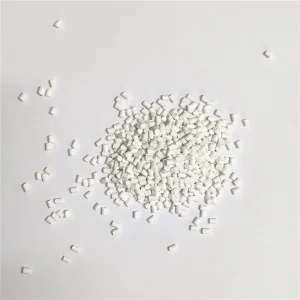
Jiazhou Solution: High-Opacity White Masterbatch (Rutile $TiO_2$ loading up to 70%) coupled with PPA (Polymer Processing Aids). Eliminates melt fracture, smooths extrudate surfaces, provides 100% opacity for privacy, and guarantees high heat-seal integrity at high line speeds.
Challenge: Recycled HDPE (rHDPE) drums and chemical jerrycans exhibit phase separation, inconsistent tinting, and degradation of flexural modulus under stacking pressure.
Jiazhou Solution: Custom Color Masterbatch (Blue, Yellow, Green, Silver) engineered with high-stiffness PE carriers and micro-dispersed inorganic pigments. Maintains dimensional stability, drop-impact performance, and chemical resistance against harsh detergents.
Challenge: Large-diameter corrugated PE pipes and landfill geomembranes demand thermal oxidation survival over 50+ year operational lifespans under soil pressure.
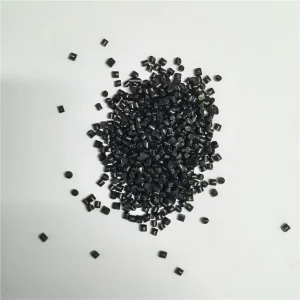
Jiazhou Solution: Heavy-duty Black Masterbatch featuring high-purity P-type furnace carbon black (particle size < 20nm) and long-term OIT (Oxidative Induction Time) thermal stabilizers. Assures chemical inertness and resistance to environmental stress cracking (ESCR).
How Changzhou Jiazhou Plastic Products Co., Ltd. delivers zero-defect masterbatches from laboratory matching to bulk shipment.
Clients submit samples of their target recycled PE resin. Our R&D team analyzes Melt Flow Index (ASTM D1238 / ISO 1133), base ash content, thermal transition via DSC (Differential Scanning Calorimetry), and initial color vector.
Using computerized spectrophotometers and micro-extruders, our polymer chemists formulate custom additive and pigment combinations. Carrier resins are selected to match the exact rheology of the customer's recycled feed.
Sample batches (1-5kg) undergo rapid trial extrusion. Blown film samples are tested for filter pressure value (FPV), gel counts, opacity, tensile strength, and color matching under D65/TL84 illuminants.
Our 6,000 m² facility features high-speed automated twin-screw extruders with underwater pelletizing. Gravimetric feeders guarantee compounding tolerance within ±0.1% accuracy across metric-ton production runs.
Every production batch undergoes strict quality control: Moisture testing (Karl Fischer), density checks, melt flow testing, heat stability checks at 260°C, and color variance ($\Delta E \le 0.5$).
Packed in moisture-proof 25kg aluminum-foil lined bags or 1000kg jumbo bulk containers. Shipped from Changzhou industrial hub with full batch COA (Certificate of Analysis) and REACH/RoHS documentation.
Next-generation innovations in polymer colorant technology, smart additives, and chemical recycling synergy.
Integration of real-time inline spectrophotometers and Machine Learning algorithms on compounding lines. Allows automatic adjustment of masterbatch dosage based on micro-fluctuations in incoming recycled PE resin color.
Transition toward 100% bio-based carrier resins derived from non-food waste oils. Utilization of nano-graphene and functionalized silica additives to boost physical stiffness of recycled PE film by up to 25% while reducing wall thickness.
Development of advanced non-interfering pigment systems tailored for post-consumer chemical recycling (pyrolysis). Ensures pigments and heavy additives can be thermally cracked without damaging refining catalysts.
Explore our full line of specialized masterbatches engineered for maximum tinting strength, non-migration, and extreme thermal resilience.
In-depth technical answers addressing common manufacturing, rheological, and compliance questions faced by plastic converters worldwide.