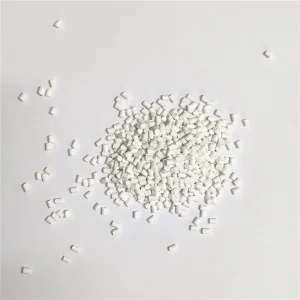
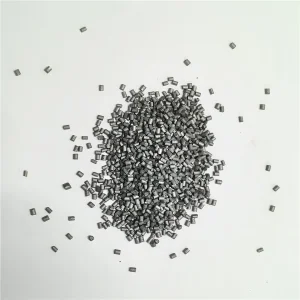
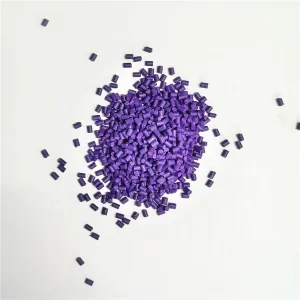
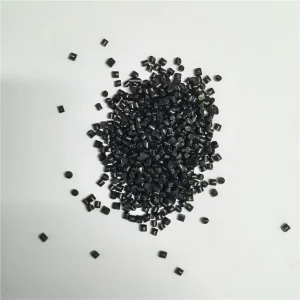
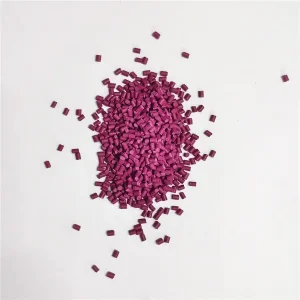
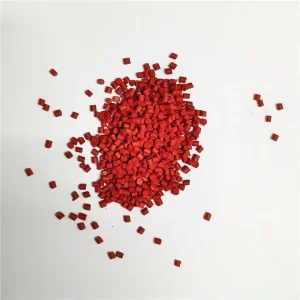
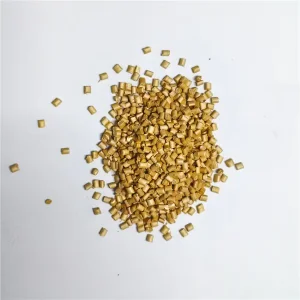
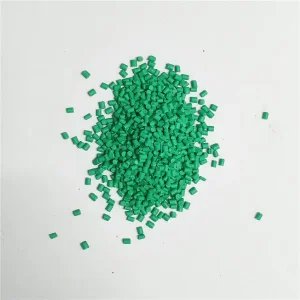
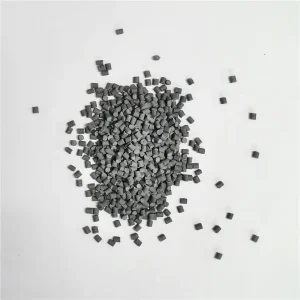
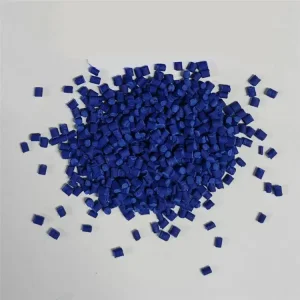
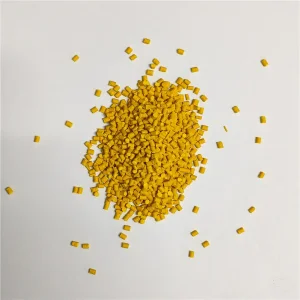
Explore our premium grade Polyethylene masterbatch series formulated for extreme heat resistance, non-migration properties, and high-opacity dispersion across blown film, injection molding, and profile extrusion lines.
Understanding the interplay between coated metallic pigments, carrier resin rheology, and shear rate optimization in advanced thermoplastic processing.
In modern industrial applications, achieving a high-gloss, metallic silver finish in Polyethylene (PE) matrices without secondary secondary painting or electroplating requires strict particle orientation control. Silver masterbatch formulations utilize micro-fine aluminum flakes (ranging from 5 to 45 microns) encapsulated in surface-passivated inorganic treatments. The key to preventing particle agglomeration lies in maintaining homogeneous dispersion within low-density polyethylene (LDPE) or linear low-density polyethylene (LLDPE) carrier systems during twin-screw extrusions.
When mixed with base polymers, these aluminum particles must align parallel to the melt flow stream to maximize specular reflection. Improper extrusion parameters or low-shear compounding lead to random flake alignment, resulting in visible greyish cast, weld line shadows, and diminished metallic sheen.
A critical engineering consideration for custom silver PE masterbatch manufacturers is matching the Melt Flow Index (MFI) of the masterbatch carrier to that of the target substrate (HDPE, LLDPE, or PP). If the carrier resin melt viscosity is significantly higher than the virgin resin, poor mixing occurs, generating streaks and pinholes in blown film extrusion.
Conversely, if the MFI is too high, the masterbatch melts prematurely, causing pigment separation, screw slip, and inconsistent color intensity across long production cycles. Advanced formulators incorporate specialized processing aids (such as fluoropolymer processing additives and low-molecular-weight waxes) to reduce shear stress on aluminum flakes during processing, preserving particle integrity and metallic brilliance.
Metallic pigments are inherently susceptible to oxidation under elevated temperatures and atmospheric moisture. Custom high-concentration silver PE masterbatches are enhanced with antioxidant packages—specifically primary hindered phenols paired with secondary phosphite stabilizers. This dual-action stabilizer network prevents thermal degradation up to 260°C – 280°C during heavy injection molding cycles.
For outdoor applications like agricultural mulch films and outdoor storage containers, light stabilizers (HALS) and UV absorbers are integrated directly into the masterbatch matrix, guaranteeing long-term anti-fading performance under intense solar irradiance (Blue Wool Scale 7-8 rating).
Deconstructing global procurement shifts, quality benchmark criteria, and value-engineering goals for international polymer converters.
The global demand for metallic-effect plastics is expanding rapidly across consumer electronics, automotive interiors, cosmetic packaging, and premium packaging. B2B procurement managers are actively transitioning away from traditional post-molding spray painting due to strict volatile organic compound (VOC) regulations and rising labor overhead. Direct in-line masterbatch coloring represents a sustainable, cost-effective alternative that reduces manufacturing footprint and cycle times.
International buyers evaluating masterbatch suppliers prioritize three non-negotiable parameters: Color Consistency (Delta E < 0.5), Zero Heavy-Metal Toxicity (RoHS/REACH Compliant), and Low Let-Down Ratio (LDR 1% to 3%). Modern plastic processing plants demand masterbatches that disperse instantly without requiring barrel temperature spikes or custom machine modifications.
Procurement teams in North America, Europe, and Southeast Asia are diversifying their vendor bases to secure stable supply chains. Partnering directly with high-capacity Chinese manufacturers offering ISO 9001:2015 certified operations ensures batch-to-batch repeatability, volume discounting, and resilient freight logistics from established maritime ports like Shanghai and Ningbo.
| Evaluation Parameter | Silver Masterbatch In-Melt Coloring | Traditional Spray Painting | Vacuum Metallization / PVD |
|---|---|---|---|
| Unit Production Cost | Lowest (Zero secondary process) | High (Substantial labor & paint wastage) | Very High (Capital intensive equipment) |
| Environmental Impact / VOC | Zero VOC Emissions (Eco-friendly) | High VOC / Hazardous waste disposal | Low VOC / High power consumption |
| Scratch & Wear Resistance | Body-Tinted Integrity (Cannot peel) | Prone to surface scratching & flaking | Requires protective top-coat layer |
| Processing Cycle Time | Single-step Injection/Extrusion | Multi-stage drying & curing delays | Batch vacuum cycle bottle-necks |
| Recyclability (Post-Consumer) | 100% Recyclable with PE stream | Difficult due to surface paint contamination | Requires costly metal stripping |
Inside Changzhou Jiazhou Plastic Products Co., Ltd. — 16 years of compounding authority, smart automation, and zero-defect quality control.
Situated in Changzhou, Jiangsu, Jiazhou operates a modern 6,000 m² production complex equipped with high-torque co-rotating twin-screw extruders. Microprocessor-controlled gravimetric loss-in-weight feeders deliver precise raw pigment ratios down to ±0.1% accuracy. This eliminates batch variance and guarantees that every ton of Silver PE masterbatch meets strict spectrophotometric color tolerances (Delta E < 0.3 against target master standards).
Every production lot undergoes rigorous laboratory verification before export dispatch. Testing equipment includes computerized benchtop spectrophotometers, Melt Flow Indexers (ISO 1133 standard), moisture analyzers, and blown film test units. Our QC protocol evaluates filterability (Pressure Filter Test - FPV), ensuring zero nozzle clogging during high-speed multi-cavity injection molding or thin film processing down to 15 microns.
Jiazhou specializes in custom shade development. Our R&D team matches physical plaque samples, Pantone numbers, or RAL codes within 3 to 5 business days. Backed by direct access to China’s major petrochemical hubs (Sinopec, CNPC), we secure consistent polymer feedstocks at optimized costs, passing significant cost advantages to global OEM buyers while maintaining 15-day order lead times.
Tailored formulations designed to solve real-world processing challenges across key industrial sectors.
Challenge: Eliminating flow marks and gate blush on high-gloss silver bottle caps and cosmetic containers.
Jiazhou Solution: Custom Silver PE masterbatch featuring ultra-fine leafing aluminum pigments and optimized lubricant additives, creating a mirror-like finish with invisible weld line blending on blow-molded bottles.
Challenge: Maintaining color fastness and structural tensile strength under continuous heat exposure and UV stress.
Jiazhou Solution: High-heat resistant PE silver masterbatch containing secondary antioxidant networks and UV absorbers, certified for automotive interior trim panels and protective trim moldings.
Challenge: Achieving high light opacity and reflective soil cooling properties without film tearing or pinholes.
Jiazhou Solution: High-concentration silver film-grade masterbatch designed for LLDPE co-extrusion down to 12 microns, reflecting infrared radiation while keeping soil temperatures optimal.
Challenge: Ensuring non-conductive electrical insulation properties while maintaining metallic color identification.
Jiazhou Solution: Passivated non-leafing aluminum pigment masterbatches engineered with strict dielectric purity, ideal for corrugated conduit pipes, cable jacketing, and industrial hose extrusion.
Operational recommendations for polymer processing engineers to maximize color yield and avoid production downtime.
Blown Film: 1.5% to 3.0% depending on required opacity and gauge thickness.
Injection Molding: 1.0% to 2.5% for standard aesthetic parts; 3.0% for high-reflectivity thick-walled parts.
Extrusion Profiles/Pipes: 2.0% to 4.0% for deep metallic opacity.
Metallic flakes are shear-sensitive. Excessively high screw speeds (RPM) or restrictive backpressure can shear the aluminum flakes, turning the bright metallic luster into a flat grey color. Keep backpressure moderate (5–10 bar) and maintain processing temperatures within 180°C – 240°C for standard PE grades.
Masterbatches are hydroscopic to a minor degree depending on pigment surface treatment. Store in sealed original moisture-proof bags in a dry, cool warehouse away from direct sunlight. Pre-drying at 70°C for 2 hours is recommended if bags have been opened in humid environments.
Direct answers to common engineering questions raised by international procurement officers and plastic process engineers.
Direct sourcing access to our high-concentration masterbatch portfolio. Request instant factory direct pricing and technical datasheets.