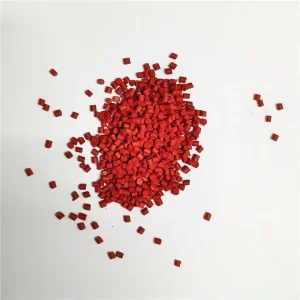
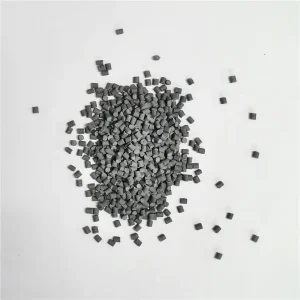
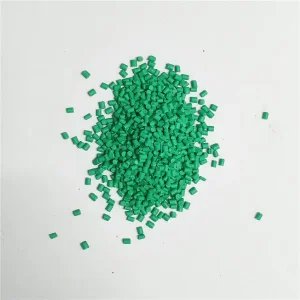
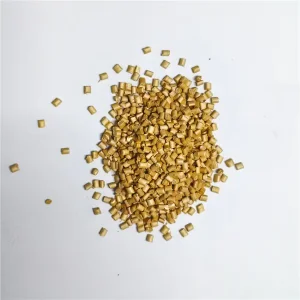
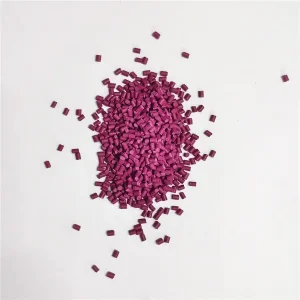
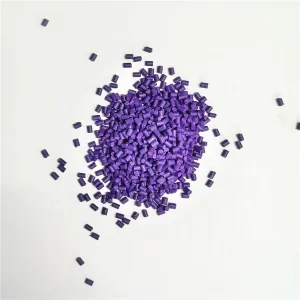
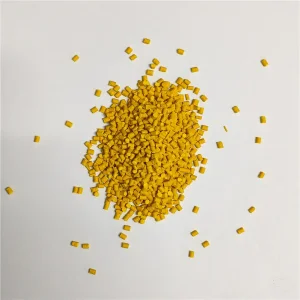
Engineered with high pigment concentration, heat resistance up to 260°C, and exceptional outdoor weatherability for blown film, pipe extrusion, and injection molding.
Analyzing photo-oxidation dynamics, outdoor polymer longevity, and critical additive synergies driving modern industrial plastic applications.
Polyethylene (PE) polymers exposed to outdoor terrestrial sunlight (wavelengths between 290nm and 400nm) undergo severe photo-oxidative degradation. Solar photons cleave the polymer's carbon-carbon backbones, causing radical formation, cross-linking, chain scission, loss of tensile strength, surface chalking, and discoloration. Custom weather-resistant masterbatches neutralize free radicals via Hindered Amine Light Stabilizers (HALS) and UV Absorbers (UVA).
Achieving defect-free extrusion requires matching the Melt Flow Index (MFI) and density of the PE carrier matrix (LDPE, LLDPE, HDPE) with the base polymer resin. Professional formulation prevents phase separation, pinholes in thin agricultural films, and surface bloom during high-speed extrusion processing up to 260°C.
The global demand for weather-resistant PE masterbatch is expanding at a projected CAGR of 6.2% through 2030, propelled by massive infrastructure projects, industrial farming modernization (greenhouse & mulch films), renewable energy infrastructure (solar backing sheets), and municipal water conveyance pipe systems needing 50+ year operational lifespans.
Why Tier-1 Chinese Masterbatch Manufacturers Deliver Unmatched Technical Cost Efficiency for Global Procurement Executives.
Leading Chinese factories, such as Changzhou Jiazhou Plastic Products Co., Ltd. (established over 16 years ago with a 6,000 m² modern manufacturing hub), leverage advanced twin-screw co-rotating compounding systems equipped with loss-in-weight gravimetric feeders. This ensures high shear dispersion of fine organic pigments, rutile titanium dioxide (TiO2), and sub-micron furnace carbon black (20nm–25nm particle size).
By mastering melt temperature management and dynamic screw design, Chinese suppliers achieve ultra-high additive loading (up to 50% concentration) without compromising carrier resin viscosity, minimizing masterbatch dosing ratios for downstream converters down to 1% - 4%.
China's comprehensive petrochemical ecosystem provides direct upstream access to virgin PE carriers, specialty light stabilizers (HALS 622, HALS 770, UV-944), and high-tinting pigment powders. This proximity drastically reduces raw material procurement lead times, insulates buyers from global price volatility, and enables rapid custom color matching (Pantone/RAL) within 3 to 5 business days.
Standardized technical matrix for custom weather-resistant PE masterbatch selection across industrial processing routes.
| Masterbatch Grade | Carrier Resin | Active Concentration | MFI (190°C / 2.16kg) | Thermal Stability | UV Resistance (kLy) | Target Applications |
|---|---|---|---|---|---|---|
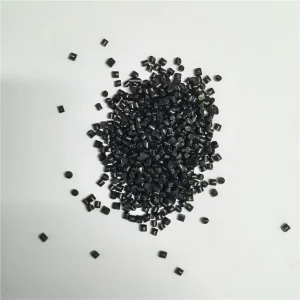
| PE Black UV-500 | HDPE / LLDPE | 40% - 50% Carbon Black | 5 - 15 g/10min | 260°C | 160 - 200 kLy | Geomembranes, Irrigation Pipes, Pressure Ducts |
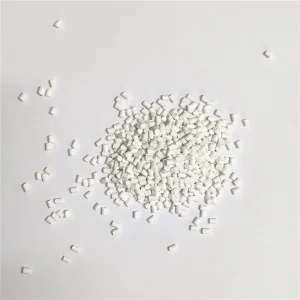
| PE White UV-700 | LDPE / LLDPE | 60% - 70% TiO2 (Rutile) | 10 - 25 g/10min | 260°C | 120 - 160 kLy | Agricultural Mulch Film, Silage Bags, Solar Backsheets |
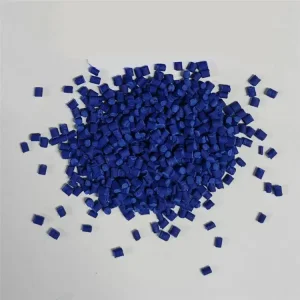
| Custom Color UV-HALS | PE Universal | 25% - 40% Pigment + HALS | 8 - 20 g/10min | 240°C - 260°C | 100 - 140 kLy | Outdoor Stadium Seating, Crates, Telecom Conduits |
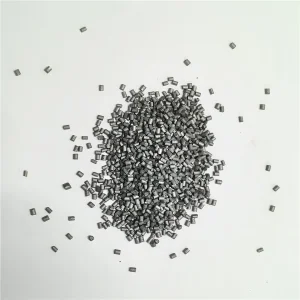
| Specialty Silver/Gold | PE / PP | 15% - 30% Metallic + UV | 12 - 30 g/10min | 240°C | 80 - 120 kLy | Rotomolded Water Tanks, Decorative Outdoor Furniture |
Custom formulated weather-resistant PE masterbatch serves demanding environments worldwide—from extreme solar radiation regions to chemical containment facilities.
Agricultural films require high clarity and continuous exposure to sunlight, pesticides, and sulfur vapors. Custom PE white and transparent UV masterbatches utilize low-basicity HALS (N-OR type) that prevent additive deactivation from agrochemicals, preserving film integrity and light transmission over 3 to 5 farming seasons.
Civil engineering applications—such as landfill liners, mining heap leach pads, and water reservoirs—require decades of UV and oxidative induction time (OIT) resistance. P-type carbon black masterbatch containing fine-dispersion carbon black protects HDPE sheets against stress cracking and thermal aging under continuous solar loading.
Gas distribution pipes, potable water HDPE conduits, and fiber-optic microducts stored in outdoor staging yards prior to underground installation require high thermal oxidation stability. Masterbatch formulations incorporate synergistic blend packages of phenolic antioxidants and organo-phosphites to ensure zero thermal degradation during hot extrusion.
Next-generation polymer additive technologies engineered to satisfy evolving global environmental standards and circular plastic economy demands.
In response to international EU REACH and US EPA regulatory restrictions on per- and polyfluoroalkyl substances (PFAS), advanced factories are developing fluoropolymer-free polymer processing aids (PPA) integrated directly into weather-resistant PE masterbatches to eliminate melt fracture without environmental toxicity.
As brands transition toward 30%–100% recycled PE resins, PCR plastic suffers from degraded polymer chain history. Next-gen masterbatches combine high-tint pigments, antioxidant boosters, and reactive chain extenders to upcycle degraded rPE into high-durability outdoor products.
Traditional carbon black absorbs Near-Infrared (NIR) light used by automated material recovery facility (MRF) sorting systems. Innovators are introducing NIR-reflective black and dark color masterbatches that deliver high UV resistance while allowing full recyclability in municipal sorting streams.
Combination of nano-scale Rutile TiO2 coatings with polymeric oligomeric HALS provides dual protection: physical UV reflection and chemical radical trapping, extending outdoor plastic lifecycle performance beyond 15 years in high UV equatorial zones.
Essential quality assurance metrics for international procurement managers sourcing PE masterbatch from China factories.
When evaluating custom masterbatch suppliers, insist on standardized lab testing documentation before issuing purchase orders:
Efficient international trade execution ensures smooth factory production schedules and customs clearance:
Direct expert insights addressing critical questions from plastics compounding engineers and sourcing specialists.
UV Absorbers (such as Benzotriazoles) function by absorbing harmful UV light photons and converting them into harmless thermal energy before they degrade the polymer chain. In contrast, HALS act as chemical radical scavengers that intercept free radicals formed during photo-oxidation, regenerating themselves during the reaction cycle. A synergistic blend of UVA and HALS provides optimal weatherability in thick-walled and thin-film plastic products.
Standard masterbatch dosing ranges between 1% and 4% depending on active pigment loading, final application thickness, and required outdoor service life (kLy exposure). For instance, thin agricultural films (<50 microns) require a higher let-down ratio (3%–4%) of concentrated UV masterbatch, whereas thick injection-molded crates may only require 1.5%–2% addition.
Fine-particle carbon black (particle size below 25 nanometers) acts as both an exceptionally strong UV absorber and a radical trap. When well-dispersed in PE at a final concentration of 2.0% to 2.5%, carbon black absorbs full-spectrum UV light and extends outdoor service life beyond 20–30 years, making it the industry standard for pressure pipes and geomembranes.
While PE-based masterbatches exhibit good physical compatibility with polypropylene (PP) and ethylene-vinyl acetate (EVA) in moderate applications, optimal physical properties are achieved when matching the carrier resin to the substrate. Using a universal PE carrier in high-temperature PP extrusion may slightly alter melt behavior, so custom formulation is recommended for critical structural parts.
Tier-1 factories utilize benchtop Spectrophotometers (CIELAB color space) to measure ΔE color variance against target master samples, Filter Pressure Value (FPV) rigs to detect pigment agglomerates, and Melt Flow Index (MFI) testers. Outdoor durability is verified using QUV accelerated weathering chambers under controlled UV-A / UV-B light and condensation cycles.
High moisture levels in masterbatch pellets lead to processing defects such as lense voids, pinholes, moisture streaks, and reduced film bubble stability during film blowing. Premium masterbatches undergo thermal vacuum drying and are sealed in moisture-proof aluminum foil packaging to maintain moisture content strictly below 0.05% (500 ppm).
Explore our full range of high-concentration color, black, white, and additive masterbatches manufactured in Changzhou, China for global export.