Precision-formulated polymer colorants engineered for high thermal stability, zero agglomeration, and compliance with global extrusion & injection standards.
Empowering global plastics converters with engineering-grade dispersion, thermal stability, and optimized melt flow index (MFI) characteristics.
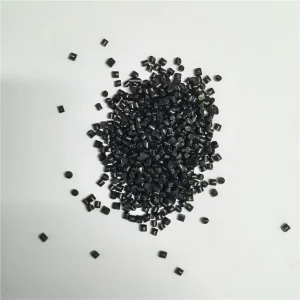
In the contemporary polymer processing paradigm, evaluating a High-Quality Black PE Masterbatch Factory requires a deep understanding of rheological mechanics, pigment morphology, polymer matrix compatibility, and multi-stage twin-screw extrusion parameters. Polyethylene (PE) black masterbatch serves as the primary functional colorant and UV-stabilizing matrix for a massive range of global plastic applications—including pressure pipes (PE80/PE100), geomembranes, high-barrier agricultural films, automotive components, and ultra-thin packaging materials.
At Changzhou Jiazhou Plastic Products Co., Ltd., 16 years of continuous scientific compounding research has established our production lines as benchmarks for carbon black jetness, tinting strength, thermal endurance up to 260°C, and structural dispersion integrity. This industrial whitepaper examines the technical framework, macro-economic purchasing considerations, global regulatory shifts, and future technology roadmaps defining the high-concentration PE black masterbatch sector.
The performance of black PE masterbatch relies fundamentally on the physical parameters of the carbon black pigment chosen by the factory, alongside the compounding physics within the extruder barrel. Achieving maximum jetness (depth of black color) and optimal UV protection requires meticulous balancing of primary particle size, aggregate structure, and surface chemistry.
Carbon black particles exist as primary spherical entities ranging typically from 15 nanometers (nm) to 50 nm. High-grade black masterbatch formulations engineered for premium jetness utilize micro-fine furnace black or gas black with primary particle sizes below 20 nm. The physics of light absorption dictates that smaller particle sizes provide higher specific surface area (measured in m²/g via BET nitrogen adsorption testing), resulting in:
Primary carbon black particles do not exist in isolation; they fuse during furnace synthesis into permanent three-dimensional clusters known as aggregates. The structural complexity of these aggregates is quantified via Dibutyl Phthalate (DBP) absorption testing (mL/100g). High-structure carbon blacks possess complex, branched aggregate chains that absorb more polymer resin, improving dispersion kinetics but increasing melt viscosity. Conversely, low-structure carbon blacks allow higher loading levels (up to 50% carbon black concentration) without excessively lowering the Melt Flow Index (MFI) of the masterbatch.
| Masterbatch Grade Type | Carbon Black Content (%) | Primary Particle Size (nm) | MFI (g/10min @ 190°C/2.16kg) | Primary Application Target |
|---|---|---|---|---|
| Ultra-Thin Film Grade | 40% - 45% | 15 - 19 nm | 15 - 25 | Agriculture Mulch, Packaging < 15μm |
| Pressure Pipe Grade (PE100) | 35% - 40% | 20 - 25 nm | 2.0 - 6.0 | Gas & Water Distribution Pipes |
| High-Jetness Injection Grade | 40% - 50% | 16 - 22 nm | 25 - 45 | Automotive Trim, Electronic Enclosures |
| Economy Extrusion Grade | 30% - 40% | 28 - 45 nm | 5.0 - 15 | Corrugated Drainage Pipes, Sheet Extrusion |
A premier PE Black Masterbatch Factory relies on state-of-the-art co-rotating twin-screw extruders featuring optimized Length-to-Diameter (L/D) ratios (typically 40:1 to 48:1). Standard single-screw processing is completely inadequate for dispersing high-concentration carbon black powders without creating agglomerates, micro-gels, and surface defects in final molded products.
High-precision multi-component gravimetric feeders ensure that carrier resin (LDPE, LLDPE, or HDPE), carbon black powder, and dispersion additives are metered with accuracy tolerances within ±0.2%. This eliminates batch-to-batch color density variation.
Screw profiles feature specialized kneading blocks, left-handed reverse screw elements, and mixing rotors. This delivers intense hydrodynamic shear forces necessary to rupture carbon black agglomerates down to sub-micron particle scales.
Carbon black powder is inherently hygroscopic and traps high volumes of air and micro-moisture. Dual atmospheric and high-vacuum degassing ports strip entrapped volatiles, preventing porosity and moisture streaks in downstream extrusion.
The true benchmark of a high-quality masterbatch manufacturer lies in its Filter Pressure Value (FPV) quality assurance protocol. Standardized under ISO 13900-5, FPV measures the pressure increase generated across a specified fine mesh screen filter pack (e.g., 615 mesh or 25-micron screen) when a masterbatch/polymer melt mixture is pumped at a controlled rate.
A low FPV index (less than 1.5 bar/gram) proves that the masterbatch contains virtually zero undispersed agglomerates, preventing filter screen clogging in high-speed blown film lines and eliminating pinhole defects in thin membranes.
Tailored technical formulations matching the rigorous mechanical and thermal requirements of diverse global manufacturing sectors.
Agricultural films require continuous sunlight exposure for 12 to 36 months without brittle failure. Our high-concentration black PE masterbatches incorporate Hindered Amine Light Stabilizers (HALS) synergistic systems paired with 20nm furnace black. This ensures severe UV degradation resistance and maintains film elasticity even under high ambient temperature conditions.
Potable water distribution lines demand masterbatches that fulfill zero toxicity migration standards and guarantee 50-year structural integrity under continuous hydrostatic pressure. Jiazhou's pipe-grade black masterbatch provides excellent microscopic dispersion, preventing stress concentration points that could trigger rapid crack propagation (RCP).
Ultra-thin packaging films (10-25 microns) produced on high-output European blown film lines require masterbatches with superior melt drawability. Our specialized LDPE/LLDPE carrier matrices provide smooth bubble stability, uniform wall thickness, zero bubble breakage, and pristine surface gloss.
For interior and exterior automotive plastics, aesthetics demand deep jet-black coloration with customizable undertones (blue undertone vs. reddish undertone). Our injection-grade masterbatches deliver high tinting strength, scratch resistance, and optimal heat distortion temperature (HDT) retention.
When enterprise procurement officers source PE black masterbatch globally, comparing unit price per kilogram alone often leads to sub-optimal operational results. A low-cost masterbatch formulated with low-quality carbon black, unrefined mineral filler, or scrap carrier resin severely degrades processing efficiency, leading to frequent filter clogging, high scrap rates, and product failures in the field.
Masterbatch efficiency is governed by the Let-Down Ratio (LDR)—the percentage of masterbatch blended into the virgin resin matrix. High-concentration formulations (e.g., 50% carbon black loading with low viscosity carrier) allow lower LDR usage (e.g., 1.5% to 2.0%) compared to conventional 30% masterbatches requiring 3.5% to 4.0% LDR. The net procurement savings are calculated via:
Effective Cost per Ton of Finished Goods = (Virgin Resin Cost × (1 - LDR)) + (Masterbatch Unit Cost × LDR) + Operational Scrap Cost
To establish E-E-A-T (Experience, Expertise, Authoritativeness, and Trustworthiness) in supply chain partnerships, procurement teams must verify that masterbatch manufacturers adhere to rigorous quality control frameworks:
Global plastic manufacturing is undergoing a profound transition toward environmental sustainability, circular economy directives, and strict chemical safety standards. Reliable black masterbatch suppliers must align product formulations with evolving international regulatory codes.
Formulations must be fully compliant with EU Regulation (EC) No 1907/2006 (REACH), strictly prohibiting Substances of Very High Concern (SVHC), heavy metals (lead, cadmium, mercury, hexavalent chromium), and Polycyclic Aromatic Hydrocarbons (PAHs).
Masterbatches destined for food packaging, caps, closures, and drinking water pipes must utilize high-purity carbon black with total PAH levels under 0.5 ppm, fulfilling FDA 21 CFR 178.3297 regulations.
Traditional carbon black absorbs Near-Infrared (NIR) light, preventing automated optical sorting in recycling facilities. Advanced factories now manufacture NIR-detectable black masterbatches, enabling automated plastic sorting and supporting circular recycling goals.
Expert technical solutions addressing common compounding, processing, and sourcing challenges in black polyolefin processing.
Comprehensive polyolefin masterbatch options engineered for high-performance industrial applications globally.