Direct Factory Sourcing Solutions Engineered for Blown Film, Injection Molding, and Industrial Profile Extrusion
Analyzing Rheological Polymer Alignment, Cross-Border Supply Risks, and Technical Requirements for Global Plastics Converters
In contemporary polymer processing, the selection of the matrix resin (carrier) within masterbatch formulations dictates thermal compatibility, mechanical retention, and pigment dispersion quality. Polyethylene (PE) carrier masterbatch—utilizing LLDPE, LDPE, or HDPE resin bases—remains the gold standard for global plastic colorization and modification.
Cross-border procurement teams face increasing pressures regarding material consistency. Achieving optimal melt flow index (MFI) matching between the carrier resin and the target virgin polymer prevents phase separation, pinhole formation in ultra-thin blown films, and surface streaking in high-pressure injection molding.
The global market for polyolefin masterbatches is undergoing a structural realignment. Tightening environmental regulations (such as EU REACH, RoHS 3.0, and US FDA 21 CFR) demand that suppliers provide fully compliant, heavy-metal-free, and low-VOC formulations.
Furthermore, global manufacturers are aggressively optimizing their total cost of ownership (TCO) by transitioning from low-concentration color pastes or dry pigments to high-concentration PE masterbatches featuring organic and inorganic pigment loadings exceeding 40% to 70%.
Understanding the Chemistry behind High-Concentration PE Colorants and Functional Additives
Optimal carrier resin selection demands a Melt Flow Index (MFI) slightly higher than that of the base substrate resin. This ensures rapid shear melting during extrusion without lowering the structural modulus of the end product. Premium PE carrier masterbatch utilizes narrow molecular weight distribution (MWD) Linear Low-Density Polyethylene (LLDPE) to facilitate seamless blending across LDPE, LLDPE, HDPE, and PP matrix resins.
Micro-dispersion quality directly impacts dielectric strength in wire jacketing and tensile strength in packaging films. Advanced twin-screw compounding lines measure quality via Filter Pressure Value (EN 13900-5). By enforcing sub-micron particle shear de-agglomeration, high-grade masterbatches maintain minimal FPV (< 0.5 bar/g), preventing nozzle clogging and film tearing during 10-micron ultra-thin film blowing.
Engineered masterbatches incorporate synergistic antioxidant packages—combining hindered phenol primary antioxidants (such as Irganox 1010) with secondary phosphites (Irgafos 168). This dual-action chemical defense prevents thermal degradation, pigment discoloration, and polymer chain scission during extended high-temperature processing cycles reaching 260°C to 280°C.
Technical Note for Sourcing Directors: When cross-border sourcing PE carrier masterbatch, always request the Filter Pressure Value (FPV) data sheet and CIELAB spectrophotometric test logs. Lower FPV values guarantee superior dispersion, lower let-down ratios (LDR), and reduced machine maintenance overhead.
Tailored Masterbatch Formulations Developed for Diverse Processing Operations across International Markets
Regional Context: High-UV environments in North America, the Middle East, and Australia.
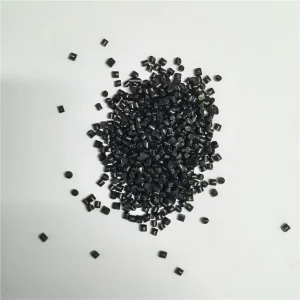
Technical Requirement: Carbon Black PE Masterbatch featuring 40–50% P-type or P-F-type carbon black with particle sizes between 19nm and 25nm. Formulations require severe weatherability, anti-aging properties, and resistance to chemical agrochemicals (pesticides, sulfur compounds).
Result: Ensures multi-season service life for agricultural films, irrigation tubing, and landfill lining membranes without micro-fissuring.
Regional Context: E-commerce and logistics hubs across Europe, Southeast Asia, and South America.
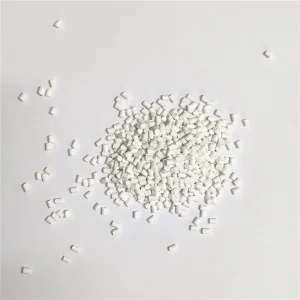
Technical Requirement: TiO2 White Masterbatch (up to 70% Rutile titanium dioxide loading) coated with organic hydrophobic surface treatments. Requires zero die-lip buildup, high opacity at ultra-low film gauge (12 microns), and complete non-toxicity for direct food contact.
Result: Provides brilliant whiteness, high barrier opacity against light degradation, and clean printability for co-extruded packaging.
Regional Context: Industrial manufacturing clusters in Germany, Japan, Mexico, and China.
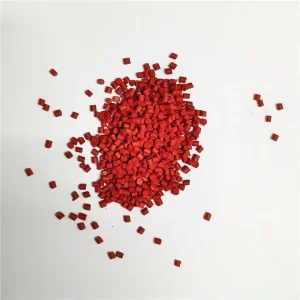
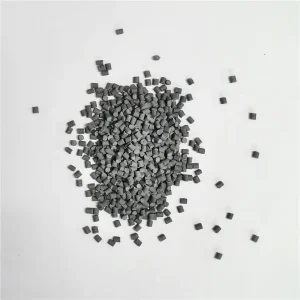
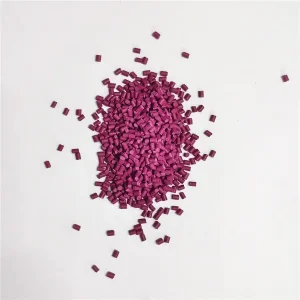
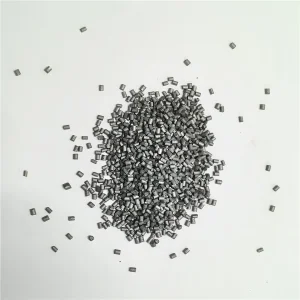
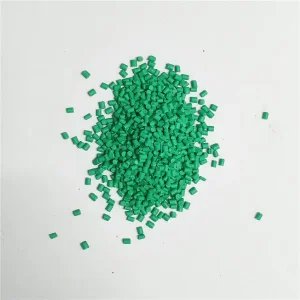
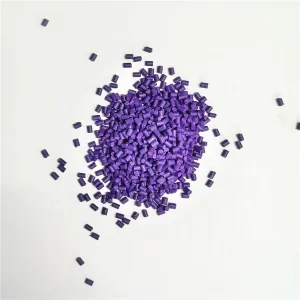
Technical Requirement: Tailored Color Masterbatches (Rose Red, Silver, Green, Blue, Purple) utilizing high-heat-resistant organic pigments. Formulations must exhibit zero anti-migration, zero warping/distortion in large HDPE/PP molded parts, and high lightfastness (Blue Wool Scale 7-8).
Result: Delivers vibrant, consistent aesthetic finish with high impact resistance and dimensional stability for outdoor logistics crates and automotive interior/exterior trim.
Regional Context: Infrastructure and municipal utility developments globally.
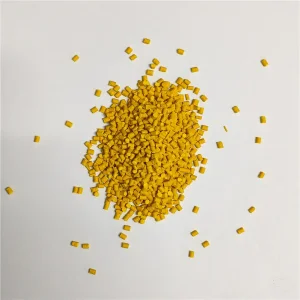
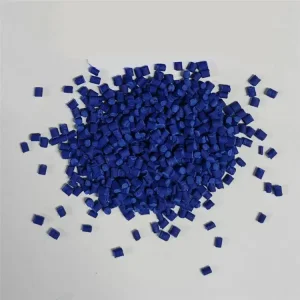
Technical Requirement: Specialized Blue and Yellow PE Masterbatches engineered for HDPE water and gas pipe identification lines. High electrical resistivity, zero migration of pigments into drinking water, and excellent thermal stability during heavy-wall continuous pipe extrusion.
Result: Full compliance with international pipe standards (ISO 4427, EN 12201), guaranteeing 50-year structural integrity.
How Leading Chinese Masterbatch Manufacturers Deliver Unmatched Quality-to-Cost Ratios and Speed to Global Buyers
China's Yangtze River Delta industrial zone (including Changzhou, Jiangsu) provides direct access to tier-one petrochemical refineries (Sinopec, PetroChina). This proximity ensures stable, uninterrupted access to virgin LLDPE/LDPE/HDPE carrier resins and high-grade calcium carbonate (CaCO3) fillers, shielding international buyers from raw material availability shocks.
Leading Chinese masterbatch production facilities operate state-of-the-art co-rotating twin-screw extruders integrated with gravimetric loss-in-weight feeders and underwater pelletizing systems. This automation ensures automated color consistency across 30-ton batch runs, minimizing human error and reducing production cycle times by 40%.
Unlike Western suppliers who enforce rigid product catalogs and high Minimum Order Quantities (MOQs), Chinese manufacturers offer agile OEM color matching. In-house computer spectrophotometer color-matching labs can formulate bespoke Pantone/RAL matches and dispatch physical sample pellets worldwide within 72 hours.
| Masterbatch Grade | Pigment / Active Content | Carrier Resin | Melt Flow Index (g/10min) | Heat Resistance | Primary Processing Method |
|---|---|---|---|---|---|
| High-Concentration Black | 40% - 50% Carbon Black | LLDPE / LDPE | 10.0 - 25.0 | 260°C - 300°C | Blown Film, Injection, Pipe Extrusion |
| Rutile White Premium | 60% - 70% Rutile TiO2 | PE Base | 12.0 - 30.0 | 260°C - 280°C | Cast Film, Packaging Film, Injection |
| Vibrant Color Series (Red/Blue/Green) | 20% - 40% Organic Pigment | Universal PE | 15.0 - 35.0 | 240°C - 260°C | Injection Molding, Extrusion Profiles |
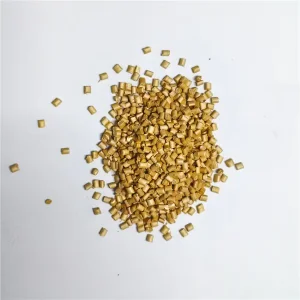
| Metallic / Special Effect (Gold/Silver) | 15% - 30% Metallic Pigment | HDPE / LLDPE | 8.0 - 20.0 | 220°C - 250°C | Cosmetic Bottles, Luxury Packaging |
De-risking International Purchasing through Rigorous Testing Standards and Seamless Logistics
Navigating global compliance frameworks is critical for cross-border buyers. Premium Chinese PE masterbatch suppliers maintain complete documentation compliance for international import regulations:
Every production lot undergoes rigorous laboratory verification prior to export container loading. Quality control protocols include:
To safeguard moisture-sensitive PE masterbatch during long-distance maritime transit, export shipments utilize heavy-duty multi-layer moisture barrier packaging:
Expert Guidance on Masterbatch Selection, Let-Down Ratios, and International Supply Integration
The recommended Let-Down Ratio (LDR) typically ranges between 1% and 4%, depending on the specific application, pigment concentration, and target wall thickness. For standard blown film packaging, a 1% to 2% dosage is generally sufficient due to high pigment loading (e.g., 50–70% TiO2 or Carbon Black). For thick-wall injection molding, an LDR of 2% to 4% ensures full opacity and color saturation without altering base resin mechanical properties.
Yes, PE carrier masterbatches—especially those formulated with low-density or linear low-density polyethylene (LDPE/LLDPE)—exhibit excellent thermodynamic compatibility with Polypropylene (PP), High-Density Polyethylene (HDPE), and ethylene-based copolymers. The lower melting point and high fluidity of the PE carrier resin allow it to disperse rapidly within the PP melt matrix without causing delamination or weakness.
High-speed extrusion and injection molding equipment operate under severe mechanical shear and high barrel temperatures (often exceeding 240°C–260°C). Standard low-grade pigments undergo thermal degradation, resulting in color shifting, gas emission, and surface blemishes. A 260°C heat-resistant PE masterbatch utilizes thermally stable organic/inorganic pigments and thermal stabilizers, ensuring exact color consistency regardless of processing speeds or barrel residence time.
Buyers can provide a physical plastic target sample or reference a standard Pantone / RAL color code. Our laboratory uses spectrophotometers to analyze the spectral reflectance curve and formulates a matching masterbatch recipe. Free sample pellets (typically 1kg to 5kg) are prepared and dispatched via international courier (DHL/FedEx) within 3 to 5 business days for factory trial runs prior to bulk order confirmation.
Explore Our Extended Range of Factory-Direct Colorants and Functional Masterbatches for Global Export