Engineered for high-dispersion blown film, structural foam extrusion, and protective buffer sheet manufacturing.
Understanding the interplay between melt strength, nucleation cell density, and energy dissipation in modern protective polyethylene cushions.
In the domain of high-end logistics, electronics transport, and automotive component protection, standard solid polyolefin packaging introduces excessive tare weight and inadequate dynamic cushioning. Advanced foaming packaging buffer PE masterbatch formulations bridge this critical gap. By embedding active exothermic or endothermic chemical blowing agents (CBAs) into a specialized polyethylene (LDPE/LLDPE/HDPE) carrier matrix, converters achieve precise density reduction ranging from 15% to over 60%.
The fundamental engineering imperative centers on controlling the micro-cellular matrix. A high-quality buffer masterbatch yields millions of closed micro-cells per cubic centimeter. Under mechanical impact, these compressed gas pockets undergo controlled elastic strain, dispersing kinetic energy across the polymeric network without structural collapse.
Standard polyolefins often suffer from low melt strength, leading to cell coalescence, premature gas escape, and structural voiding during high-temperature sheet or profile extrusion. Premium masterbatch suppliers address this by modifying polymer rheology.
By integrating modified nucleating additives, thermal stabilizers, and specialized strain-hardening carrier resins, masterbatches supplied by industry leaders like Changzhou Jiazhou Plastic Products Co., Ltd. guarantee uniform cell wall thickness, high compression recovery, and pristine surface finish without visual sink marks or surface roughness.
Pioneering advancements in green blowing chemistry, supercritical gas compatibility, and nanoscale nucleation systems.
The industry transition away from traditional azodicarbonamide (ADC) towards non-toxic, food-contact compliant endothermic systems (derived from modified citric acids and sodium bicarbonates) represents a major milestone. Endothermic reactions absorb thermal energy during activation, releasing CO2 in a smooth, predictable rate. This yields finer cell structures (down to 10–50 microns) while leaving non-discoloring, food-safe residues ideal for cold-chain and medical protective wraps.
As direct gas injection (N2 and CO2 in Supercritical Fluid state - SCF) expands across high-speed extrusion lines, specialized nucleating PE masterbatches have become mandatory. Advanced inorganic nano-talc and layered silicates embedded in the masterbatch act as heterogeneous nucleation sites, lowering the activation energy barrier for gas bubble initiation and preventing gas migration through the polymer matrix.
The future of protective buffer packaging rests on recyclability. Next-generation masterbatches are specifically tuned for Post-Consumer Recycled (PCR) polyolefin streams. By balancing molecular weight degradation in recycled resins through integrated chain extenders and antioxidants, these masterbatches enable up to 50% PCR content without sacrificing buffer resiliency or structural load capacity.
Tailored masterbatch systems optimizing physical properties for diverse industrial end-use environments.
Class-A automotive body panels and heavy engine spare parts require high-density closed-cell buffer foam blocks to mitigate transit vibration. Foaming masterbatch additives formulated with high-density polyethylene (HDPE) carriers supply maximum compressive strength and dimensional stability under static load stress.
Micro-processors, glass displays, and medical sensors demand static-dissipative cushion foams. Suppliers combine foaming blowing agents with permanent non-migratory anti-static agents in a single multi-functional PE masterbatch.
Bubble wraps, air pillows, and extruded foam sheets utilized in global logistics networks must minimize resin consumption while maintaining burst pressure limits.
Perishable food logistics demand insulated, shock-absorbing trays and thermal barrier wraps complying with international food contact guidelines.
Standardized evaluation criteria for global procurement directors, quality assurance teams, and polymer process engineers.
| Performance Index | Endothermic Masterbatch Grade | Exothermic Masterbatch Grade | Hybrid (Dual Action) Grade |
|---|---|---|---|
| Primary Active Gas Released | Carbon Dioxide (CO2) | Nitrogen (N2) / Carbon Monoxide | CO2 + N2 Balanced Mixture |
| Decomposition Temp. Range | 140°C – 180°C | 170°C – 220°C | 150°C – 200°C |
| Gas Yield (mL/g masterbatch) | 50 – 90 mL/g | 120 – 180 mL/g | 90 – 140 mL/g |
| Cell Structure Morphology | Ultra-fine Closed Cell (10–40 μm) | Medium/Large Cell (50–120 μm) | Bimodal Uniform Matrix |
| Food Contact & Odor Rating | Excellent (FDA Compliant, Odorless) | Moderate (Industrial Packaging Only) | Good (General Purpose Packaging) |
| Primary Application Target | Medical, Food Trays, Fine Buffer Sheets | Heavy Industrial Foam Blocks, Thick Pipes | High-Speed E-commerce Air Pillows |
Inside Changzhou Jiazhou Plastic Products Co., Ltd. — 16 Years of Advanced Polymer Compounding Precision.
Located in Changzhou, Jiangsu Province, Changzhou Jiazhou Plastic Products Co., Ltd. operates a state-of-the-art 6,000 square meter manufacturing facility equipped with fully automated multi-screw compounding extruders, continuous loss-in-weight gravimetric feeders, and automated pellet inspection systems.
By integrating closed-loop Industry 4.0 processing controls, Jiazhou ensures strict batch-to-batch consistency. Parameters such as shear rate, barrel temperature profiles, melt pressure, and dispersion index are monitored in real time, preventing thermal degradation of delicate foaming active agents during production.
Operating within China’s premier plastic manufacturing corridor, Jiazhou maintains direct raw material strategic partnerships with global resin producers. This enables guaranteed access to prime grade low-density polyethylenes (LDPE), high-density polyethylenes (HDPE), and specialty virgin pigments.
Ensuring effortless international customs clearance and absolute end-product safety across global regulatory regimes.
All PE masterbatch product lines undergo rigorous third-party testing via accredited laboratories (SGS, TÜV Rheinland). Formulations strictly exclude heavy metals (Lead, Cadmium, Mercury, Hexavalent Chromium), Polybrominated Biphenyls (PBBs), Polybrominated Diphenyl Ethers (PBDEs), and Substances of Very High Concern (SVHC).
For food buffer trays, fresh produce cushioning mats, and pharmaceutical protective packaging, Jiazhou provides full regulatory documentation confirming compliance with US FDA 21 CFR 177.1520 and European Union Regulation (EU) No 10/2011 for plastic materials intended to come into contact with food.
Jiazhou supports international partners with tailored processing optimization. Experienced polymer engineers provide guidance on extrusion temperature profiles, screw design selection, blow-up ratio (BUR) adjustments, and masterbatch let-down ratio (LDR) calibration to optimize customer manufacturing efficiency.
Explore our export-ready high-concentration masterbatch catalog formulated for injection molding, blown film, and buffer sheet extrusion.
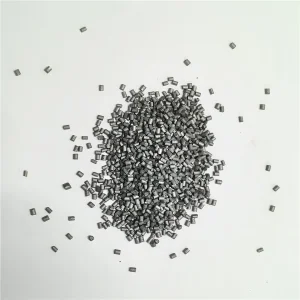
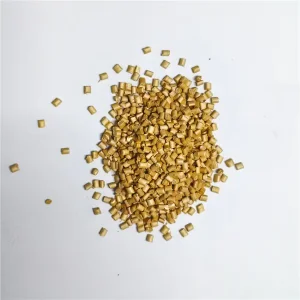
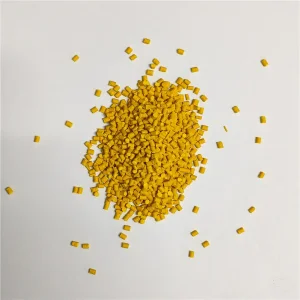
Expert engineering insights addressing common processing questions, dosing guidelines, and resin compatibility.
The standard recommended dosage ranges between 1.5% and 5.0% by weight, depending on the target density reduction and wall thickness of the buffer profile or film. For light density reduction (10%–20% weight reduction in packaging film), an LDR of 1.5% to 2.5% is typically sufficient. For heavy-duty industrial buffer foams requiring up to 50% density reduction, dosages of 3.5% to 5.0% are recommended in combination with melt-strength-enhanced LDPE/LLDPE resin blends.
Extruder temperature profiles must be precisely controlled. The feed and compression zones should remain below the active decomposition temperature of the blowing agent (typically 130°C–150°C) to prevent premature gas release inside the hopper or throat. Full activation should occur within the metering zone and die (170°C–210°C). If temperatures are too high, gas bubbles can coalesce into large voids; if too low, unreacted masterbatch particles remain, causing surface defects and non-uniform cushioning density.
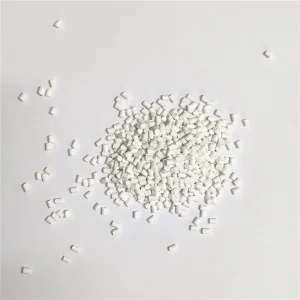
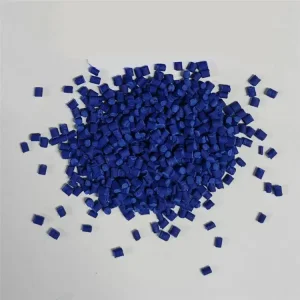
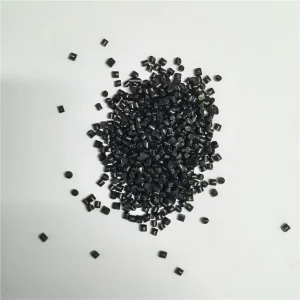
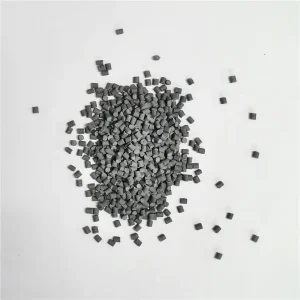
Yes. Foaming agent masterbatches can be seamlessly dry-blended with high-concentration PE color masterbatches (such as Jiazhou’s White, Black, Blue, Grey, or custom colors) prior to extrusion. Ensure that the selected color masterbatch carrier has a compatible Melt Flow Index (MFI) to prevent phase separation during melt homogenization.
Masterbatch products containing chemical blowing agents should be stored in a cool, dry, well-ventilated environment away from direct sunlight, moisture, and radiant heat sources. Storage temperatures must remain below 35°C (95°F). Kept in sealed original aluminum foil lined bags, shelf life is guaranteed for up to 12 months from the date of manufacture.
Changzhou Jiazhou Plastic Products Co., Ltd. operates under strict ISO 9001:2015 quality assurance protocols. Every batch undergoes rigorous quality control testing including Melt Flow Index (MFI) verification, moisture level testing (≤ 0.15%), gravimetric gas yield analysis, and spectrophotometer color matching. Certificates of Analysis (COA) are provided with every shipment.