Explore our industrial-grade and food-contact safe masterbatches optimized for blown film, injection molding, and extrusion compounding.
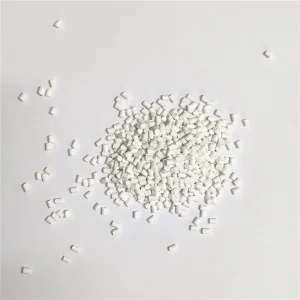
High-Quality High Concentration PE White Masterbatch Non-toxic Weather Resistant
View Product Details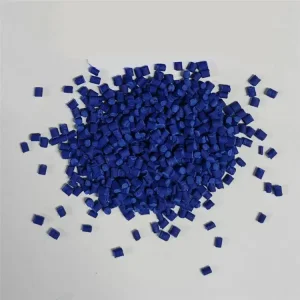
High-Quality High Concentration Blue Masterbatch PE Carrier for Plastic Injection Blowing Film
View Product Details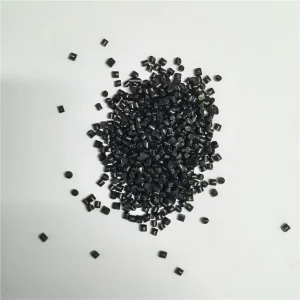
High-Quality High Concentration PE Black Masterbatch Eco-friendly 260°C Heat Resistant
View Product DetailsNavigating regulatory evolution, sustainability mandates, and technical demands in food-contact polymer colorants.
Global food contact regulations (such as US FDA 21 CFR 177.1520, EU Regulation No 10/2011, and China GB 4806.6-2016) have significantly tightened threshold limits on heavy metals, aromatic amines, and volatile organic compounds (VOCs). Plastic converters can no longer rely on standard industrial white masterbatches. Food-grade PE white masterbatches must undergo rigorous migration testing, sensory organoleptic evaluations, and total chemical purity audits before deployment in food contact materials (FCM).
The core performance driver of high-opacity food grade white masterbatch lies in Titanium Dioxide (TiO₂) crystal selection. Rutile TiO₂, processed via the chloride route, offers superior refractive index ($n = 2.73$) compared to Anatase TiO₂ ($n = 2.55$). High-end suppliers encapsulate Rutile TiO₂ particles with dense Silica ($SiO_2$) and Alumina ($Al_2O_3$) inorganic surface treatments. This prevents photocatalytic activity, mitigates polymer degradation, and minimizes yellowing during high-temperature extrusion processing.
Modern flexible packaging, such as milk pouch films, barrier laminates, and squeeze bottles, demands ultra-thin film down-gauging without opacity compromise. Premium white PE masterbatches achieve TiO₂ loadings of 60% to 70% while maintaining exceptional dispersion. This enables converters to reduce film thickness from 80 microns down to 45 microns while maintaining high light-blocking performance (UV/visible light opacity > 98%), extending milk and liquid food shelf life.
Understanding carrier resin selection, rheological behavior, and non-migratory additive systems in food-grade masterbatches.
To prevent phase separation and mechanical degradation, food-grade white PE masterbatches utilize virgin Linear Low-Density Polyethylene (LLDPE) or Low-Density Polyethylene (LDPE) with high Melt Flow Index (MFI: 20–40 g/10min at 190°C/2.16kg). The carrier resin must be completely free of post-consumer recycled (PCR) content, heavy metal catalysts, and low-molecular-weight oligomers to meet strict food contact organoleptic standards.
In high-speed cast film extrusion and extrusion coating (where melt temperatures reach 280°C to 310°C), moisture or volatile dispersion aids can cause "lacing" or pinhole voids. Advanced food-grade formulations replace traditional low-cost zinc stearate or paraffin waxes with high-purity, non-migratory fluoroelastomer processing aids (PPA) and specialized hyper-dispersants. This achieves a Filter Pressure Value (FPV) under 0.5 bar/g according to EN 13900-5 testing standards.
The whiteness index (WI), tinting strength, and opacity are measured using spectrophotometers under CIE L*a*b* color space standards. High-performance food grade white PE masterbatches yield an $L^*$ value exceeding 98.5, an $a^*$ value close to 0, and a $b^*$ value between -0.5 and +0.5 (slight blue undertone for brilliant visual whiteness), effectively suppressing resin yellowness.
| Performance Metric | Standard Industrial White PE Masterbatch | High-Quality Food Grade White PE Masterbatch | Impact on End-Use Food Packaging |
|---|---|---|---|
| TiO₂ Type & Grade | Anatase or Low-grade Sulfate Rutile | Chloride Processed Rutile ($Al_2O_3 / SiO_2$ coated) | Prevents yellowing, photolytic breakdown, and chalking; enhances opacity. |
| Carrier Resin Purity | Standard LLDPE / Recycled blend blend | 100% Virgin LLDPE / LDPE (Zero oligomers) | Eliminates off-taste and odor transfer to packaged food products. |
| Heavy Metal Limits | < 1000 ppm total | Non-detectable / RoHS & REACH < 100 ppm | Strict regulatory safety compliance for indirect/direct food ingestion. |
| Thermal Stability | Up to 220°C | Up to 280°C - 300°C (Anti-lacing formulation) | Prevents die build-up, void formation, and pinholes in high-speed film casting. |
| Dispersion Level (FPV) | 1.5 – 3.0 bar/g | < 0.5 bar/g (Ultra-fine particle distribution) | Prevents web breaks in ultra-thin blown films (< 20 microns). |
| Regulatory Approval | General industrial safety MSDS | FDA 21 CFR 177.1520, EU 10/2011, GB 4806.6 | Global export-ready compliance for dairy, beverage, and medical packaging. |
Food contact packaging materials must pass Robinson Test (DIN 10955) protocols to guarantee that no taste or odor transfer occurs between the plastic container and sensitive food media (such as mineral water, chocolate, or butter). Food-grade PE white masterbatches undergo vacuum degasification during twin-screw extrusion compounding to remove trace volatile organic compounds (VOCs).
Empowering multinational brand owners with complete batch traceability and regional certification dossiers.
Formulated in full accordance with FDA Title 21 CFR 177.1520 (Olefin Polymers) and CFR 178.3297 (Colorants for Polymers). Ingredients are strictly selected from the Generally Recognized as Safe (GRAS) list or approved indirect food additive inventories, enabling seamless entry into the North American market.
Compliant with EU Regulation (EU) No 10/2011 on plastic materials intended to come into contact with food, EC Regulation 1935/2004, and Good Manufacturing Practice (GMP) EC 2023/2006. Certified free of Specific Migration Limits (SML) violations, Bisphenol A (BPA), Phthalates, and PFAS/PFOS chemicals.
Fully compliant with China’s GB 4806.1-2016 / GB 9685-2016 standards and Japan's JHOSPA positive list. Complete technical documentation packages—including Certificate of Analysis (CoA), Safety Data Sheets (SDS), and Migration Test Reports—are supplied with every production batch for smooth customs clearance.
Optimized melt rheology tailored to high-speed film blowing, thin-wall injection molding, and extrusion laminating.
Used in 3-layer, 5-layer, and 7-layer blown film extrusion lines for fresh milk bags, UHT milk pouches, and edible oil packaging. The white PE masterbatch provides high opacity in the middle/outer layers, shielding nutrient-rich liquids from harmful light degradation while maintaining high seal integrity and dart impact strength.
Ideal for beverage bottle caps, dairy tubs, margarine tubs, and thin-wall food containers. Formulated for short cycle times and dimensional stability. Low warpage characteristics ensure leak-proof sealing caps and uniform color distribution across intricate mold cavities.
Tailored for paperboard milk carton coating, coffee cup linings, and foil laminates. Excellent thermal stability prevents melt fracture, smoke generation, and polymer breakdown at processing temperatures exceeding 290°C, ensuring superior adhesion between PE and substrate boards.
Suitable for IV bag films, pharmaceutical tablet bottles, and medical device trays requiring cleanroom-grade purity, non-cytotoxicity, and resistance to gamma-ray or ethylene oxide (EtO) sterilization processes.
Pioneering bio-based carriers, NIR sorting compatibility, and ultra-high dispersion masterbatches.
Transitioning from fossil-fuel LLDPE to sugarcane-derived Bio-HDPE and ISCC PLUS certified mass-balanced bio-polymers. Our R&D team has engineered zero-carbon footprint food grade white masterbatches that deliver identical processing properties without compromising food contact compliance.
Traditional white masterbatches often reflect near-infrared (NIR) spectrum efficiently, but post-industrial recycling sorting requires exact polyolefin differentiation. Next-generation optical formulations incorporate NIR-detectable tracer compounds to streamline automated sorting at material recovery facilities (MRFs).
Integrating multi-functional active packaging technologies into white masterbatches—combining superior optical barrier protection with non-migratory oxygen scavengers and natural food-safe antimicrobial agents to double fresh food shelf life.
16 Years of Dedicated Masterbatch Compounding Excellence, Serving Global Plastics Leaders Across 100+ Countries.
Spanning a modern 6,000 m² production facility in Changzhou, Jiangsu, China, Jiazhou operates high-torque twin-screw compounding extruders equipped with underwater pelletizing systems and loss-in-weight gravimetric feeders to ensure strict batch-to-batch consistency.
Equipped with Datacolor spectrophotometers, Melt Flow Indexers (MFI), Karl Fischer moisture titrators, and two-roll laboratory mills. Every batch undergoes rigorous L*a*b* color testing, dispersion filter tests, and high-temperature thermal stability checks prior to shipment.
Supported by a dedicated team of polymer color chemists, Jiazhou provides rapid custom color matching according to Pantone, RAL, or physical target samples within 3 to 5 working days, accompanied by free laboratory trial samples.
Factory Address: No. 4-3, Shengli Road, Buyi, Zouqu Town, Zhonglou District, Changzhou, Jiangsu, China.
Direct Sales Hotline: +86 15861161116 / +86 17768388359 | Email Inquiries: [email protected]
Expert answers to processing, regulatory, dosage, and quality troubleshooting inquiries.
Explore our complete spectrum of color and functional masterbatches designed for demanding manufacturing standards.
High-Quality High Concentration PE White Masterbatch Non-toxic Weather Resistant
View Product Details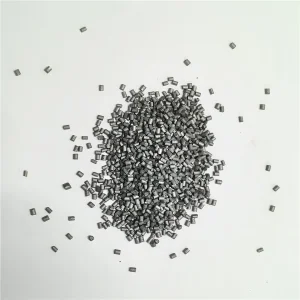
Custom High Concentration PE Silver Masterbatch Anti-fading High Weather Resistance
View Product Details
High-Quality High Concentration Blue Masterbatch PE Carrier for Plastic Injection Blowing Film
View Product Details
High-Quality High Concentration PE Black Masterbatch Eco-friendly 260°C Heat Resistant
View Product Details