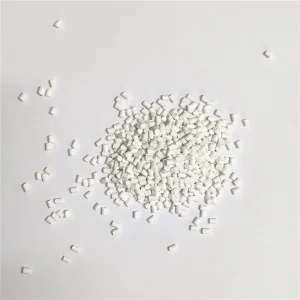
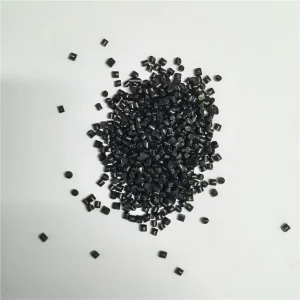
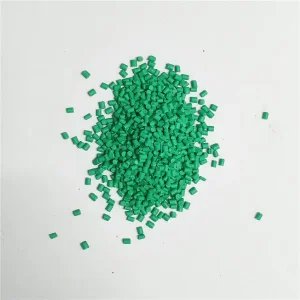
Direct factory supply manufactured under strict ISO 9001:2015 quality standards with premium melt flow compatibility and non-fading metallic pigmentation.
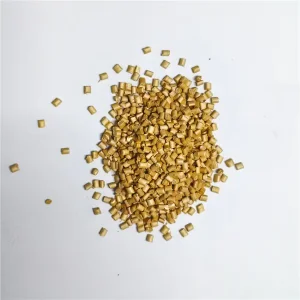
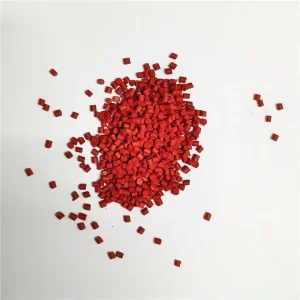
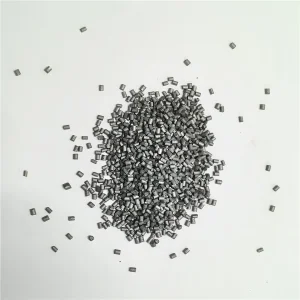
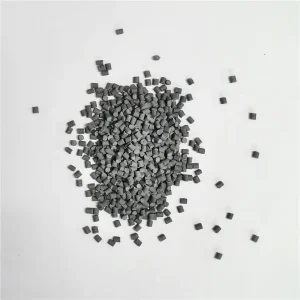
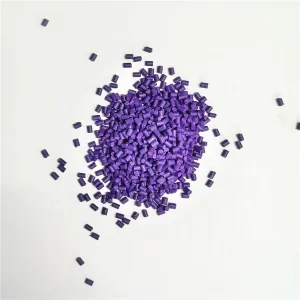
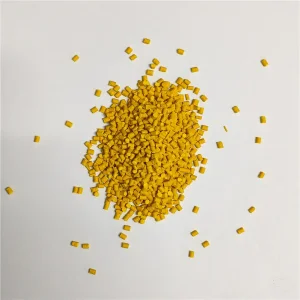
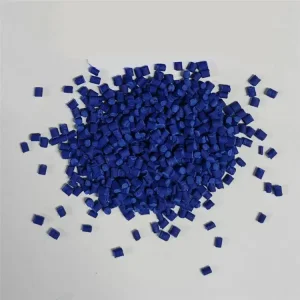
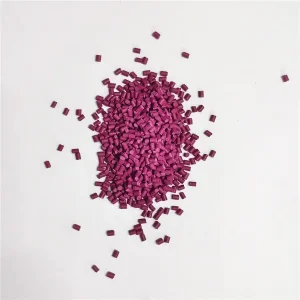
In modern polymer processing, achieving a flawless metallic aesthetics without compromising structural integrity or melt processing behavior represents a sophisticated chemical engineering challenge. Gold Polyethylene (PE) Masterbatch is a specialized color concentrate designed to impart brilliant metallic, pearlescent, or satin-gold tones to polyolefin resins, primarily low-density polyethylene (LDPE), linear low-density polyethylene (LLDPE), and high-density polyethylene (HDPE).
Historically, achieving metallic gold visual effects in plastics relied heavily on coarse bronze or brass metallic powders. However, traditional bronze flake masterbatches suffered from significant operational bottlenecks, including severe oxidative discoloration at thermal thresholds exceeding 200°C, heavy shear degradation, filter pack clogging during extrusion, and strict environmental compliance concerns related to heavy metal leaching. Today's advanced Gold PE Masterbatch factories have revolutionized the formulation landscape through inorganic chemistry and precision particle surface modification.
Key Technical Shift: Modern gold masterbatch formulations utilize engineered mica-titanium ($TiO_2$) dioxide pearlescent pigments, synthetic fluorphlogopite flakes, or iron oxide ($Fe_2O_3$) coated silicate platelets. By controlling the optical interference layer thickness down to nanometer scale, modern factories achieve metallic brilliance while maintaining thermal stability up to 260°C–300°C, zero electrical conductivity, and total chemical inertness.
The performance of gold masterbatch during high-speed blown film extrusion or thin-wall injection molding depends fundamentally on carrier resin selection and dispersion quality. Premium manufacturers utilize virgin PE carrier resins with a carefully calibrated Melt Flow Index (MFI) matching the target host polymer. If the carrier resin MFI differs by more than 25% from the host polymer resin, processing anomalies such as melt fracture, flow marks (weld line visibility), and uneven metallic streak distribution inevitably occur.
Understanding the multi-regional procurement requirements enables international packaging manufacturers and consumer product brands to secure high-yield, cost-optimized supply chains.
Global buyers across the EU and North America require strict adherence to EU REACH SVHC, US FDA 21 CFR 177.1520 (food contact compliance), and PFAS-free processing aid mandates. Modern gold PE masterbatch factories engineer non-toxic formulations certified free of heavy metals (Pb, Cd, Hg, Cr VI) and aromatic amines.
The global personal care, cosmetics, luxury spirit closures, and high-end agricultural film sectors are driving double-digit demand for high-chroma metallic gold concentrates. Brand owners demand uniform reflection, zero optical pinholes, and non-migrating pigment technology.
High-concentration masterbatches (up to 40-50% pigment loading) significantly lower down-stream let-down ratios (LDR). Processing plants can achieve vivid gold opaque coverage at lower dosage rates (1.5% to 3.0%), minimizing freight fees and storage footprints.
China has established itself as the world’s leading hub for plastic colorant extrusion technology. Regional clusters, notably in Jiangsu Province (such as Changzhou's high-tech masterbatch manufacturing hubs), combine vertically integrated chemical supply chains with advanced automated compounding facilities.
Modern Chinese Masterbatch factories leverage Industry 4.0 compounding infrastructure to eliminate batch-to-batch color variance. Key structural advantages include:
| Manufacturing Parameter | Traditional Compounding Factory | China 4.0 Smart Compounding Factory |
|---|---|---|
| Dosing System | Volumetric manual weighing (Higher human error) | Multi-component Gravimetric Loss-in-Weight Feeders ($\pm 0.1\%$ precision) |
| Extruder Technology | Single-screw or low L/D twin-screw extruders | Co-rotating Twin-Screw Extruders ($L/D$ 40:1 to 48:1) with side-feeders |
| Spectrophotometry QC | Visual color strip matching | Online Closed-Loop Spectrophotometers ($CIE L^*a^*b^*, \Delta E < 0.3$) |
| Melt Filtration | Manual single-plate screen changers | Automated Continuous Hydraulic Screen Changers (80-150 Mesh Filtration) |
| Lead Time & Agility | 25-35 Days | 7-14 Days with automated inventory buffering |
The manufacturing process of high-grade gold PE masterbatch demands tight temperature profile management along the extruder barrel. Pearlescent flakes and metallic oxides are extremely sensitive to mechanical shear. High shear stress degrades the high-aspect-ratio mica flakes, converting brilliant sparkle effects into a dull, greyish sheen.
Leading factories overcome this challenge by utilizing split-feed split-screw extrusion architecture. The virgin PE carrier resin and dispersion waxes are fully melted and homogenized in the primary barrel zones (Zones 1–4). The delicate gold metallic flakes are subsequently introduced via downstream side-feeders (Zone 5 or 6) under low-shear mixing elements, guaranteeing optimal flake orientation, brilliant reflection, and zero flake breakdown.
Gold PE masterbatch formulations are engineered for specific polymer conversion processes. Processing parameters must be tuned according to the end-use plastic matrix.
Applications: Luxury agricultural mulch, promotional shopping bags, decorative shrink sleeves, agricultural films.
Technical Requirement: Low filter blocking value (DFV), ultra-high dispersion to prevent film pinholes or bubble tearing. Recommended Let-Down Ratio (LDR): 2.0% – 4.0%.
Applications: Cosmetics caps, luxury spirit bottle closures, personal care containers, household goods.
Technical Requirement: Non-warping formulations, low weld-line visibility, high surface gloss. Melt Flow Rate must match host resin (e.g., HDPE injection grade MFI 4 to 20 g/10min).
Applications: Engine oil bottles, detergent jugs, pharmaceutical bottles, decorative tubes.
Technical Requirement: Excellent parison melt strength, uniform wall thickness distribution, stress-crack resistance (ESCR compliance).
Expert solutions to common processing challenges encountered during Gold PE Masterbatch conversion.
Flow lines and weld line visibility occur when metallic/mica flakes orient parallel to the flow front and collide at cold weld junctions. To minimize this defect: (1) Increase mold temperature by 10°C–15°C to delay freeze-off; (2) Optimize gate locations away from high-aesthetic visual zones; (3) Increase injection speed slightly to promote turbulent flow near gates; and (4) Select a Gold PE Masterbatch formulated with spherical or micro-flake geometries that reduce directional orientation bias.
For optimal dispersion without phase separation, the carrier resin’s MFI should equal or slightly exceed the host polymer’s MFI. For blown film applications using LLDPE (MFI 1.0 g/10min), use a masterbatch with a carrier MFI between 2.0 and 4.0 g/10min. For high-speed injection molding using HDPE (MFI 8–20 g/10min), select a masterbatch carrier MFI of 20–30 g/10min.
Die deposit or plate-out is caused by low-molecular-weight processing aids, excess wax dispersion agents, or incompatible pigment coatings migrating out of the polymer melt under high pressure. Switching to a high-purity masterbatch manufactured with high-viscosity dispersion polymers and fluoropolymer processing aids (PPA) completely eliminates die buildup.
Yes. Modern inorganic titanium-mica gold masterbatches are fully inert and thermally stable through multiple mechanical recycling loops. Unlike organic dyes that bleed or degrade during re-pelletization, pearlescent gold pigments retain their color value, making them compatible with circular economy HDPE and LDPE recycling protocols.
When stored in sealed original moisture-barrier bags in a dry, cool environment below 35°C away from direct UV exposure, premium PE gold masterbatch has an official shelf life of 24 months. Ensure moisture content remains below 0.10% prior to processing to prevent steam voiding during extrusion.
Explore our complete range of specialized PE color masterbatches engineered for injection molding, blown film extrusion, and high-speed bottle blow molding.