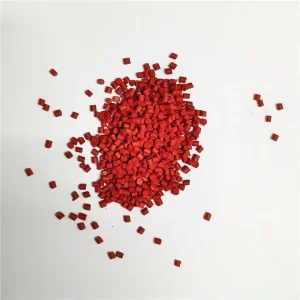
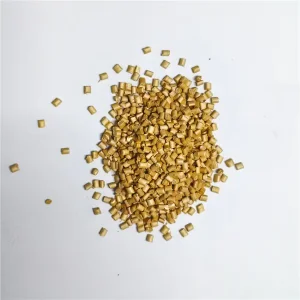
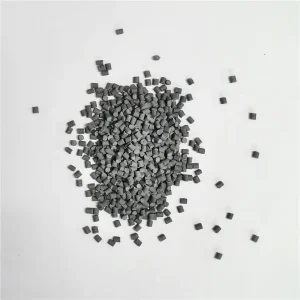
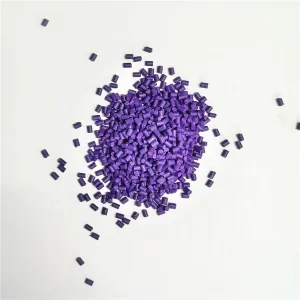
High-concentration, superior dispersion PE masterbatches engineered for blown film, injection molding, and complex industrial extrusion.
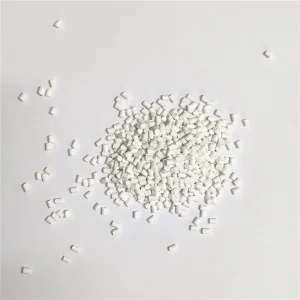
In the global polyolefin processing industry, High Covering White PE Masterbatch serves as a foundational performance additive across flexible packaging, rigid container blow molding, agricultural film extrusion, and precision injection-molded components. The fundamental engineering objective of white masterbatch is to impart maximum opacity (hiding power), superior whiteness, high tinting strength, and thermal stability to virgin or recycled Polyethylene (LDPE, LLDPE, HDPE) matrices without compromising the host polymer's mechanical properties, sealability, or melt rheology.
The technical core of high-covering capability lies in the optical physics of Titanium Dioxide (TiO2). TiO2 boasts an exceptionally high refractive index—specifically 2.73 for Rutile crystal structure compared to 2.55 for Anatase—enabling maximum light scattering across visible wavelengths. When dispersed uniformly within a Polyethylene carrier matrix (refractive index ~1.51), Rutile TiO2 yields optimal opacity even at ultra-thin film gauges down to 10–15 microns. Leading global manufacturers utilize advanced surface-treated Rutile pigments passivated with inorganic alumina/silica coatings and hydrophobic organic silane coupling agents. This formulation strategy prevents moisture adsorption, minimizes die-lip build-up (pinning), and suppresses thermal degradation up to 280°C–300°C processing temperatures.
| Technical Parameter | Standard White Masterbatch | Premium High Covering White PE Masterbatch | Impact on Industrial End Products |
|---|---|---|---|
| TiO2 Content Loading | 30% – 50% Anatase / Basic Rutile | 60% – 70% Micro-milled Rutile | Higher pigment loading allows lower Let-Down Ratio (LDR), reducing resin dilution. |
| Refractive Index | 2.55 (Anatase) | 2.73 (Rutile Phase Pure) | Maximizes light reflection and complete opacity in single-layer and co-ex films. |
| Filter Pressure Value (FPV) | > 2.5 bar/g | < 0.8 bar/g (EN 13900-5) | Prevents screen pack clogging, reduces extrusion head pressure, and eliminates pinholes. |
| Moisture Content | < 0.15% (1500 ppm) | < 0.03% (300 ppm) | Eliminates lacing, voiding, and moisture bubbles during high-speed film blowing. |
| Thermal Stability | 220°C – 240°C | 260°C – 300°C | Prevents yellowing and polymer chain scission during injection molding cycles. |
Procurement directors and chemical sourcing managers face increasing pressure to balance unit raw material costs with processing efficiency and environmental compliance. When sourcing high covering white PE masterbatches, global buyers must evaluate suppliers beyond initial price-per-kilogram metrics. Total Cost of Ownership (TCO) in plastic converting is heavily dictated by masterbatch consistency, dispersion efficiency, downtime mitigation, and scrap reduction.
Variations in TiO2 concentration or melt flow index (MFI) lead to color shifting, opacity fluctuations, and machine recalibration downtime. Premier suppliers utilize automated gravimetric dosing and real-time inline spectrophotometry during twin-screw extrusion compounding to maintain color delta E (ΔE) under 0.5.
Optimal compatibility demands matching the carrier resin to the target resin matrix. High-covering white masterbatches engineered with LLDPE or mLLDPE carriers ensure seamless viscosity blending, superior melt strength, and zero delamination in high-density polyethylene (HDPE) or polypropylene (PP) compounds.
Leading tier-1 masterbatch suppliers maintain strategic reserves of primary titanium dioxide feedstocks (chloride vs. sulfate process) and operate multi-line compounding facilities in key industrial hubs like Jiangsu, China to ensure uninterrupted global deliveries.
White PE masterbatch is customized across distinct conversion processes. Understanding process-specific requirements enables converters to select formulations optimized for melt strength, die geometry, and end-use exposure.
Utilized for liquid milk packaging pouches, courier bags, hygiene barrier films, and greenhouse covers. High covering white masterbatch provides 100% light barrier protection against UV-induced oxidation while maintaining film puncture resistance, dart impact strength, and bubble stability.
Applied in cosmetic caps, food container lids, industrial pails, and household appliances. Formulations are optimized for high fluidity (high MFI) to ensure rapid cavity filling, minimum cycle times, zero warpage, and spotless surface gloss without sink marks.
Essential for HDPE pharmaceutical bottles, agrochemical bottles, and personal care containers. Ensures high chemical resistance, zero pigment leaching, excellent Environmental Stress Crack Resistance (ESCR), and structural integrity under drop impact tests.
Engineered for paperboard liquid packaging (Tetra-Pak style) and woven sack laminates. Operates at extreme processing temperatures (up to 300°C–315°C) without smoke generation, pinhole defects, or thermal odor emission.
As the plastics industry aligns with global decarbonization goals, ESG standards, and circular economy directives, white PE masterbatch formulation technology is undergoing significant evolution:
Traditional pigments or fillers can interfere with Near-Infrared (NIR) optical sorting at recycling facilities. Modern high covering white PE masterbatches utilize non-interfering pigment surface modifications that allow automated sorting systems to identify and classify post-consumer PE films accurately.
To decrease scope 3 carbon emissions, top suppliers are transitioning from fossil-derived PE carriers to sugarcane-based bio-PE carriers and certified Post-Consumer Recycled (PCR) polyolefin matrix resins, maintaining mechanical strength while drastically shrinking carbon footprints.
Next-generation masterbatches leverage nano-scale particle dispersion and micro-encapsulation additives. This enables converters to achieve complete opacity at Let-Down Ratios as low as 1.0%–1.5%, significantly reducing transport volume and storage footprints.
The global market for white masterbatch is experiencing steady growth, driven by expanding e-commerce packaging, flexible food preservation films, and infrastructure piping projects.
Asia-Pacific represents over 45% of global production capacity and consumption. China leads with state-of-the-art compounding clusters in Jiangsu and Zhejiang provinces, supplying high-volume, cost-competitive, and custom-formulated PE masterbatches worldwide.
Characterized by rigorous compliance demands (FDA 21 CFR, EU 10/2011 food contact standards, REACH, RoHS). Focus is centered on circular economy compliance, food contact safety, and zero non-migratable additives in medical/pharmaceutical applications.
Rapid industrialization in LATAM and MEA is fueling demand for durable agricultural mulch films, silobags, and civil construction geotextiles requiring high-covering white masterbatches formulated with hindered amine light stabilizers (HALS) for extreme UV resistance.
To ensure reliable performance in high-speed converting machinery, professional masterbatch manufacturers implement rigorous quality assurance controls:
Tested according to EN 13900-5. Low FPV (< 0.8 bar/g) guarantees microscopic pigment dispersion, preventing screen clogging and film blow-outs during micro-gauge film blowing.
TGA testing verifies exact TiO2 inorganic ash content, ensuring purchasers receive the precise concentration specified (e.g., 60%, 70%) without inorganic filler adulteration.
Formulated in compliance with FDA 21 CFR 177.1520 and EU Regulation No. 10/2011. Heavy metal content is independently tested to remain well below RoHS and CONEG thresholds.
Karl Fischer titration verifies moisture levels below 300 ppm (0.03%), protecting converters against pinhole formation, voiding, and surface lacing defects in high-temp extrusion.
Discover our comprehensive lineup of weather-resistant, heat-stable masterbatches tailored for international plastic manufacturing excellence.