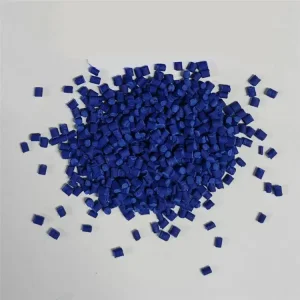
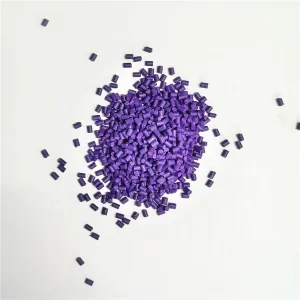
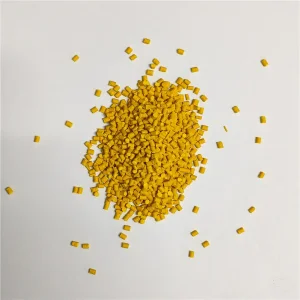
Specially formulated for Extrusion Blow Molding (EBM) and Injection Stretch Blow Molding (ISBM) processes requiring heat stability up to 260°C and zero pinhole defects.
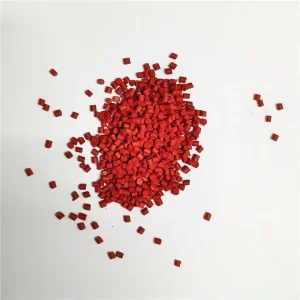
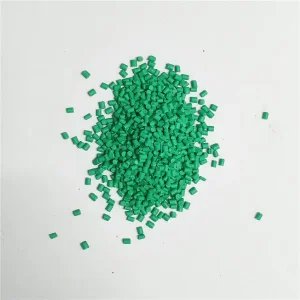
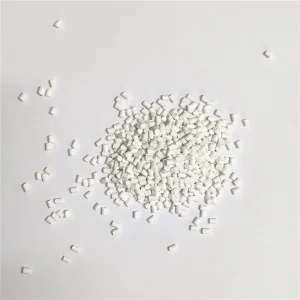
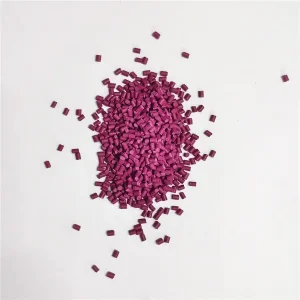
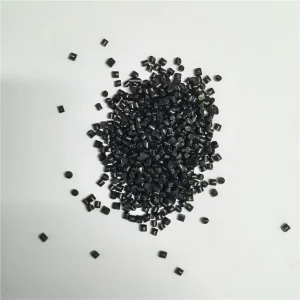
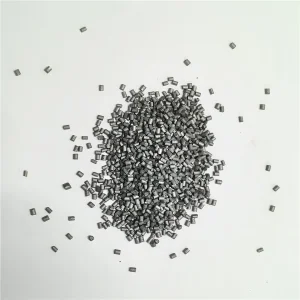
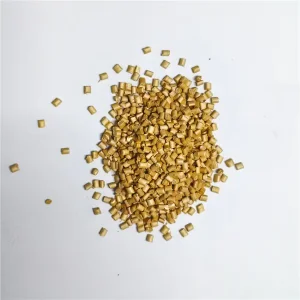
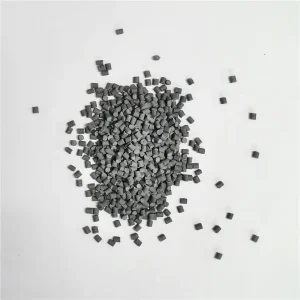
Analyzing Melt Strength, Pigment Dispersibility, and Interfacial Rheology in Extrusion Blow Molding Processes
In the contemporary plastic transformation landscape, Hollow Blow Molding stands as a dominant manufacturing methodology for producing stress-bearing containers ranging from 100mL personal care bottles to 1000L Intermediate Bulk Containers (IBCs). However, introducing colorants into high-molecular-weight high-density polyethylene (HMW-HDPE), LLDPE, or recycled PE matrices introduces complex physical-chemical challenges. A top-tier High-Quality Hollow Blow Molding PE Masterbatch Company & Factory must look beyond standard pigment loading to master the precise balance of melt strength, melt flow index (MFI) parity, shear-thinning behavior, and Environmental Stress Crack Resistance (ESCR).
Core Technical Insight: Standard injection molding masterbatches often cause catastrophic failures in blow molding lines. Injection grades prioritize high melt flow (low viscosity), whereas hollow blow molding requires low melt flow (high viscosity) and exceptional melt elasticity to prevent parison sag during continuous or accumulator extrusion.
During Extrusion Blow Molding (EBM), molten polymer is continuously extruded through a die annular gap to form a vertical hollow tube called a parison. Gravity acts continuously upon this molten tube before mold closure. If the PE masterbatch uses an incompatible low-molecular-weight carrier resin (e.g., standard LDPE with MFI > 20 g/10min), it drastically reduces the overall melt strength of the polymer blend.
This viscosity mismatch leads to severe parison sag, causing non-uniform wall thickness along the vertical axis of the hollow container. Premium blow molding masterbatches engineered by certified factories utilize strictly matched fractional melt-flow PE carriers (MFI 0.1 to 1.5 g/10min at 190°C/2.16kg) paired with proprietary hyper-dispersants. This ensures zero shear-induced degradation, maintaining uniform wall thickness and structural pinch-off strength at the bottom weld line.
Industrial hollow containers, especially those intended for aggressive chemical surfactants, agrochemicals, and industrial solvents, are subjected to internal pressure and environmental stress over extended storage periods. Poorly formulated masterbatches contain coarse pigment agglomerates (>5 microns) or non-reactive carrier additives that act as stress concentration nodes within the polyolefin matrix.
Under ASTM D1693 ESCR testing standards, containers produced with substandard masterbatches exhibit premature micro-cracking at the mold seam lines. Modern high-concentration masterbatch factories employ triple-screw compounding and continuous inline optical quality monitoring to limit pigment particle size strictly below 1.5 microns. By ensuring full primary particle wetting and steric stabilization, the masterbatch leaves the inter-crystalline amorphous regions of the HDPE matrix completely intact, retaining 98%+ of the virgin resin’s baseline ESCR performance.
| Performance Metric | Standard Injection Masterbatch | Blow Molding Grade Masterbatch | Engineering Significance |
|---|---|---|---|
| Carrier Resin MFI (190°C/2.16kg) | 12.0 - 25.0 g/10min | 0.1 - 1.2 g/10min | Prevents parison sagging & wall thinning |
| Pigment Dispersion (Filter Pressure Value) | > 2.5 bar/g | < 0.8 bar/g | Eliminates pinholes, streaks & die build-up |
| Heat Stability Threshold | 200°C - 220°C | 260°C - 300°C | Prevents thermal color shift during long cycle times |
| ESCR Retainability (ASTM D1693) | 50% - 65% baseline | 95% - 99% baseline | Critical for UN Hazardous Chemical Drums |
| Lightfastness (Blue Wool Scale) | Grade 4 - 5 | Grade 7 - 8 | Resists intense UV exposure without chalking |
Market expansion driven by rigid packaging demands, circular economy mandates, and smart manufacturing adoption.
The global shift toward high-capacity UN-certified chemical containers (20L to 200L drums) demands masterbatches with exceptional pigment loading (up to 70% titanium dioxide in white grades or high-jetness carbon black) that do not compromise impact resistance at sub-zero temperatures.
Global brand owners require strict compliance with US FDA 21 CFR 177.1520, European Commission Regulation (EU) No 10/2011, and heavy-metal-free standards (RoHS/REACH). Leading masterbatch factories strictly isolate production lines to prevent cross-contamination of phthalates and primary aromatic amines.
With regulations mandating 30%+ Post-Consumer Recycled (PCR) content in packaging, masterbatch companies are engineering specialized additive masterbatches featuring odor absorbers, chain extenders, and antioxidant boosters tailored to offset PCR thermal degradation.
Custom-engineered masterbatch formulations solving real-world production bottlenecks across diverse geographic sectors.
In the North American chemical corridor, 55-gallon L-Ring drums made from HMW-HDPE require specialized PE Black Masterbatch with high UV stability (2.5% carbon black loading in final part). Formulations prevent melt fracture and wall roughness under ultra-high throughput extrusion lines.
European personal care markets demand high-aesthetic appeal, including metallic gold, pearlescent silver, and pastel shades. Masterbatches must eliminate pinholes and surface flow marks in multi-layer co-extrusion blow molding (up to 6 layers) while complying with strict EU 10/2011 regulations.
APAC agrochemical bottle producers require intense opacity to safeguard photo-sensitive pesticide formulations. Specialized high-titanium-dioxide PE White Masterbatch delivers 99.9% light blocking at 1.5% let-down ratios without compromising neck thread molding precision.
In desert climates, 3-layer and 4-layer roto-blow molded PE water tanks require extreme outdoor weatherability. Blue and Black PE masterbatches are enriched with Hindered Amine Light Stabilizers (HALS) to guarantee 15+ years of outdoor service without cracking or discolouration.
Under-the-hood components such as coolant tanks and windshield washer fluid reservoirs require heat-stabilized colorants that resist continuous glycol contact and elevated operating temperatures without pigment extraction or leaching.
For medical and pharma packaging, masterbatches undergo rigorous extractable and leachable testing (USP Class VI compliant), delivering pristine color consistency and zero off-gassing during gamma or ETO sterilization.
Pioneering the next era of smart masterbatch engineering through nano-dispersion, NIR sorting, and digital color matching.
Traditional carbon black absorbs Near-Infrared (NIR) light in automated recycling sorting centers, turning dark plastic containers invisible. Next-gen masterbatches use specialized organic pigments that reflect NIR wavelengths, enabling full circular sorting for black HDPE bottles.
Deploying cloud-linked spectrophotometers and machine learning algorithms to reduce custom shade-matching turnarounds from 5 days to under 2 hours, matching delta E < 0.3 across diverse virgin and PCR resin batches.
Utilizing advanced twin-screw co-rotating extruders with L/D ratios up to 52:1 to produce masterbatches with 75%+ pigment loadings. Lower let-down ratios (LDR down to 0.8%) dramatically cut shipping costs and energy consumption for blow molders.
Expert advice from our senior polymer engineers to eliminate defects in your blow molding operations.
Color streaking occurs due to incomplete dispersion of pigment agglomerates or viscosity mismatch between the masterbatch carrier and the main polymer resin. If the masterbatch carrier melts later or has a significantly different Melt Flow Index (MFI) than the HDPE base resin, non-homogenous melt distribution occurs in the extruder screw. Our blow molding PE masterbatches utilize ultra-fine dispersed micro-pigments and tailored polyolefin carriers matching the MFI profile of your virgin/PCR resin, ensuring flawless melt blending and zero vertical streaks.
Substandard masterbatches containing low-grade fillers, poor wetting agents, or undispersed pigment particles introduce micro-voids and stress points in the crystalline polymer structure. When filled with aggressive surfactants or oils, stress cracking initiates at these particle boundaries. Our specialized blow molding masterbatches use high-purity organic/inorganic pigments wetted with proprietary coupling agents that preserve the polymer matrix integrity, retaining up to 98% of original ESCR performance under ASTM D1693 test conditions.
The standard recommended Let-Down Ratio (LDR) ranges between 1.0% and 4.0%, depending on bottle wall thickness, required opacity, and pigment concentration within the masterbatch. For high-concentration grades (e.g., 60-70% TiO2 white masterbatch), an LDR of 1.0% to 1.5% is typically sufficient for full coverage. Our engineering team provides precise dosage recommendations based on your machine L/D ratio and target part opacity.
Yes. All of our premium blow molding masterbatches are formulated with high-thermal-stability organic and inorganic pigments along with secondary antioxidants. They comfortably withstand processing temperatures up to 260°C – 300°C for extended dwell times without experiencing thermal color degradation, gas evolution, or discoloration.
Absolutely. We produce food-grade PE masterbatches strictly aligned with FDA 21 CFR 177.1520 regulations and EU Commission Directive 10/2011. They are heavy-metal-free, phthalate-free, low-odor, and tested for minimal migration, making them safe for direct contact with liquid foods, dairy products, and oral pharmaceuticals.
Engineered for high-volume blow molding, injection molding, and extrusion factories worldwide.