Explore our specialized range of high-dispersion, heat-resistant Polyethylene masterbatches optimized for thin-wall injection molding and durable home appliance housing components.
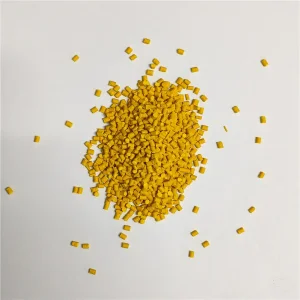
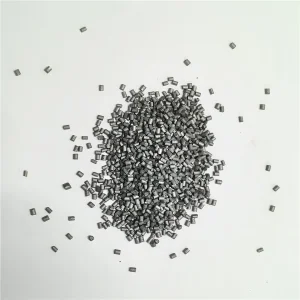
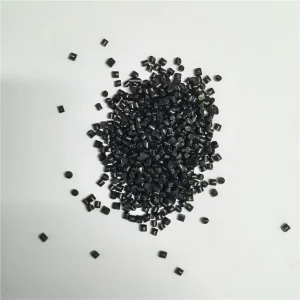
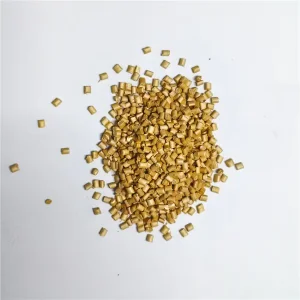
An in-depth analysis of market demands, regulatory compliance frameworks, and material transformation in modern appliance outer housing manufacturing.
The global household appliance industry is undergoing a structural paradigm shift driven by evolving consumer aesthetics, stringent environmental mandates, and the quest for lightweight structural durability. Modern consumers no longer view home appliances—ranging from washing machines, refrigerators, and split-system air conditioners to countertop kitchen electronics—as purely utilitarian tools. Instead, these devices are integrated architectural components of modern interior living spaces. Consequently, global OEMs (Original Equipment Manufacturers) and ODMs (Original Design Manufacturers) require advanced injection-grade plastic masterbatches that deliver uncompromising visual depth, surface gloss, scratch resistance, and structural integrity.
Polyethylene (PE) matrix masterbatches, specifically formulated for high-pressure injection molding of large-format appliance shells, represent a pivotal technical cornerstone in this ecosystem. While Polypropylene (PP) and ABS (Acrylonitrile Butadiene Styrene) have historically dominated rigid casing markets, specialized Low-Density Polyethylene (LDPE) and High-Density Polyethylene (HDPE) masterbatch carriers engineered with high Melt Flow Indexes (MFI) have emerged as superior color and additive delivery systems. They offer unmatched dispersion properties, zero environmental stress cracking (ESCR) interference, and exceptional compatibility with polyolefin blends.
Key Insight for Supply Chain Procurement: Precision color consistency across multi-component appliance assemblies requires pigment particle sizes below 0.5 microns, coupled with non-migrating carrier resins. Mismatches in Melt Flow Rate (MFR) between masterbatch carrier and base resin lead to weld-line visual defects, flow marks, and reduced mechanical impact resistance in thin-wall injection processes.
Furthermore, international regulatory frameworks such as EU RoHS 3 (Directive 2015/863), REACH SVHC (Substances of Very High Concern), UL94 Flammability Ratings, and FDA/EU Food Contact guidelines have elevated the barrier to entry for color concentrate manufacturers. High-quality masterbatch factories must maintain end-to-end analytical testing protocols—utilizing X-ray fluorescence (XRF) spectroscopy and gas chromatography-mass spectrometry (GC-MS)—to guarantee zero heavy metal contamination (Lead, Cadmium, Hexavalent Chromium, Mercury) and non-detected levels of polybrominated biphenyls (PBBs) or phthalate plasticizers.
Deep-dive analysis into organic/inorganic pigment loading, surface passivation chemistry, and carrier polymer matching for large-scale injection machinery.
Formulated with high melt flow index carrier PE resins (20 to 50 g/10min at 190°C/2.16kg) to ensure rapid, uniform melt blending without shear heating degradation during high-speed injection cycles.
Employs heat-stabilized organic pigments and rutile titanium dioxide (TiO2) treated with alumina-silica coatings, preventing color shifts up to 260°C injection barrel temperatures.
Integrated Hindered Amine Light Stabilizers (HALS) and UV absorbers (Benzotriazole chemistry) protect appliance housing aesthetics against indoor neon exposure and sunlight yellowing.
The core challenge in engineering PE masterbatches for appliance shells lies in avoiding micro-agglomeration of pigments. Un-dispersed pigment particles act as localized stress concentrators, reducing impact strength (Izod/Charpy values) of the final molded housing by up to 35%. Furthermore, poor dispersion causes visual defects such as pinholes, specks, and streaking under high surface gloss inspection standards.
Our manufacturing facility utilizes co-rotating twin-screw extruders featuring high-shear screw element configurations (combining kneading blocks, reverse feeding elements, and tooth-mixing elements). We benchmark dispersion using the strict DIN EN ISO 13900-5 Filter Pressure Value (FPV) standard, guaranteeing FPV values below 1.0 bar/gram for critical appliance grade production lines.
| Technical Parameter | Standard Testing Protocol | Appliance Grade Specification | Performance Impact |
|---|---|---|---|
| Carrier Resin Type | ISO 1183 (Density) | LDPE / LLDPE High Flow (0.918–0.924 g/cm³) | Ensures perfect miscibility & fast dispersion |
| Melt Flow Index (MFI) | ISO 1133 (190°C / 2.16 kg) | 25 – 45 g/10 min | Prevents pressure drops & flow line defects |
| Pigment Loading Content | TGA / Ash Content ISO 3451 | 30% – 70% (Custom Pigment / TiO2 / Carbon Black) | High tinting strength at low let-down ratios |
| Heat Resistance (Thermal) | DIN EN 12877-2 | 240°C – 280°C (5 min dwell time) | No color fading during hot runner molding |
| Color Difference Tolerance | CIE L*a*b* (D65 / 10°) | Delta E (ΔE) < 0.5 vs. Standard Target | Batch-to-batch consistency for multi-part shells |
| Moisture Content | Karl Fischer Titration ISO 15512 | < 0.05% (500 ppm) | Eliminates silver splay marks & surface voids |
Tailored masterbatch formulation matrices developed specifically for diverse thermal, chemical, and mechanical exposure environments.
Environment: Constant exposure to moisture, alkaline detergents, bleach, and high mechanical vibration.
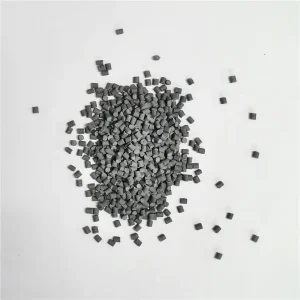
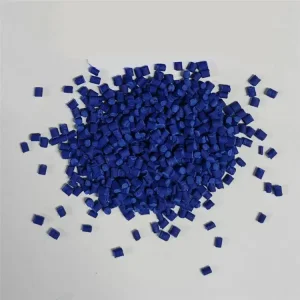
Masterbatch Solution: Non-migrating PE Grey, White, and Blue masterbatches enhanced with environmental stress crack resistance (ESCR) additives and chemical-passivated pigments preventing surfactant bleeding.
Environment: Low-temperature environments (-25°C), direct food contact compatibility, and fatty acid exposure.
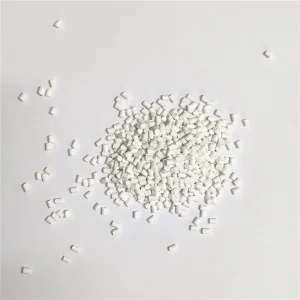
Masterbatch Solution: FDA/EU compliant high-concentration PE White and custom metallic masterbatches. Formulated with ultra-pure Anatase/Rutile TiO2, ensuring zero odor generation and high impact resistance at sub-zero temperatures.
Environment: Continuous indoor fluorescence light exposure, dust attraction, and static charge buildup.
Masterbatch Solution: Anti-static PE White, Ivory, and Grey formulations. Combines permanent antistatic additives (migrating and non-migrating polymer networks) with long-term UV stabilizers (Delta E < 0.8 over 5,000 continuous operating hours).
Environment: Thermal cycles, mechanical impact, scratch exposure, and premium visual texture demands.
Masterbatch Solution: Metallic Silver, Gold, Rose Red, and Deep Black PE concentrates. Incorporates aluminum flake passivated particles and mica pearlescent pigments engineered to withstand high shear forces without particle fracturing.
Navigating the convergence of smart appliance design, sustainable circular economy mandates, and advanced material science.
The global shift toward extended producer responsibility (EPR) mandates that home appliance manufacturers incorporate 20% to 50% PCR polyolefins into structural and aesthetic housings. However, PCR resins present severe technical challenges: inherent yellowing, residual odor, inconsistent MFI, and batch-to-batch color variance. Our technical roadmap focuses on PCR-Corrective PE Masterbatches, which utilize chemical color-compensating optical brighteners, odor-scavenging synthetic zeolites, and reactive chain extenders to restore mechanical properties and baseline whiteness.
Conventional black masterbatches rely on Carbon Black pigment, which absorbs Near-Infrared radiation, preventing automated optical sorting sensors at recycling facilities from identifying the underlying polymer. To solve this end-of-life challenge, our factory has engineered NIR-Detectable Black PE Masterbatches utilizing organic dark pigments. These allow automated sorting systems to correctly identify PE, PP, and ABS appliance casings for efficient closed-loop recycling.
Post-pandemic consumer preferences prioritize hygienic touchpoints on home appliances. Future masterbatch formulations integrate silver-ion and zinc-pyrithione inorganic antimicrobial networks into the PE carrier matrix. These additive masterbatches achieve a 99.9% reduction in bacterial proliferation (ISO 22196 compliance for *E. coli* and *S. aureus*) without compromising surface finish or mechanical strength.
Strategic Manufacturing Roadmap: By 2028, 100% of our appliance-grade PE masterbatches will feature low-processing-temperature technology (reducing injection barrel temps by up to 15°C) and carbon-neutral bio-based polyethylene carriers derived from sugarcane ethanol, drastically lowering Scope 3 carbon emissions for global brand owners.
Why leading global home appliance brands choose Changzhou Jiazhou Plastic Products Co., Ltd. as their strategic color technology partner.
Utilizing Datacolor 800 Spectrophotometers and X-Rite color measurement systems under standardized D65, A, TL84, and CWF illuminants, we achieve exact color matching against Pantone, RAL, or physical master samples within 48 hours.
Our 6,000 m² modern production base houses high-capacity co-rotating twin-screw compounding lines, automated gravimetric loss-in-weight feeders, and underwater pelletizing systems ensuring uniform granule size (2.5mm ± 0.2mm) with zero dust generation.
Every production batch undergoes comprehensive testing: Melt Flow Rate (MFR), Density, Ash Content, Moisture Level, Filter Pressure Value (FPV), Izod Impact Retention, and Accelerated QUV Weathering testing prior to dispatch.
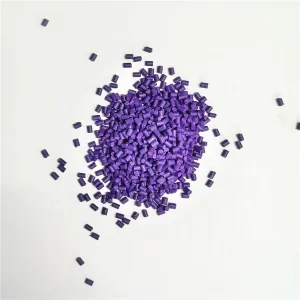
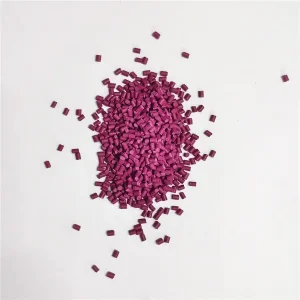
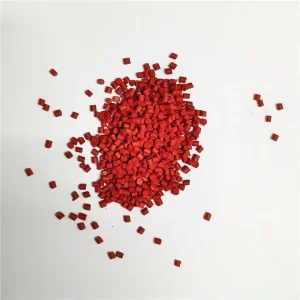
Explore additional specialty formulations, metallic masterbatches, and bright color solutions engineered for injection molding and film extrusion operations.
Expert engineering answers to common injection molding defects, carrier selection issues, and supply chain logistics queries.
For standard white, black, and solid color masterbatches, the recommended Let-Down Ratio (LDR) typically ranges between 1% to 4% by weight, depending on the pigment concentration and required opacity. For specialty metallic (silver/gold) or pearlescent masterbatches, an LDR of 3% to 5% is advised to achieve uniform metallic particle distribution without creating visible weld-line flow marks.
Yes. Low-Density Polyethylene (LDPE) carrier masterbatch with a high Melt Flow Index (MFI > 25 g/10min) is widely used as a "universal carrier" for Polypropylene (PP) resins because PE and PP belong to the same polyolefin family and display excellent thermodynamic compatibility. However, for ABS or SAN structural appliance housings, we recommend using a specialized SAN/Acrylic carrier matrix or an engineered PE masterbatch modified with polar compatibilizers to avoid micro-delamination and drop-impact strength reduction.
Pigment migration and blooming occur when low-molecular-weight organic dyes or low-grade pigments dissolve into the molten polymer and slowly recrystallize onto the cold plastic surface over time. We eliminate this defect by exclusively using high-molecular-weight organic condensed azo, phthalocyanine, and inorganic complex metal oxide pigments (CIMOP) featuring a high degree of solvent resistance and zero solubility in PE matrices.
Every production batch shipped from Changzhou Jiazhou Plastic Products Co., Ltd. is supplied with a comprehensive Technical Data Sheet (TDS), Certificate of Analysis (COA), and third-party laboratory test reports (SGS/Intertek) verifying compliance with EU RoHS 3 (Directive 2015/863), REACH SVHC updates, FDA 21 CFR food contact standards (where applicable), and UL94 flammability certifications.
We implement a closed-loop Quality Control system. Raw pigments undergo strict color strength testing before compounding. During extrusion, automated loss-in-weight gravimetric feeders maintain ingredient ratios within a ±0.1% tolerance. Finished masterbatch pellets are test-injected into standard plaques and evaluated under a dual-beam Datacolor spectrophotometer. Shipments are approved only when the color deviation Delta E (ΔE) is less than 0.5 compared to the master reference standard.