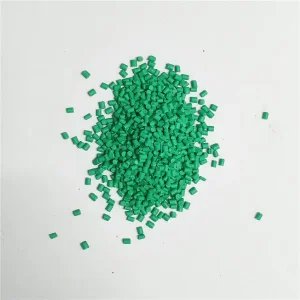
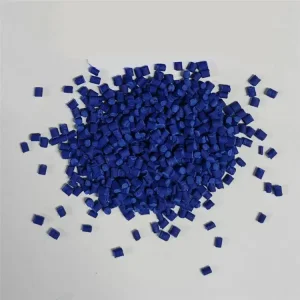
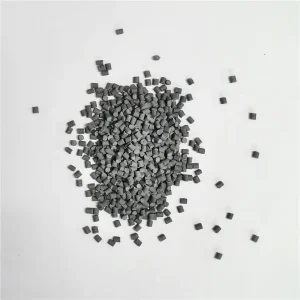
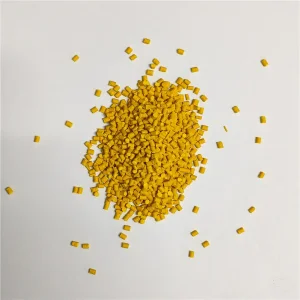
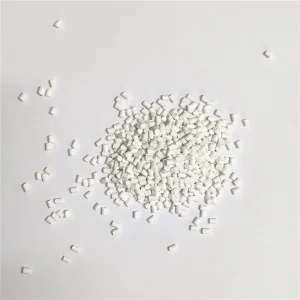
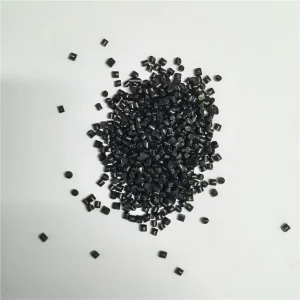
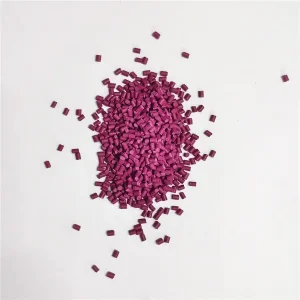
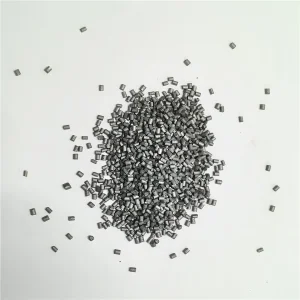
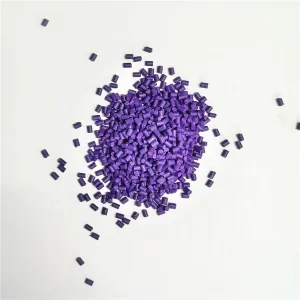
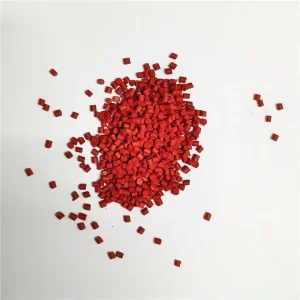
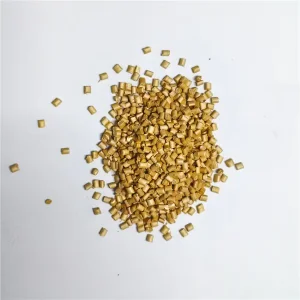
Engineered with high pigment concentration, anti-fading thermal stability, and seamless dispersion for blown film and injection processes.
An in-depth chemical and physical analysis of surface light scattering, carrier matching, and compounding dynamics in tier-1 masterbatch factories.
In modern polymer conversion, visual appeal and surface optics play a critical role in consumer perception, brand identity, and functional performance. Polyethylene (PE), encompassing Low-Density Polyethylene (LDPE), Linear Low-Density Polyethylene (LLDPE), and High-Density Polyethylene (HDPE), naturally exhibits a semi-crystalline structure that results in moderate-to-high surface gloss when melt-processed. However, emerging global market trends—particularly in luxury flexible packaging, automotive interior components, non-reflective agricultural mulch, and premium cosmetic containers—demand a refined, low-reflection matte finish.
Achieving a consistent, high-durability matte surface without compromising mechanical strength (such as tensile elongation and dart impact resistance) presents a complex material engineering challenge. Leading matte PE color masterbatch factories must balance pigment dispersion, matting agent particle size distribution, matrix viscosity matching, and thermal processing stability. This technical guide outlines the physics of surface dulling, masterbatch formulation chemistry, compounding technology, and global supply chain integration.
Information Gain Insight: Unlike standard color masterbatches which rely solely on organic/inorganic pigments suspended in a resin matrix, matte PE masterbatch integrates specialized surface micro-structuring additives. These agents induce controlled micro-roughness ($Ra \approx 1.5 - 3.5 \mu m$) during crystallization, transforming specular light reflection into diffuse reflection while preserving melt rheology.
Surface gloss is determined by how light interacts with a polymer interface. According to Fresnel's laws of reflection, a smooth plastic surface causes specular reflection where incident light rays bounce off at an equal angle, producing high sheen. Conversely, a matte surface features microscopic surface irregularities that scatter light across multiple angles—known as diffuse scattering.
When evaluating matte masterbatch performance, factories utilize gloss meters measuring at $60^\circ$ and $85^\circ$ angles according to ASTM D523 / ISO 2813 standards. Standard unmodified PE films typically display gloss levels exceeding $80 - 90 \text{ GU (Gloss Units)}$ at $60^\circ$. High-quality matte PE masterbatches can reduce this gloss rating to below $10 \text{ GU}$, creating a soft-touch, premium aesthetic with anti-glare functional benefits.
Micro-engineered additives generate uniform surface roughness ($Ra > 2.0 \mu m$), disrupting mirror-like light reflections.
Altered surface topography reduces contact area for skin lipids, preventing oily smudges on molded parts and packaging.
Increased surface surface area enhances dyne levels, facilitating superior ink adhesion for gravure and flexographic printing.
A professional matte PE color masterbatch is composed of four core functional ingredients: carrier resin, primary coloring pigments, inorganic/organic matting agents, and processing aids/dispersants.
The manufacturing process in leading factories relies on co-rotating twin-screw extruders featuring high length-to-diameter ($L/D$) ratios (ranging from 40:1 to 48:1). The screw profile is custom-designed with specialized kneading blocks and mixing elements to balance distributive and dispersive mixing.
| Extrusion Process Zone | Temperature Range (°C) | Primary Processing Objective | Quality Control Indicator |
|---|---|---|---|
| Feed Zone (Zone 1-2) | 160 - 180 °C | Solid conveying & resin premelting | Zero bridging, steady gravimetric feed rate |
| Melting & Kneading (Zone 3-5) | 190 - 220 °C | High shear dispersive mixing of pigments | Particle agglomerate reduction (< 5 µm) |
| Side Feeding Zone (Zone 6) | 200 - 220 °C | Downstream introduction of delicate matting agents | Preserved particle structure & aspect ratio |
| Vacuum Degassing (Zone 7-8) | 210 - 230 °C | Removal of volatiles, moisture & monomer residues | Pore-free pellet density, zero bubble entrapment |
| Pelletizing & Screening | 190 - 210 °C | Under-water or strand pelletization through 100-mesh filter | Uniform cylindrical/spherical size (2.5mm) |
Tailored technical solutions for film blowing, injection molding, and profile extrusion across diverse market verticals.
Applied in multi-layer blown films (LDPE/LLDPE) for courier bags, premium apparel packaging, and soft-touch pouch laminates. Delivers a tactile paper-like feel, eliminates light reflection for seamless barcode scanning, and maintains high tear resistance.
Utilized in HDPE/PP injection molding for wireless router housings, remote controls, smart home devices, and laptop accessories. Provides anti-scratch surface properties, hides sink marks, and prevents unsightly fingerprint accumulation.
Integrated into blow-molded HDPE containers and tube packaging for skincare creams, shampoos, and luxury cosmetics. Offers an elegant frosted finish without requiring secondary chemical etching or spray-coating processes.
Engineered for injection-molded automotive dash panels, door trims, and HVAC vents. Meets strict interior low-gloss safety standards to reduce windshield reflection while complying with low-VOC emission requirements.
Formulated for specialized greenhouse covers and weed-control mulch films. The matte surface scatters solar radiation evenly across crops, reducing localized heat spot burn and optimizing photosynthetic active radiation (PAR).
Blended into extruded PE synthetic wood profiles and outdoor conduit pipes. Imparts a natural matte wood texture with exceptional weather resistance against rain, thermal expansion, and solar degradation.
Why Changzhou, Jiangsu serves as the global hub for high-precision masterbatch manufacturing and rapid OEM scaling.
Global procurement directors and polymer processors increasingly turn to specialized Chinese manufacturers for their masterbatch requirements. The concentration of polymer chemistry expertise, raw material upstream integration, and advanced compounding infrastructure in Jiangsu province creates an unmatched competitive advantage in quality control, pricing efficiency, and lead times.
Situated within the Yangtze River Delta petrochemical ecosystem, Changzhou masterbatch factories maintain direct, long-term supply partnerships with top-tier primary resin producers (Sinopec, CNPC) and chemical pigment leaders. This ensures raw material purity, batch consistency, and immunity to international supply chain disruptions.
Every production batch undergoes automated spectrophotometer measurement (Datacolor / X-Rite) to guarantee strict color tolerance ($\Delta E < 0.5$). Melt Flow Indexers (MFI), moisture analyzers, and blown film test extruders evaluate melt homogeneity before shipment, ensuring zero lot-to-lot variance.
Equipped with multiple automated high-speed twin-screw extrusion lines, local factories can seamlessly scale production from small custom trial orders (100 kg) to full container loads (25 metric tons) within 7 to 10 working days, backed by rapid color-matching turnaround (under 72 hours).
Formulations comply strictly with international regulatory frameworks including EU REACH, RoHS 2.0 (Directive 2011/65/EU), FDA food contact approval 21 CFR 177.1520, and EN71-3 toy safety standards. Heavy metal content (Pb, Cd, Hg, Cr VI) is certified below detection limits.
Comparative physical and optical metrics for standard vs matte polyethylene color masterbatches.
| Performance Parameter | Standard PE Color Masterbatch | High-Quality Matte PE Masterbatch | Testing Method / Standard |
|---|---|---|---|
| Surface Gloss (60° Angle) | 85 - 98 GU (High Sheen) | < 10 - 25 GU (Controlled Matte) | ASTM D523 / ISO 2813 |
| Pigment Loading Concentration | 20% - 40% Pigment | 30% - 50% Pigment + Matting Matrix | Gravimetric Ash Content ISO 3451-1 |
| Melt Flow Index (190°C/2.16kg) | 5 - 15 g/10min | 10 - 30 g/10min | ASTM D1238 / ISO 1133 |
| Heat Resistance Temperature | 220 - 240 °C | Up to 260 °C (Anti-Fading) | DIN EN 12877-2 |
| Filter Pressure Value (FPV) | < 1.5 bar/g | < 0.8 bar/g (Ultra-Fine Dispersion) | EN 13900-5 |
| Light Fastness Rating | Blue Wool Scale 6-7 | Blue Wool Scale 7-8 (Maximum UV) | ISO 105-B02 |
| Recommended Addition Ratio | 2.0% - 4.0% | 1.5% - 3.5% (High Efficiency) | Internal Dosing Standard |
Addressing core engineering queries from plastic processors, film blowers, and procurement engineers.
Browse our extensive selection of vibrant, weather-resistant, and high-concentration color masterbatch solutions.