Engineered for Medical Packaging, Injection Molding, and Advanced Film Extrusion Applications
Setting Benchmark Quality in Cleanroom-Grade Polymer Colorants and Halogen-Free Additives
The global medical packaging industry is undergoing a structural paradigm shift driven by stringent environmental mandates, evolving international healthcare safety standards, and the aggressive phase-out of hazardous flame retardants. Historically, brominated and chlorinated compounds dominated the flame-retardant polymer formulations used in hospital environments and medical device housings. However, the adoption of directives such as the EU Medical Device Regulation (MDR 2017/745), REACH SVHC (Substances of Very High Concern), and US FDA 21 CFR regulations has compelled medical packaging manufacturers to eliminate halogenated additives completely.
Halogen-Free Polyethylene (PE) Masterbatch represents the pinnacle of modern polymer chemistry for cleanroom and clinical applications. Polyethylene—encompassing Low-Density Polyethylene (LDPE), Linear Low-Density Polyethylene (LLDPE), and High-Density Polyethylene (HDPE)—is the material of choice for IV fluid bags, sterile blow-fill-seal (BFS) ampoules, blister packaging, diagnostic kit containers, and surgical tool wraps. Incorporating a halogen-free flame retardant (HFFR) and high-dispersion pigment masterbatch into PE resins ensures that the final medical packaging yields zero corrosive toxic gases (such as hydrogen chloride or hydrogen bromide) during thermal processing or waste incineration.
Furthermore, medical packaging requires extreme chemical inertness. Standard industrial-grade masterbatches often suffer from pigment migration, heavy metal leaching, or volatile organic compound (VOC) emissions during gamma-ray or ethylene oxide (EtO) sterilization. A certified Medical Grade Halogen Free PE Masterbatch Supplier manufactures colorants utilizing medical-grade virgin carrier resins and ultra-pure organic pigments, fully complying with USP Class VI, ISO 10993 cytotoxicity, and European Pharmacopoeia (EP 3.1.3) requirements.
Strict enforcement of EU MDR, RoHS 3, and REACH SVHC mandates complete zero-halogen formulations in medical device packaging and drug delivery containment systems.
Formulated to maintain mechanical integrity, optical clarity, and color fastness under 25-50 kGy Gamma irradiation, E-beam exposure, and high-pressure autoclaving.
Intumescent phosphorus-nitrogen flame retardants eliminate dense smoke and halogen acid gas generation, ensuring maximum safety during medical waste handling.
Achieving optimal dispersion of organic colorants and halogen-free fire retardants within a Polyethylene matrix requires sophisticated compounding techniques. The primary challenge in manufacturing high-concentration medical masterbatches lies in preventing agglomeration while maintaining a narrow particle size distribution (typically < 1 micron).
Leading Chinese masterbatch factories leverage co-rotating twin-screw extruders featuring high length-to-diameter (L/D) ratios (44:1 to 52:1) equipped with specialized kneading blocks. This setup applies intense shear stress without overheating the polymer melt, preserving the integrity of heat-sensitive active additives.
| Performance Parameter | Halogen-Free PE Masterbatch | Standard Brominated PE Masterbatch | Generic Commercial Masterbatch |
|---|---|---|---|
| Halogen Level (Cl, Br, F, I) | 0 ppm (ND via EN 14582) | > 50,000 ppm | Variable (Uncontrolled) |
| Biocompatibility (ISO 10993) | Passed (Non-cytotoxic) | High Failure Risk | Not Evaluated |
| Smoke Density (ASTM E662) | Low / Non-toxic Smoke | High / Corrosive Acid Smoke | Medium to High |
| Heat Resistance Threshold | 260°C – 300°C | 220°C – 240°C | 200°C – 220°C |
| Heavy Metal Extraction (RoHS) | Pb, Cd, Hg, Cr(VI) < 2 ppm | Trace Contaminants Present | High Leaching Risk |
| Carrier Resin Quality | 100% Medical Grade Virgin PE | Industrial Recycled PE / Virgin PE | Off-spec / Recycled Polyolefins |
China has emerged as the global epicenter for advanced polymer additive synthesis and masterbatch manufacturing. Factories located in industrial hubs such as Changzhou, Jiangsu Province, benefit from an integrated chemical ecosystem that links basic petrochemical refining directly to specialized additive compounding. This vertical integration offers global pharmaceutical and medical packaging procurement teams unparalleled cost efficiency and operational agility.
Utilizing gravimetric loss-in-weight feeders and inline spectrophotometer monitoring ensures batch-to-batch color variance of ΔE < 0.3 across multi-ton production runs.
Chinese factories achieve 25%–40% cost reduction versus European or North American suppliers through high-volume throughput, automated compounding, and optimized raw material sourcing.
Rapid color matching within 48 to 72 hours, flexible minimum order quantities (MOQ), and fast sea/air freight dispatch to worldwide pharmaceutical converters.
Medical Packaging Halogen Free PE Masterbatch is implemented across a wide spectrum of critical healthcare applications. Below are the core sectors where these specialized colorants and functional additives demonstrate superior utility:
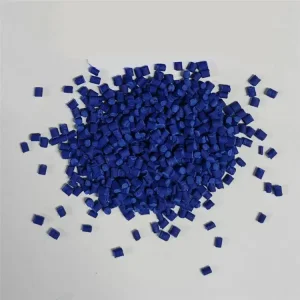
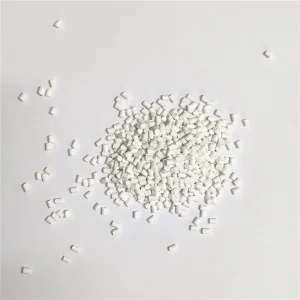
Formulated with high-clarity LDPE/LLDPE carriers, our white and blue masterbatches ensure perfect sealing properties, zero pinhole formation, and complete compliance with European Pharmacopoeia 3.1.3.
Provides precise stripe color identification (radiopaque marker stripes) for clinical tubing without altering melt strength, tensile elongation, or lumen flexibility during micro-extrusion.
Protects light-sensitive active pharmaceutical ingredients (APIs) by providing 99.9% UV-Vis light blockage while maintaining zero halogen leaching into solid oral dosage forms.
Procuring plastic masterbatch for medical applications demands strict vendor qualification procedures. Unlike standard commercial plastics, any batch contamination or unannounced formulation tweak can lead to regulatory recalls, batch rejections, or compromised patient safety.
The medical plastics industry is entering an era dominated by sustainability and smart material integration. Key innovations shaping the next decade include:
1. Bio-Based Halogen-Free PE Carriers: The adoption of sugarcane-derived bio-PE resins as carrier matrices to drastically reduce carbon footprint while preserving identical mechanical and medical compliance standards.
2. Micro-Extrusion Nanocomposites: Integrating nano-dispersed inorganic flame retardants and non-migratory pigment particles for ultra-thin medical films (< 15 microns) without pinholes or tear points.
3. RFID & Sensor-Compatible Pigment Systems: Developing masterbatches that do not interfere with high-frequency RFID tags embedded in smart medical packaging for hospital inventory automation.
Technical and Commercial Guidance for Medical Packaging Procurement and Process Engineers
Direct Factory Supply for Injection Molding, Blown Film, and Extrusion Industry Partners