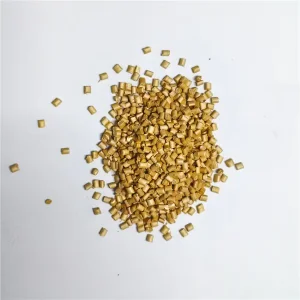
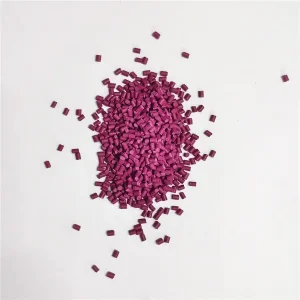
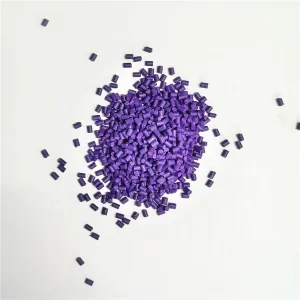
Engineered for high-shear hose extrusion, blown film, and pressure-pipe applications. High dispersion, pigment concentration up to 50%, and thermal stability rated up to 260°C.
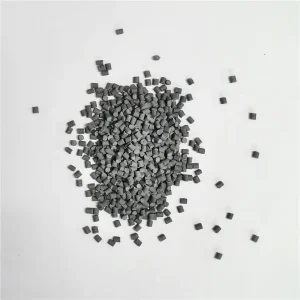
Analyzing global demand, fluid dynamics in hose extrusion, compounding technology, and market vectors shaping 2026–2030.
The global flexible tubing and plastic hose manufacturing sector is experiencing a rapid technological evolution driven by strict agricultural water conservation goals, expanding urban infrastructure, automotive thermal management needs, and stringent medical hygiene guidelines. Polyethylene (PE)—spanning Low-Density Polyethylene (LDPE), Linear Low-Density Polyethylene (LLDPE), and High-Density Polyethylene (HDPE)—remains the dominant polymer matrix for flexible conduits, irrigation hoses, corrugated tubes, and cosmetic squeeze pipes.
At the center of high-performance PE hose manufacturing is the specialized PE plastic hose masterbatch. Unlike general-purpose plastic colorants, masterbatches formulated for hose extrusion must meet demanding rheological, mechanical, and chemical stability criteria. Extruding continuous wall hoses at high linear line speeds (often exceeding 30 to 60 meters per minute) requires masterbatch pellets to melt instantly, disperse uniformly without causing melt fracture or pinholes, and maintain structural polymer chain integrity under thermal shear stress.
Extruding plastic hoses presents distinct processing challenges compared to injection molding or flat film casting. Hoses undergo continuous radial stress, environmental weathering, liquid pressure fluctuations, and flexural fatigue. Consequently, global buyers require masterbatch factories to engineer products that address five foundational processing parameters:
The Melt Flow Index (MFI) of the masterbatch carrier resin must strictly match or slightly exceed the base PE virgin resin (typically 0.3 to 4.0 g/10min at 190°C/2.16kg) to prevent viscosity mismatch, shear heat build-up, and surface roughness.
Agglomerated pigment particles cause localized stress concentration points, leading to hose pinholes, burst failure under hydrostatic pressure, and wall weakness. Micro-dispersion under 1 micron is imperative.
Hoses used for industrial chemicals, cosmetic packaging, or food fluid delivery demand zero organic pigment migration to prevent fluid contamination or outer surface blooming.
Understanding pigment selection, carrier polymer chemistry, thermal stabilization, and UV defense mechanisms in masterbatch formulation.
Achieving superior color brilliance, lightfastness, and opacity in plastic hose manufacturing requires sophisticated chemical formulation. Advanced compounding plants utilize a tri-part compounding system: Carrier Resin + Organic/Inorganic Pigments + Functional Additive Package.
| Masterbatch Type | Primary Pigment / Active Material | Pigment Concentration (%) | Thermal Stability (°C) | Primary PE Hose Application |
|---|---|---|---|---|
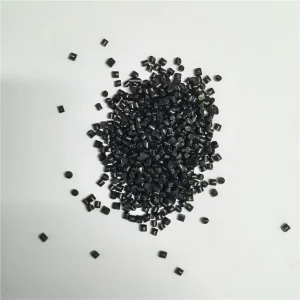
| PE Black Masterbatch | P-Type / Gas Carbon Black (N330/N550, particle size 15-25nm) | 30% - 50% | 260°C - 300°C | Agricultural drip tape, outdoor irrigation hoses, underground conduits |
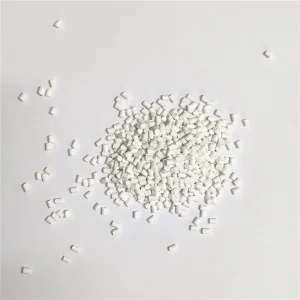
| PE White Masterbatch | Rutile Titanium Dioxide ($TiO_2$, coated with Silica/Alumina) | 40% - 70% | 280°C | Cosmetic squeeze tubes, milk delivery hoses, sanitary water pipes |
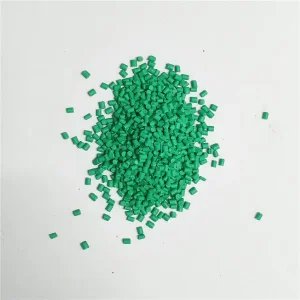
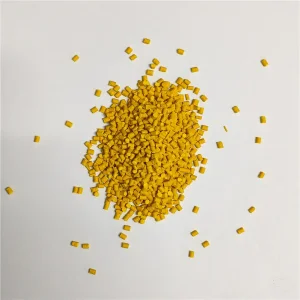
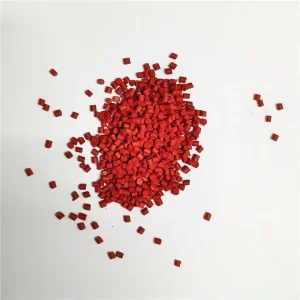
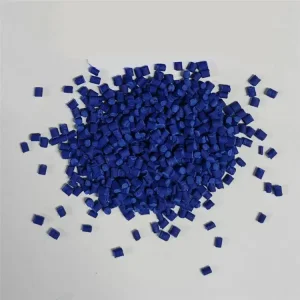
| Color Masterbatches (Red/Blue/Green) | Phthalocyanine Blue/Green, Quinacridone Red, Perylene | 20% - 40% | 240°C - 260°C | Pneumatic air hoses, industrial fluid lines, gas pipes |
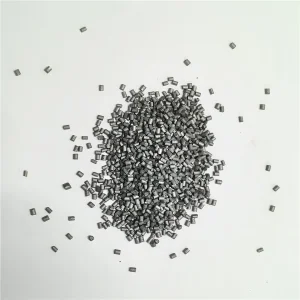
| Specialty Metallic (Silver/Gold) | Coated Aluminum Flakes, Mica Pearl Pigments | 15% - 30% | 220°C - 240°C | Premium personal care squeeze tubes, decorative hose outer layers |
| Desiccant / Filler Masterbatch | Active Calcium Oxide ($CaO$) / Ultrafine $CaCO_3$ | 70% - 80% | 260°C | Moisture absorption in recycled PE hose extrusion, cost reduction |
Outdoor PE hoses exposed to solar radiation suffer from photo-oxidation. Ultraviolet rays split polymer chains, causing micro-cracks, loss of flexibility, and eventual burst failure. Premier masterbatch manufacturers incorporate Hindered Amine Light Stabilizers (HALS) alongside UV absorbers (such as Benzotriazoles) into the masterbatch matrix. In PE Black Masterbatch, ultra-fine Carbon Black serves a dual function: providing intense black color and acting as a physical UV screen by absorbing UV energy and dissipating it as heat harmlessly across the polymer matrix.
For high-end hose extrusion (especially thin-wall drip irrigation tubes with wall thicknesses under 0.2mm), masterbatch quality is quantified by its Filter Pressure Value (FPV) according to EN 13900-5. Leading Chinese factories enforce strict FPV thresholds below 0.5 to 1.5 bar/g (using 14 or 25-micron screen packs), ensuring zero nozzle clogging and eliminating catastrophic line breaks during continuous extrusion runs.
How Changzhou and Jiangsu compounding hubs deliver global competitiveness, production scalability, and precise quality control.
China has solidified its position as the global manufacturing center for high-performance masterbatch compounding. Regions such as Changzhou in Jiangsu Province represent specialized industrial clusters where raw material petrochemical refineries, precision twin-screw extruder machine builders, and pigment formulation labs operate within close proximity.
Modern Chinese compounding lines utilize co-rotating twin-screw extruders with high L/D ratios (44:1 to 52:1), enabling multi-stage side-feeding, optimal melt homogenization, and zero thermal degradation of organic pigments.
By producing tens of thousands of metric tons annually with automated loss-in-weight gravimetric feeders, Chinese factories achieve 20% to 35% lower unit production costs compared to European or North American compounders.
Integrated spectrophotometry labs allow custom color matching (Pantone / RAL) within 72 hours, with sample dispatch via international express and seamless export via Shanghai/Ningbo deep-water ports within 10-15 days.
How specific hose industries leverage customized PE masterbatches for functional and aesthetic compliance.
Requires high-opacity Black PE Masterbatch formulated with fine carbon black (N330). It prevents sunlight penetration into the hose interior, suppressing algae growth while ensuring long-term UV resistance under harsh desert or tropical climates.
Utilizes High-Opacity White, Silver Metallic, or Custom Pastel PE Masterbatches. Formulations must strictly comply with FDA 21 CFR and EU No 10/2011 food/cosmetic contact regulations, featuring zero heavy metals and low odor profiles.
Demands vibrant identification color masterbatches (Red, Blue, Green, Yellow) with exceptional heat fastness. The masterbatch must not degrade the flexural modulus or tensile strength of the base LLDPE/HDPE matrix.
Incorporates cost-effective Filler Masterbatch (CaCO3 based) mixed with PE Black Masterbatch. Enhances ring stiffness, reduces thermal shrinkage during cooling, and slashes virgin resin expenditure by up to 25%.
Requires heat-stabilized, chemical-resistant PE grey and black masterbatches capable of resisting continuous under-hood temperatures exceeding 120°C alongside engine oil and glycol splash exposure.
Demands ultra-pure, USP Class VI certified non-toxic masterbatches manufactured in ISO Class 7 cleanroom environments, ensuring zero phthalates, non-bleeding migration, and gamma radiation resistance.
A structured framework for international procurement directors to audit, evaluate, and source PE masterbatches from Chinese suppliers.
Procuring raw polymer inputs across international borders requires rigorous vendor auditing to guarantee batch-to-batch consistency and prevent downstream extrusion downtime. Procurement managers should enforce the following four-stage qualification protocol:
Provide the supplier with your base resin's exact resin grade, processing temperature curve, extruder screw L/D ratio, and target screen mesh size. Demand MFI verification of the masterbatch carrier.
Request 1kg–5kg testing samples. Perform Filter Pressure Value (FPV) testing, Differential Scanning Calorimetry (DSC) for thermal degradation points, and ash content analysis for filler verification.
Ensure the manufacturer supplies third-party SGS/TÜV test reports verifying compliance with REACH, RoHS 2.0, Heavy Metal (Pb, Cd, Hg, Cr VI) limits, and FDA food contact standard compliance where applicable.
Standard PE Masterbatch pellets are packed in 25kg moisture-proof PE/Kraft paper bags or 1,000kg bulk super-sacks. A standard 20-foot FCL container accommodates 18 to 20 metric tons on pallets, while a 40-foot HQ container accommodates up to 26 metric tons. Partnering with factories in Changzhou ensures direct highway access to Shanghai Port, reducing inland transit time to under 6 hours.
The transition toward circular plastics, Post-Consumer Recycled (PCR) carrier systems, and smart additive integration.
The global masterbatch market is rapidly adapting to environmental regulations such as the EU Packaging and Packaging Waste Regulation (PPWR) and global carbon neutrality directives. Masterbatch factories are expanding beyond conventional coloring into multifunctional, eco-friendly systems:
Compounding masterbatches using certified Post-Consumer Recycled (rPE) resins as carrier matrices, enabling plastic hose manufacturers to increase total recycled content without sacrificing mechanical strength.
Utilizing sugarcane-derived bio-polyethylene carriers to achieve negative carbon footprint compounding for eco-friendly consumer squeeze tubes and organic farm irrigation lines.
Integrating silver-ion ($Ag^+$) or zinc-based nano-additives into PE masterbatches for food-grade liquid delivery and medical tubing to inhibit biofilm growth on hose interior walls.
Expert insights on troubleshooting hose extrusion, let-down ratios, carrier compatibility, and supply lead times.
Select a product to inspect technical datasheets, request OEM color formulation, or submit an online RFQ.