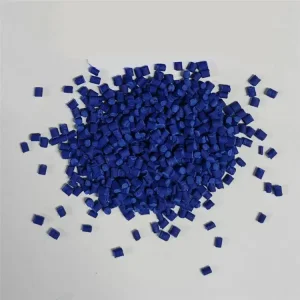
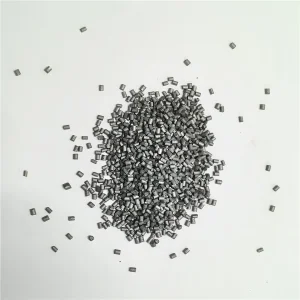
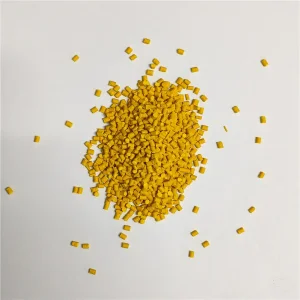
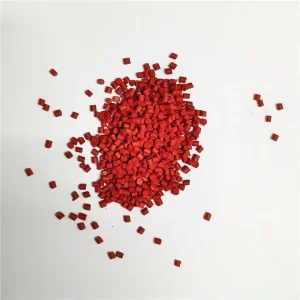
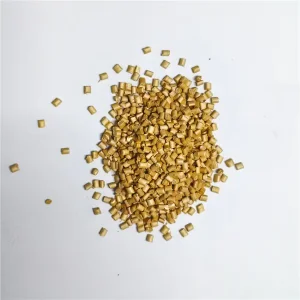
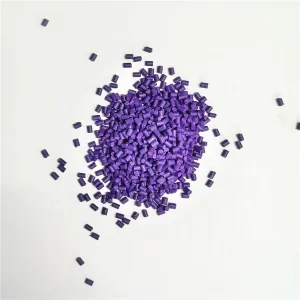
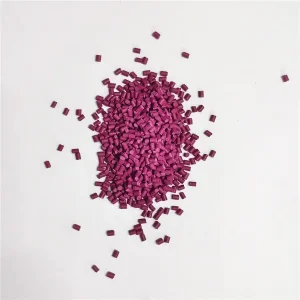
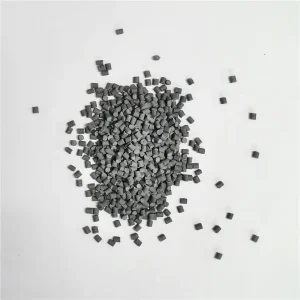
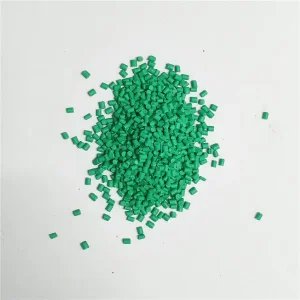
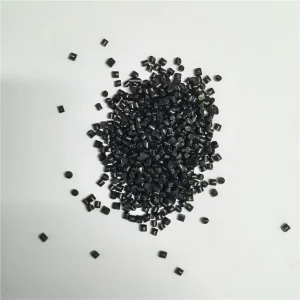
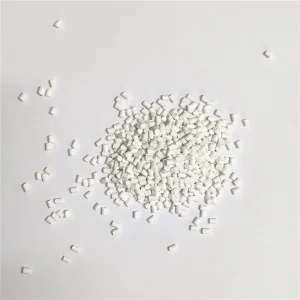
Engineered with high pigment loadings and optimal carrier matrix dispersion for blown film, injection molding, and continuous profile extrusion.
Understanding the physics of pigment wetting, shear-induced de-agglomeration, and carrier matrix compatibility in high-speed thermoplastics processing.
During compounding, the molten carrier polymer must completely wet the surface of primary pigment particles, lowering interfacial tension and replacing air pockets trapped within pigment aggregates.
High shear stress generated by co-rotating twin screws breaks pigment agglomerates down to their fundamental particle size (< 1 micron), eliminating surface streaks and filter clogging.
Dispersing agents and waxes permanently stabilize the de-agglomerated particles, preventing re-coagulation during storage, transport, and final product remelting.
How procurement leaders balance unit price, lot-to-lot consistency, yield efficiency, and supply continuity in international plastics manufacturing.
| Evaluation Parameter | Standard Industry Masterbatch | Jiazhou Premium Pigment Concentrate | Operational Impact |
|---|---|---|---|
| Pigment Loading Concentration | 20% - 35% Loading | 40% - 75% High Concentration | Lower let-down ratio (LDR), reduced freight and storage costs per ton. |
| Color Tolerance (CIE L*a*b*) | ΔE ≤ 1.5 to 2.0 | ΔE ≤ 0.3 to 0.5 (Strict Batch Control) | Guarantees exact color matching across global multi-factory sites. |
| Heat Resistance Rating | 200°C - 220°C | 260°C - 300°C High-Temp Stability | Prevents thermal color shift, yellowing, and degradation during high-speed molding. |
| Filter Pressure Value (FPV) | > 1.5 bar/g | < 0.2 bar/g (Ultra-Fine Dispersion) | Extends extruder screen life by 300% in ultra-thin film blowing. |
| Heavy Metal & Migration | Trace impurity risk | 100% RoHS / REACH / Non-Migration | Ensures compliance for food packaging, toys, and medical applications. |
Leveraging the Changzhou masterbatch industrial hub to deliver unmatched economies of scale, technical precision, and rapid order fulfillment.
Located in the core chemical manufacturing region of Changzhou, Jiangsu, our facility maintains direct supply pipelines for high-purity Rutile TiO2, organic Phthalocyanine pigments, Carbon Black, and specialized carrier resins (PE, PP, EVA, ABS, PET).
Our factory incorporates computer-controlled multi-component gravimetric feeders linked to continuous co-rotating twin-screw extruders. This guarantees precise feed ratios with zero batch deviation.
With proximity to Shanghai and Ningbo deep-water ports, standard orders are dispatched within 7–12 days. Emergency custom color matching is delivered within 3 working days globally.
Navigating international chemical safety frameworks with full documentation, certification transparency, and localized engineering support.
Fully registered and compliant with European Chemicals Agency (ECHA) standards. Free from Substances of Very High Concern (SVHC).
Formulated according to 21 CFR 177.1520 guidelines for direct and indirect food contact packaging applications.
Strictly heavy-metal free. Zero lead, cadmium, mercury, hexavalent chromium, PBBs, or PBDEs for electronic appliance housings.
Tested for heavy metal migration in toy manufacturing, ensuring child safety in injection molded consumer goods.
Pioneering sustainable plastic coloration through bio-based carriers, recycled resin compatibility, and NIR sorting technology.
Traditional carbon black absorbs Near-Infrared (NIR) radiation, preventing automated optical sorting in recycling facilities. Our special NIR-detectable black masterbatch enables optical sorting sensors to identify and separate PCR polyolefins efficiently.
With increasing mandates for Post-Consumer Recycled (PCR) content, our carrier matrices incorporate special compatibilizers and chain extenders to neutralize color variations and odor issues present in recycled plastic feedstocks.
For fully compostable agricultural mulch films and single-use packaging, we supply certified OK Compost bio-masterbatches utilizing PLA and PBAT carriers paired with non-toxic organic pigments.
Customized masterbatch formulations tailored to specific processing equipment, shear environments, and end-use conditions.
Used in shopping bags, courier express bags, and multi-layer agricultural films. Requires zero pin-holes, micro-dispersion under 15 microns, and high opacity at 1% to 3% LDR.
Applied in automotive interior trim, home appliance housings, and logistics crates. Requires high dimensional stability, zero warp/shrinkage, and scratch resistance.
Formulated for HDPE water supply pipes, corrugated conduit, and outdoor PVC profiles. Focuses on long-term UV resistance (xenon arc testing > 2000 hrs) and hydrostatic pressure performance.
Engineered for PP spunbond non-woven fabrics and synthetic filament yarns. Demands ultra-low Filter Pressure Value (FPV < 0.1 bar/g) to prevent spinneret clogging.
Addressing key technical challenges in polymer coloration, carrier selection, rheology, and global compliance standards.
The carrier resin of a plastic pigment concentrate should ideally match the base processing polymer (e.g., PE carrier for PE resin, PP carrier for PP resin). Mismatched carrier polymers (such as using an EVA carrier in high-density polyethylene) can reduce tensile strength, cause delamination, or lower heat deflection temperature (HDT). When absolute universal compatibility is needed, low-molecular weight specialized copolymers with adjusted Melt Flow Index (MFI) are utilized to preserve impact resistance.
Color streaking occurs due to incomplete dispersion of pigment agglomerates or significant melt viscosity differences between the masterbatch carrier and the virgin resin. To resolve this, we adjust the Melt Flow Index (MFI) of our pigment concentrate to be slightly higher (more fluid) than the base resin, increase twin-screw shear parameters during compounding, and incorporate specialized internal lubricants.
Filter Pressure Value (measured in bar/g per EN 13900-5) quantifies the dispersion quality of a masterbatch by measuring the pressure build-up when molten polymer passes through a fine mesh screen pack. A low FPV (< 0.2 bar/g) indicates minimal un-dispersed pigment agglomerates, making the masterbatch suitable for ultra-thin blown films (down to 8 microns) and fiber spinning without risking film breakage or screen clogging.
Inorganic pigments (such as Titanium Dioxide, Iron Oxides, Cobalt Blue) feature superior thermal stability (exceeding 300°C), exceptional weather resistance (light fastness rating 7-8), and high opacity, but lower color brightness. Organic pigments (such as Phthalocyanines and Azo pigments) provide vibrant color intensity and high tinting strength, but require specialized heat stabilizers to withstand thermal processing above 260°C.
Thanks to high pigment concentration loading (up to 75%), our masterbatches operate efficiently at let-down ratios (LDR) between 1% and 4% (1:100 to 4:100 mixing ratios) depending on wall thickness, opacity demands, and part geometry. Lower LDRs significantly reduce operating costs and storage requirements.
Yes, we regularly engineer combination (combo) masterbatches that integrate color pigments with functional additives in a single pellet matrix. Common combinations include Color + UV Stabilizers (HALS), Color + Anti-Static Agents, Color + Flame Retardants, and White TiO2 + Anti-Slip/Processing Aids.
Selecting high-performance masterbatch solutions for blown film extrusion, injection molding, and custom OEM compounding applications.
Our polymer laboratory provides spectrophotometric matching (Pantone/RAL/sample chip) within 3-5 business days. Experience superior pigment dispersion and optimized Total Cost of Ownership.
Connect with Polymer Experts