Engineered for maximum pigment concentration, ultra-low filter pressure value (FPV), and superior thermal dispersion across blown film and injection processes.
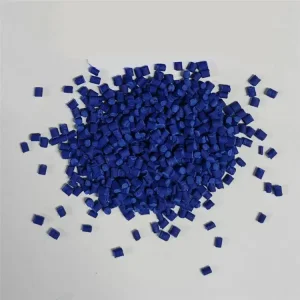
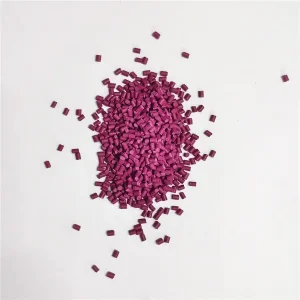
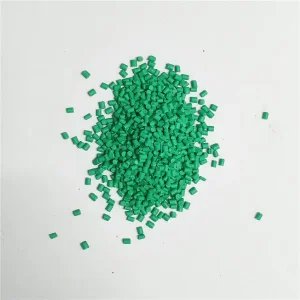
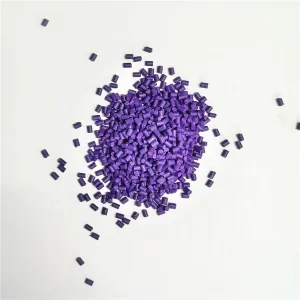
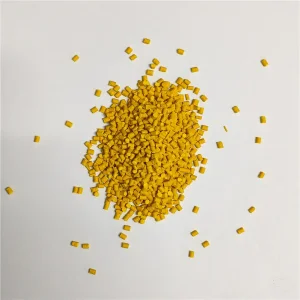
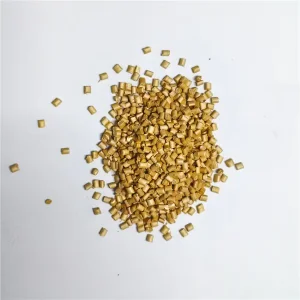
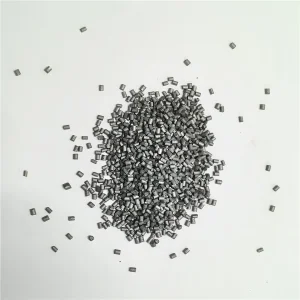
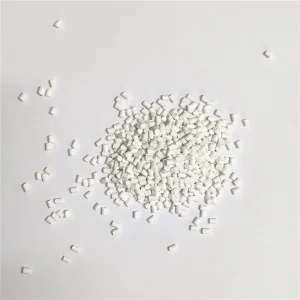
Understanding the transition from opaque coloration to high-clarity transparent polyolefin masterbatch systems.
The global polyolefin color concentrates market is undergoing a structural shift. Modern packaging design, consumer electronics enclosures, agricultural film engineering, and medical-grade device manufacturing increasingly demand transparent polyethylene (PE) color masterbatch solutions that deliver vibrant hues without compromising optical transparency, haze limits, or mechanical toughness. Transparent PE color masterbatch is a highly specialized polymer formulation designed to impart specific color tones (tinting) while preserving the natural refractive index and light transmission profile of base resins, such as Low-Density Polyethylene (LDPE), Linear Low-Density Polyethylene (LLDPE), and High-Density Polyethylene (HDPE).
Achieving absolute optical transparency in pigmented polyolefins requires precise molecular matching between the carrier resin, specialized organic dyes, and nano-dispersed pigments. Unlike traditional opaque masterbatches that rely on inorganic fillers (such as Titanium Dioxide $\text{TiO}_2$ or Carbon Black) to scatter light, transparent PE color formulations utilize high-purity organic colorants and dye complexes that feature particle sizes significantly below the wavelength of visible light ($< 400\text{ nm}$). This technical configuration prevents Mie scattering, ensuring minimal haze buildup and maximum total light transmittance (TLT) according to ASTM D1003 standards.
Brand owners require transparent color tinting (e.g., tinted shrink film, stretch wrap, zip-lock bags) to facilitate product visibility while establishing shelf differentiation and light-wavelength protection for sensitive goods.
Unlike heavy opaque pigments that disrupt automated Near-Infrared (NIR) sorting systems at material recovery facilities (MRFs), transparent colored polyolefins allow full infrared light penetration, enabling high-value circular recycling.
In greenhouse film and agricultural applications, transparent masterbatches tuned to specific spectral windows selective absorption of destructive UV rays while optimizing Photosynthetically Active Radiation (PAR) transmission.
The physics of refractive index matching, melt viscosity tuning, and thermal stability in masterbatch extrusion.
Developing high-performance transparent PE color masterbatch is an exercise in microscopic interface physics. The primary challenge lies in preventing phase separation, pigment agglomeration, and refractive index mismatch between the carrier polymer matrix and the added functional additives.
Polyethylene typically exhibits a refractive index ($n_D$) ranging between 1.510 and 1.540 depending on crystallinity and density. Low-Density Polyethylene (LDPE) sits at approximately $n_D = 1.515$, whereas High-Density Polyethylene (HDPE) ranges up to $n_D = 1.540$. When an organic pigment or dye is introduced, any variance between the refractive index of the additive phase and the host polymer phase causes light refraction at interface boundaries, converting specular light transmission into diffuse scattering (perceived visually as haze or cloudiness). Leading manufacturers utilize proprietary solvency promoters and compatibilizers that bridge the surface energy gap, ensuring the colorant dissolves at a molecular level within the molten carrier during extrusion processing.
The Melt Flow Index (MFI) of the masterbatch carrier resin must be engineered to match or slightly exceed the MFI of the target virgin resin under operating shear rates. If the carrier MFI is significantly lower, incomplete breakdown of the masterbatch pellets occurs during extrusion, resulting in visual "fish-eyes", color streaks, and un-melted gels. Conversely, an excessively high MFI carrier degrades the mechanical integrity of thin blown films.
To quantify dispersion quality, enterprise laboratories test batches via the Filter Pressure Value (FPV) test according to EN 13900-5. High-quality transparent masterbatch products maintain an exceptionally low FPV ($< 0.5 \text{ bar/g}$ over a $14\ \mu\text{m}$ screen mesh), confirming the absence of un-dispersed micro-aggregates that could induce micro-pinholes or film tearing during high-speed blowing lines.
| Parameter / Metric | Standard Transparent PE Masterbatch | High-Clarity Technical Grade (Jiazhou Standard) | Test Standard / Method |
|---|---|---|---|
| Carrier Resin Type | Standard LLDPE / LDPE | 100% Virgin Metallocene LLDPE / POE Elastomer | ASTM D1238 |
| Melt Flow Index (MFI) | 5 – 15 g/10 min (190°C/2.16kg) | 12 – 45 g/10 min (Customizable) | ISO 1133 / ASTM D1238 |
| Filter Pressure Value (FPV) | < 1.5 bar/g ($14\mu m$) | ≤ 0.3 bar/g ($14\mu m$) | EN 13900-5 |
| Heat Fastness / Stability | 220°C – 240°C | 260°C – 300°C | DIN EN 12877-2 |
| Light Fastness (Blue Wool Scale) | Grade 5 – 6 | Grade 7 – 8 (High Weathering) | ISO 105-B02 |
| Migration Resistance | Grade 3 – 4 | Grade 5 (Zero Bleed / Non-migratory) | DIN 53775 |
| Haze Addition Rate | + 3.5% – 5.0% at 2% Letdown | < + 0.8% at 2% Letdown | ASTM D1003 |
Optimizing masterbatch dosage, melt behavior, and cooling kinetics across industrial conversion equipment.
Used extensively for high-clarity shrink wraps, agricultural greening films, food packaging, and protective laminates. Formulations feature ultra-fine dispersion to eliminate bubble instabilites, gauge variation, or die build-up (drool) at high throughput rates ($> 500 \text{ kg/hr}$). Recommended Let-Down Ratio (LDR): 1% to 3%.
Ideal for medical syringes, clear caps and closures, storage containers, and cosmetic packaging. Optimized carrier fluidity ensures fast cycle times, zero weld-line defects, uniform color distribution across complex geometries, and complete freedom from warpage or dimensional shrinkage.
For deep-draw thermoformed clamshells, trays, and clear signage. Formulations resist thermal degradation under prolonged heating cycles during thermoforming plug assist, preserving vivid color depth, crystal transparency, and edge-clarity.
Evaluating vendor capabilities, batch consistency, supply chain resilience, and regulatory compliance.
For multinational procurement officers and plastic converters, selecting the correct masterbatch factory involves comprehensive audit evaluations beyond unit price per kilogram. Supply chain disruptions, batch-to-batch color variance, or regulatory non-compliance can stall automated manufacturing plants. Changzhou Jiazhou Plastic Products Co., Ltd. integrates strict quality engineering protocols across all operational stages:
Equipped with high-precision continuous loss-in-weight gravimetric feeders, raw pigments, processing aids, and carrier resins are metered into co-rotating twin-screw extruders featuring high length-to-diameter ($L/D \ge 44:1$) ratios. Specialized mixing elements provide intensive dispersive and distributive shear, breaking down pigment agglomerates down to primary particle sizes without degrading polymer chain length.
Every production batch undergoes spectrophotometer analysis under standard illuminants (D65, A, F11/CWF). Computerized color matching software calculates CIELAB color coordinates ($L^*, a^*, b^*$). Production lots are released only when total color difference ($\Delta E^*$) stays strictly below 0.3 against approved master customer standards, eliminating shade shifts across separate production runs.
Our transparent PE masterbatches are formulated using pigments and additives that comply fully with stringent global safety frameworks:
Pioneering bio-based carriers, smart optical additives, and circular recycling compatibility.
To reduce carbon footprints, our R&D roadmap incorporates sugarcane-derived Bio-PE and chemically recycled Post-Consumer Recycled (PCR) polyolefin carriers. These systems achieve carbon neutrality while retaining 99.5% optical transparency compared to fossil-fuel base resins.
Next-generation transparent masterbatches integrate invisible fluorescent markers and narrow-band UV absorbers. These technologies protect food light-sensitive nutrients from oxidation while allowing rapid brand verification under specialized UV scanners.
Explore our wide spectrum of color masterbatches tailored for injection, blown film, and pipe extrusion applications.
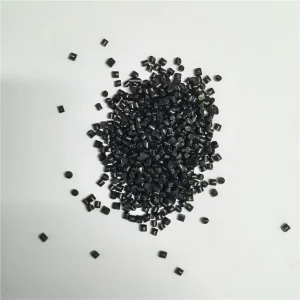
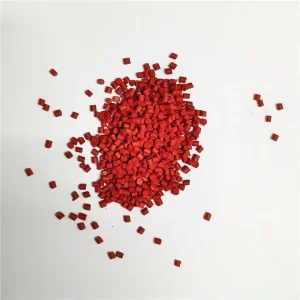
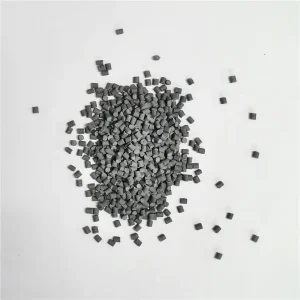
Expert insights into color matching, processing parameters, troubleshooting, and global factory logistics.
Transparent color masterbatch utilizes high-purity organic dyes or ultra-fine nano-scale pigments that dissolve or disperse completely within the polyolefin melt without scattering light. Opaque masterbatches contain inorganic pigments (like Titanium Dioxide or Carbon Black) that actively reflect and scatter light, rendering the final plastic part non-translucent.
When formulated with refractive-index-matched carrier resins (such as Metallocene LLDPE), high-grade transparent masterbatches introduce minimal haze ($\le 0.8\%$ additional haze at a standard $2\%$ dosage). This ensures the finished film maintains crystal transparency and high gloss compliant with ASTM D1003 standards.
Standard let-down ratios range between $1\%$ and $4\%$ depending on the desired color intensity, wall thickness of the injection-molded part, or film gauge. For thin blown films ($15 - 30 \ \mu\text{m}$), a dosage of $1.5\% - 3\%$ is typically optimal.
Yes. Changzhou Jiazhou Plastic Products Co., Ltd. manufactures food-grade masterbatches using raw materials compliant with FDA 21 CFR 177.1520 and EU Regulation 10/2011. Heavy-metal-free, phthalate-free, and non-migratory formulations are guaranteed upon request.
We utilize high-molecular-weight organic colorants engineered with strong polymer-chain affinity, paired with specialized dispersion agents. This prevents pigment migration (blooming) onto plastic surfaces, ensuring stable color even under high ambient temperatures or prolonged contact with oily food products.
Our heat-stabilized color masterbatch lines are rated for processing temperatures up to $260^\circ\text{C} - 300^\circ\text{C}$ without thermal degradation, color discoloration, or volatile gas generation during long-residence-time extrusion or injection molding.
Our color matching laboratory matches physical targets (or Pantone/RAL codes) within 3 to 5 business days using computer spectrophotometry. Once sample plaques or film clips are approved, standard container production orders ship within 10 to 15 days from our Changzhou factory.
FPV measures the degree of pigment agglomeration. High FPV causes filter screen clogging, frequent line shutdowns, bubble breaks, and micro-pinholes in thin films. Jiazhou guarantees an FPV $\le 0.3 \text{ bar/g}$, maximizing operating uptime and minimizing scrap rates for continuous converters.