Engineered for maximum tinting power, thermal stability up to 260°C, and total compliance with EU REACH standards.
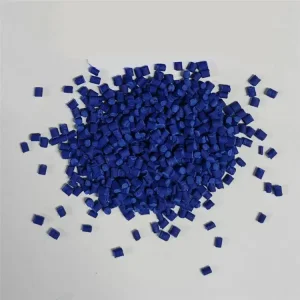
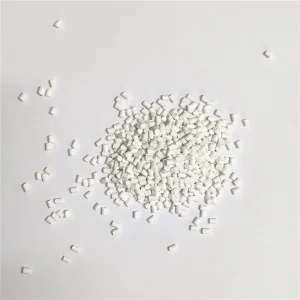
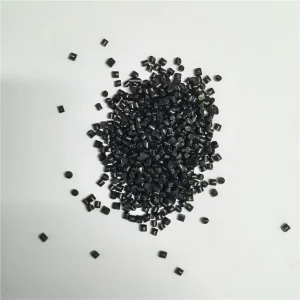
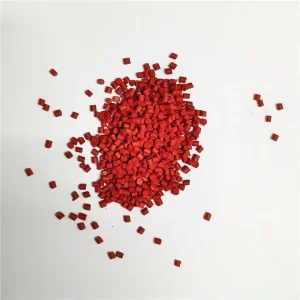
Analyzing how Central Europe’s largest industrial powerhouse demands cost-optimized, highly reliable polymer colorants and filler additives.
Poland has solidified its position as the beating heart of manufacturing and polymer converting within Central and Eastern Europe (CEE). Over the past decade, regions such as Silesia (Katowice), Greater Poland (Poznań), Lower Silesia (Wrocław), and Pomerania (Gdańsk) have transformed into high-density industrial clusters specializing in plastic packaging extrusion, automotive component molding, household appliance production, and construction polymer profiles. As European brands optimize their nearshoring strategies, Polish factories face a dual challenge: rising overhead costs and stringent EU environmental dictates.
In this hyper-competitive landscape, seeking a "cheap products company & factory serving the Poland market" does not imply compromising on technical performance or regulatory compliance. On the contrary, sophisticated Polish procurement directors define true cost efficiency through maximum pigment yield, ultra-low addition rates (LDR down to 1–2%), zero filter clogging, and seamless integration with recycled polymers (rPE/rPP).
Driven by Poland's booming e-commerce, food processing, and logistics sectors (e.g., courier mailers, stretch films, agricultural film blowing), demand for high-opacity white TiO2 masterbatches and jet-black carbon formulations has skyrocketed.
Tier-1 automotive molders in Silesia require UV-stabilized, high-heat grey, silver, and custom color masterbatches capable of enduring heat up to 260°C–280°C without degassing, migration, or surface blemishes.
Polymers utilized in HDPE corrugated pipes, cable conduit systems, and PVC/PE architectural profiles rely heavily on cost-reducing calcium carbonate (CaCO3) filler masterbatches and long-term anti-fading color concentrates.
Navigating the EU Circular Economy Action Plan, Single-Use Plastics (SUP) Directive, and NIR Sortability Requirements.
The plastics industry across Poland and the broader EU is undergoing a seismic transition. The mandate to integrate Post-Consumer Recycled (PCR) resins into primary products has fundamentally altered how masterbatches are engineered. When processors blend virgin resin with variable-quality recycled feedstocks, melt flow behavior, color stability, and mechanical strength fluctuate dramatically. Advanced masterbatches must act as corrective matrices, ensuring uniform opacity and color shade regardless of substrate variations.
Deconstructing the Total Cost of Ownership (TCO) in B2B polymer colorant sourcing.
When searching for a cheap masterbatch factory serving Poland, experienced procurement teams evaluate far more than the per-kilogram purchase price (FOB/CIF). The true financial impact is revealed on the factory floor. Low-grade, improperly compounded masterbatches lead to uneven dispersion, filter screen pack clogging, elevated scrap rates, machine downtime, and customer rejections.
| Evaluation Parameter | Cheap Low-Grade Supplier | Jiazhou Optimized Direct-Factory Supply | Polish OEM Value Advantage |
|---|---|---|---|
| Pigment Dispersion & Fine Particle Size | Poor dispersion (>25 µm agglomerates); frequent die buildup | Ultra-fine twin-screw dispersion (<5 µm); uniform distribution | Prevents film pinholes, tear failures & machine downtime |
| Recommended Addition Rate (LDR) | High dosage required (4% – 6%) due to low pigment concentration | Low dosage required (1% – 2%) via high-concentration formulations | Reduces net material cost per metric ton of processed plastic |
| Thermal Stability Limit | Degrades & discolors above 200°C; emits unpleasant odors | Engineered heat resistance up to 260°C – 300°C without gas release | Enables high-speed injection molding and thin-wall extrusion |
| Regulatory & Heavy Metal Audit | Lack of batch-specific REACH/RoHS compliance verification | Full compliance documentation: REACH, RoHS, SVHC free, EU 10/2011 | Guarantees hassle-free customs clearance & EU market access |
| Batch-to-Batch Color Consistency | High Delta E variance (ΔE > 2.0) between production lots | Strict spectro-colorimetric monitoring (ΔE < 0.5 guaranteed) | Ensures identical color matching for ongoing European product lines |
Comprehensive technical support tailored for injection molders, film extruders, and profile fabricators across Poland.
Our in-house R&D laboratory utilizes advanced computer-assisted spectrophotometers to match target Pantone, RAL, or physical resin samples provided by Polish clients. We deliver precise color-matched samples within 3 to 5 business days, backed by comprehensive Filter Pressure Value (FPV) test reports.
Every production run undergoes multi-stage quality assurance tests, including melt flow index (MFI) analysis, thermogravimetric analysis (TGA) for inorganic pigment content verification, and weatherability simulation under UV exposure chambers to prevent premature color degradation in outdoor applications.
By eliminating intermediary brokers and trading markups, Changzhou Jiazhou Plastic Products provides Polish enterprises direct factory-gate pricing. Combined with optimized container loading strategies and flexible payment terms, we deliver unmatched commercial value.
We provide full DDP, CIF, and FOB logistics solutions, maintaining streamlined export workflows to major Polish maritime ports (Port of Gdańsk, Port of Gdynia) as well as direct rail freight options via the Silk Road land bridge connecting China to Małaszewicze, Poland.
Safeguarding Polish manufacturers against non-compliance risks, customs holds, and legal liabilities.
All chemical constituents and pigments used in our masterbatches are fully compliant with EU REACH regulations. Formulations are guaranteed free from Substances of Very High Concern (SVHC) above threshold limits.
Certified compliant under EU Directive 2015/863 (RoHS 3). Free from lead (Pb), cadmium (Cd), mercury (Hg), hexavalent chromium (Cr VI), PBBs, PBDEs, and phthalates (DEHP, BBP, DBP, DIBP).
Dedicated food-grade formulations designed specifically for plastic food packaging, agricultural greenhouse films, and beverage bottle closures, ensuring zero flavor or odor transfer.
Pioneering sustainable, high-performance compounding technologies for the future of European manufacturing.
As the European Union moves toward a fully circular plastics economy by 2030, our technical R&D department in Changzhou is continuously advancing smart additives and environmentally conscious carrier systems. Our technical roadmap focuses on three pivotal pillars:
Engineered with PLA, PBAT, and PHA carrier systems, these specialized masterbatches are designed to color compostable agricultural films, single-use cutlery, and bio-based packaging bags without compromising the natural degradation cycles mandated by EN 13432 standards.
With recycled polymers subjected to multiple thermal cycles, thermal oxidation degradation leads to polymer chain scission, yellowing, and brittleness. Our integrated additive masterbatches combine primary hindered phenol antioxidants with secondary phosphite stabilizers to preserve resin integrity during extrusion.
Specialized additives enable high-contrast, permanent laser marking directly onto molded plastic parts, eliminating the need for environmental-unfriendly solvent inks in automotive tracing and industrial asset labeling.
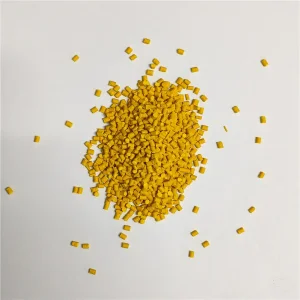
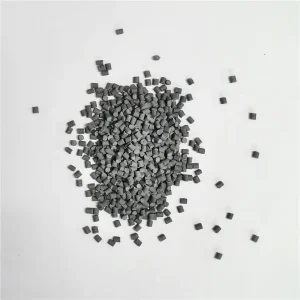
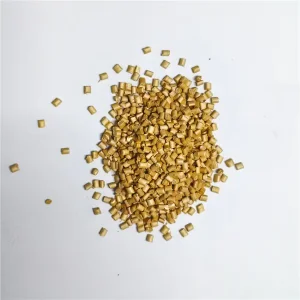
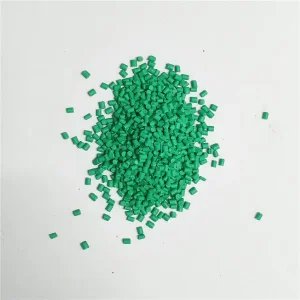
Explore our specialized range of high-concentration PE masterbatches engineered for injection molding, film blowing, and extrusion.
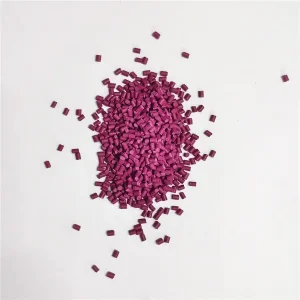
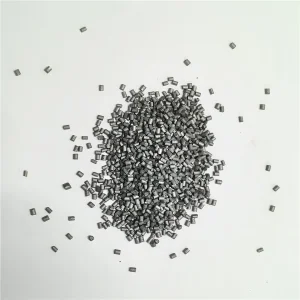
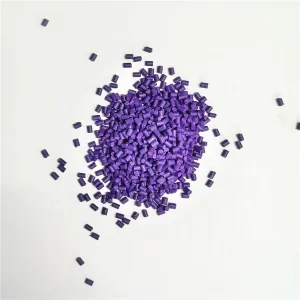
Addressing core inquiries regarding custom matching, EU compliance, shipping timelines, and commercial terms.
We operate a streamlined 6,000 m² high-capacity facility equipped with continuous twin-screw compounding lines in Changzhou, China. By sourcing raw organic/inorganic pigments and premium carrier resins in massive volume and serving Polish enterprise buyers directly, we eliminate middleman trading margins while maintaining strict ISO 9001 quality standards and exact Delta E color consistency.
Yes. All products exported to Poland and EU member states are thoroughly tested for SVHC compliance under REACH (EC 1907/2006) and RoHS 3 (Directive 2015/863). We provide comprehensive Safety Data Sheets (SDS), Technical Data Sheets (TDS), and Certificate of Analysis (CoA) with every shipment.
Standard production lead times are between 7 to 14 days following order confirmation. Ocean transit to the Port of Gdańsk or Gdynia typically takes 28 to 35 days, while expedited rail freight via the China-Europe Railway Express (ending in Małaszewicze) offers transit times of approximately 14 to 18 days.
Absolutnie (Absolutely). Our color technicians utilize advanced computer spectrophotometers to match exact RAL, Pantone, or physical resin target samples. Free lab testing samples (1 kg – 5 kg) are prepared and dispatched via international courier for trail extrusion runs on your equipment.
We provide specialized carrier resins including PE (LDPE/LLDPE/HDPE), PP, PS, ABS, and EVA. Choosing a carrier resin identical or highly compatible with your base polymer prevents melt viscosity mismatches, surface delamination, and excessive filter pressure build-up during continuous high-speed extrusion.
Request immediate technical documentation, free lab samples, or a direct factory quotation tailored to your specific extrusion or injection molding requirements.
Send Inquiry Now