High pigment loading, superior dispersion index, and optimal thermal stability designed specifically for high-speed manufacturing facilities across Selangor and Greater Kuala Lumpur.
Navigating the technical dynamics of Malaysia’s primary industrial epicenter across Shah Alam, Port Klang, Petaling Jaya, and Balakong.
As the economic heartland of Malaysia, Greater Kuala Lumpur and the adjacent Klang Valley corridor represent one of Southeast Asia's most sophisticated plastic convertors markets. Key manufacturing hubs such as Shah Alam, West Port/Port Klang Free Zone (PKFZ), Rawang, and Balakong host hundreds of plastic processors specializing in flexible film extrusion, rigid packaging, automotive components, electrical & electronics (E&E) housings, and municipal infrastructure piping.
Operating within Malaysia’s equatorial tropical climate, localized polymer converters face unique environmental challenges. Polymer products exposed to ambient outdoor conditions in Kuala Lumpur must endure high relative humidity averaging 80% to 90%, year-round ambient temperatures fluctuating between 28°C and 35°C, and intense UV radiation index values exceeding 11+. Standard un-stabilized plastic formulations experience rapid photo-oxidative degradation, thermal yellowing, structural embrittlement, and color migration within months of deployment.
Consequently, local plastics manufacturers in Kuala Lumpur require color masterbatch and filler masterbatch systems engineered with robust thermal stabilizers, non-migratory organic pigments, high-opacity rutile titanium dioxide (TiO2), and advanced Hindered Amine Light Stabilizers (HALS). Meeting these demands requires direct supplier-manufacturer partnerships capable of providing tailored melt-rheology matching, exact color tolerances (Delta E < 0.5), and guaranteed compliance with national regulatory frameworks like SIRIM QAS International and global standards such as EU RoHS, REACH, and US FDA food contact protocols.
Technical Information Gain Insight: Polyethylene (PE) masterbatches exported to Kuala Lumpur must incorporate high-molecular-weight carrier resins matching the specific Melt Flow Index (MFI) of local base polymers (typically 2.0 to 7.0 g/10min for film, 12 to 25 g/10min for injection). Mismatched MFI leads to melt fracture, die build-up, and streakiness during high-speed extrusion lines operating at over 300 m/min.
Comprehensive technical evaluation parameters for plastic compounding and processing operations in Kuala Lumpur.
| Masterbatch Grade | Active Concentration | Carrier Resin Base | Melt Flow Index (g/10min) | Heat Fastness (°C) | Light Fastness (Blue Wool Scale) | Primary Industrial Application in KL |
|---|---|---|---|---|---|---|
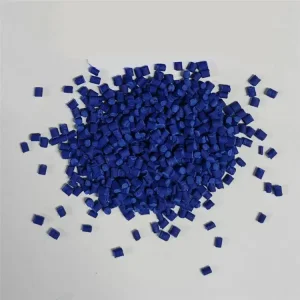
| High Concentration Blue PE | 40% - 50% Organic Phthalo Blue | PE / Universal Polyolefin | 8.0 - 15.0 | 260°C | Grade 7 - 8 | Blown film packaging, water tanks, injection containers |
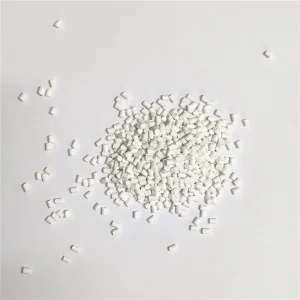
| Weather Resistant PE White | 60% - 70% Rutile TiO2 | LLDPE / LDPE | 2.5 - 6.0 | 280°C | Grade 8 | Food contact films, milk bags, greenhouse agricultural sheets |
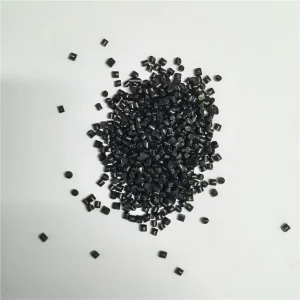
| Eco-Friendly Black PE | 30% - 50% Fine Carbon Black | HDPE / LLDPE | 1.0 - 10.0 | 260°C - 300°C | Grade 8 | HDPE water/drainage pipes, cable jacketing, garbage bags |
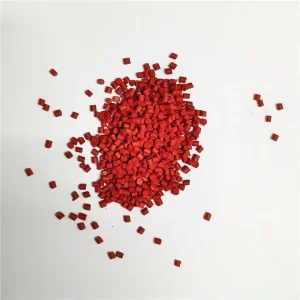
| Bright Red PE Masterbatch | 35% High-Tint Organic Red | PE / PP Compatible | 10.0 - 18.0 | 260°C | Grade 6 - 7 | FMCG caps & closures, industrial crates, courier bags |
| CaCO3 Filler Masterbatch | 75% - 84% Micro-CaCO3 | Homo PP / LLDPE | 1.5 - 4.5 | 240°C | N/A | Cost reduction in shopping bags, raffia tapes, injection parts |
Solving localized manufacturing friction points with precise polymer additivation and shade stability.
Converters operating high-speed blown film lines (such as W&H or Alpine systems) in Shah Alam require white and color masterbatches with minimal Filter Pressure Value (FPV < 0.5 bar/g). High dispersion rutile TiO2 white masterbatches prevent micro-pinholes and surface gels in ultra-thin 15-micron multi-layer food lamination barrier films, maintaining gas-barrier integrity under high humidity.
For municipal water distribution and electrical conduit pipe manufacturing governed by DBKL and SPAN regulations, carbon black masterbatch must offer high jetness combined with sub-micron particle distribution (P-type carbon black, < 25nm particle size). This guarantees exceptional UV weatherability, preventing environmental stress cracking (ESCR) under long-term underground soil stress.
Tier-1 automotive component molders in Bangi and Rawang serving local OEMs require low-VOC, odor-minimized grey, black, and custom shade masterbatches. Incorporating high thermal resistance pigments guarantees no color drift during long injection cycles at high melt temperatures (250°C to 280°C), while preventing fogging on interior windshield components.
Pioneering sustainable, intelligent, and highly concentrated masterbatch formulations for Malaysia’s Industry 4.0 transition.
As Malaysia advances its Circular Economy Roadmap (2021–2030) and mandates post-consumer plastic sorting, traditional carbon black masterbatches present a major hurdle. Standard carbon black absorbs NIR light emitted by automated MRF (Material Recovery Facility) sorting sensors, causing black plastics to be misidentified as residual waste and landfilled.
Our breakthrough NIR-Detectable Black Masterbatch utilizes specialized non-absorbing organic black pigments. This allows automated optical sorting equipment across Malaysian recycling hubs to accurately detect, categorize, and recycle PE/PP packaging polymers without compromising on rich jetness or opacity.
To align with Malaysia's Roadmap Towards Single-Use Plastics Elimination, our lab has perfected masterbatches utilizing biodegradable carrier matrices, including PLA (Polylactic Acid), PBAT (Polybutyrate Adipate Terephthalate), and bio-PE. These masterbatches deliver 100% compatibility with compostable carrier bags and food service packaging without altering biodegradation rate standards under ISO 14855.
In high-speed tubular blown film production, interfacial friction and static electricity cause roll-telescoping and dust attraction. By integrating sub-micron synthetic silica and permanent migratory anti-static agents directly into masterbatch pellets, processors in Greater KL achieve uniform surface resistivity (10^9 ohms/sq) and instant bubble stability on continuous 3-layer extruders.
R&D Milestone: Twin-screw co-rotating extrusion compounding featuring L/D ratios of 48:1 ensures complete dispersion of hard-to-wet organic pigments (like Phthalocyanine Blue and Quinacridone Magenta), resulting in zero screen-pack clogging during continuous 72-hour factory production runs.
Leveraging Changzhou’s compounding scale to give Kuala Lumpur manufacturers a competitive cost and quality edge.
Changzhou Jiazhou Plastic Products Co., Ltd. operates a 6,000 m² modern compounding facility equipped with gravimetric feeding, high-torque twin-screw extruders, and underwater pelletizing systems. Our annual capacity exceeds 25,000 metric tons of color and filler masterbatches.
Utilizing X-Rite Ci7800 benchtop spectrophotometers and computer color matching software, our laboratory can match any custom Pantone, RAL, or physical sample shade provided by Kuala Lumpur clients within 72 hours, dispatching sample pellets via express air freight.
Situated in Jiangsu with fast access to Shanghai and Ningbo ports, we offer direct ocean container shipping (FCL/LCL) reaching Port Klang (North & West Ports) in just 6 to 9 days transit time. This seamless supply chain minimizes safety stock overhead for Malaysian factories.
Providing full documentation, safety certifications, and compliance guarantees for international trade.
Every masterbatch batch manufactured for export to Kuala Lumpur undergoes stringent quality control testing before dispatch. Our internal laboratory tests for:
Our masterbatches strictly adhere to international regulatory frameworks required by Malaysian exporters serving European, North American, and ASEAN markets:
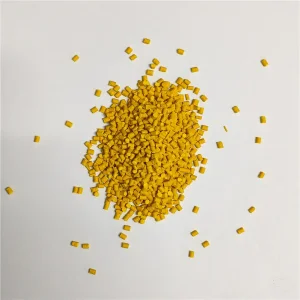
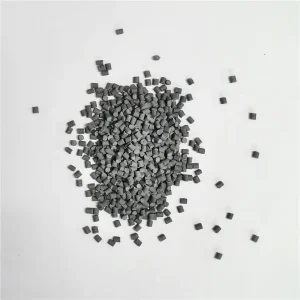
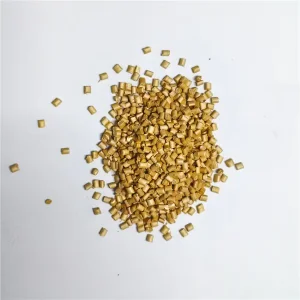
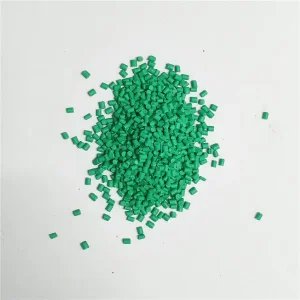
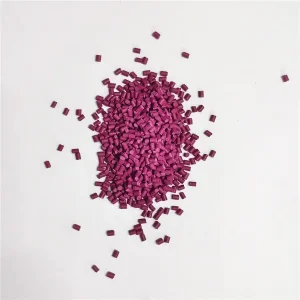
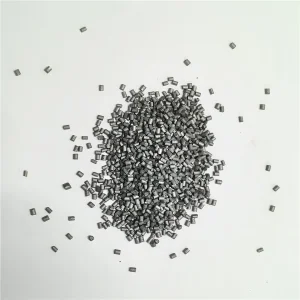
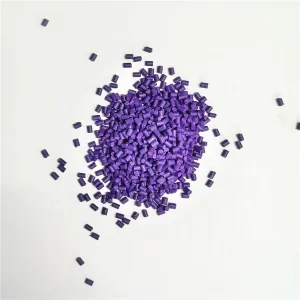
Explore our versatile palette of engineering colorants and property-enhancing additives for every plastic process.
Expert guidance on compounding parameters, let-down ratios, carrier compatibility, and tropical storage.
Our high-concentration PE masterbatches are typically added at a Let-Down Ratio (LDR) of 1.0% to 4.0% depending on film thickness and desired color opacity. For thin blown films (under 25 microns), an LDR of 2.0% to 3.0% ensures high color depth and zero streakiness, while rigid injection molding parts achieve full color coverage at 1.5% to 2.0% LDR, significantly reducing masterbatch consumption costs.
High ambient humidity in Malaysia (often exceeding 85% RH) can lead to moisture absorption on pellet surfaces, causing steam bubbles, surface silver streaks, or film popping during high-temperature extrusion. Jiazhou masterbatches are packed in vacuum-sealed 25kg moisture-proof aluminum-foil plastic composite bags. Additionally, hydrophobic dispersion wax additives are utilized to minimize moisture pickup during hopper residence time.
Yes. High-density Polyethylene (HDPE) and Low-density Polyethylene (LDPE) carrier masterbatches exhibit strong polyolefin compatibility with PP resins for general injection molding and blown film processes up to 3% LDR. However, for critical high-clarity or high-tensile PP applications (like BOPP films or fine fiber spinning), we recommend matching with a dedicated Homo-PP carrier masterbatch to maintain optical transparency and tensile modulus.
We guarantee a strict color difference tolerance of Delta E (ΔE) < 0.5 under D65 standard illuminant conditions using X-Rite Ci7800 spectrophotometers. Each production batch undergoes strict quality control comparing melt-molded chip samples to master target standards before shipment to Kuala Lumpur customers.
Incorporating Jiazhou 80% CaCO3 Filler Masterbatch (PE/PP carrier) at 10% to 30% addition rates allows plastic converters in Klang Valley to replace expensive virgin resin (LLDPE/PP). This reduces total raw material formulation costs by 15% to 28% while improving thermal conductivity, reducing extruder cycle times, and decreasing part shrinkage without compromising tensile strength.
We provide regular container shipping (FCL - 20GP/40HQ) and consolidated freight (LCL) departing directly from Shanghai or Ningbo ports to Port Klang (North Port & West Port). Production lead time for standard masterbatch grades is 3 to 7 working days, followed by ocean transit of 6 to 9 days, delivering complete orders to factory warehouses in Shah Alam or Balakong within 2 weeks.