Engineered with high pigment density, 260°C+ thermal stability, and optimized melt flow for West Africa's rapid industrial processing.
Nigeria stands as Sub-Saharan Africa's largest economy and plastic processing hub. Driven by aggressive urbanization in Lagos, Ogun State (Agbara Industrial Estate), Kano, and Port Harcourt, the demand for raw polymer colorants and functional filler masterbatches has experienced exponential compound growth.
Globally, plastic manufacturing is shifting away from raw pigment powders toward dust-free, fully dispersed micro-pellet masterbatches. High-performance twin-screw co-rotating extrusion technologies ensure micro-dispersion of titanium dioxide ($TiO_2$), organic pigments, and sub-micron $CaCO_3$ fillers. This global transition protects worker health, eliminates airborne contamination, and maximizes machine throughput during film blowing and injection molding cycles.
Nigerian plastics manufacturers face unique operational constraints: high ambient temperatures (35°C to 45°C), intense ultraviolet radiation (UV Index reaching 11+), power grid fluctuations, and an increasing reliance on recycled polymer resins. Operating under these conditions requires additive formulations fortified with Hindered Amine Light Stabilizers (HALS), specialized thermal anti-oxidants, and ultra-high dispersion carriers to prevent resin degradation and die-build up.
Our masterbatches utilize virgin Linear Low-Density Polyethylene (LLDPE), Polypropylene (PP), and universal carrier matrices matching exact Melt Mass-Flow Rates (MFR) for optimized phase dispersion.
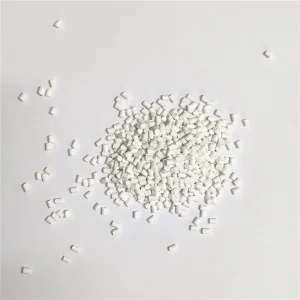
Synthesized with up to 70% Rutile titanium dioxide coated with silica and alumina. Provides maximum refractive index (2.73), high blue-tone whiteness, and absolute opacity in thin-gauge blown sachet films without pinholes.
Organic and inorganic color pigments undergo strict thermogravimetric analysis (TGA). Formulations guarantee zero shade drift or thermal cracking during high-temperature injection molding of crates and caps.
Engineered pigment molecules prevent solvent bleed-through and color migration in food contact packaging, compliance certified for NAFDAC regulations and international FDA standards.
Customized additive masterbatches engineered to thrive under West Africa’s harsh solar exposure and rigorous mechanical stress requirements.
Nigeria consumes billions of liquid sachet units annually. Our White Masterbatch delivers total opacity in 30-40 micron single and multi-layer blown films. Formulated with food-grade PE carriers to prevent taste alteration, offering zero die-lip accumulation on high-speed extrusion lines operating in Lagos industrial zones.
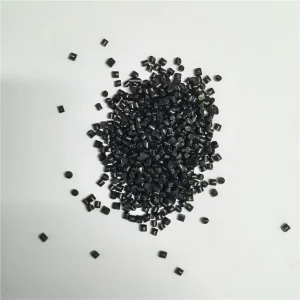
Underground irrigation, water infrastructure, and telecom ducting demand heavy UV resistance. Our Black Masterbatch utilizes P-type Carbon Black (particle size 19nm–25nm) to guarantee 20+ years of weather resistance against sunlight-induced polymer chain degradation across northern and southern Nigeria.
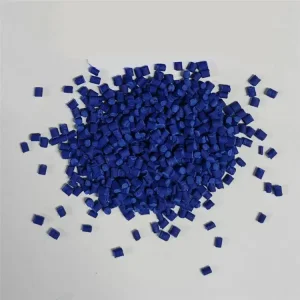
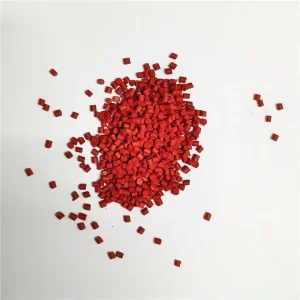
Beverage transport crates, paint buckets, and jerrycans in West Africa require intense impact strength and vivid color differentiation. Our masterbatch series (Red, Blue, Green, Yellow) offers optimal dispersion without warpage or shrinkage in large PP/HDPE molded parts.
Used extensively for agricultural grain packaging (cocoa, cassava, rice), our high-tinting-strength color masterbatches remain stable through high-speed PP raffia tape stretching tapes without fiber breakage or pigment agglomeration.
Anticipating regulatory changes, circular economy mandates, and energy efficiency needs for plastic converters in West Africa.
Integration of reactive functional polymers into masterbatches to allow seamless blending of post-consumer recycled (PCR) PE/PP resins without loss of tensile strength or impact resistance.
Development of Near-Infrared (NIR) reflective masterbatches for dark plastic roofing tiles and outdoor water tanks, reducing internal surface thermal absorption by up to 15°C in tropical West Africa.
Custom carrier systems utilizing PBAT, PLA, and bio-based PE resins designed to comply with emerging West African zero-waste environmental protocols and eco-tax regulations.
Browse our complete spectrum of color and functional additive masterbatches available for container-load shipping to Apapa Port, Tin Can Island, and Onne Port.
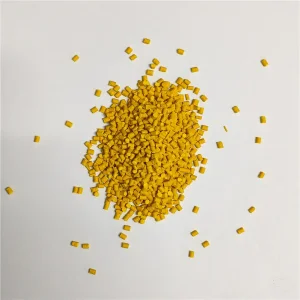
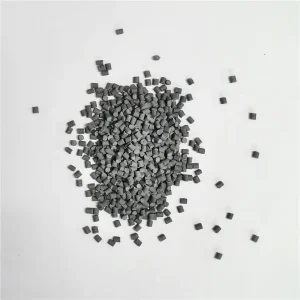
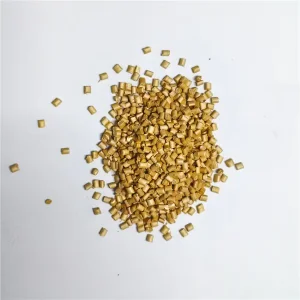
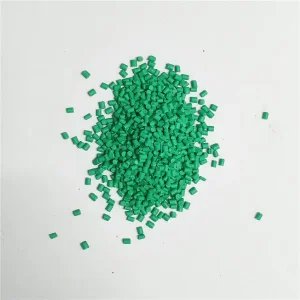
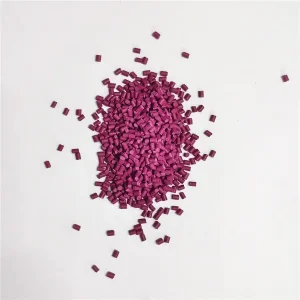
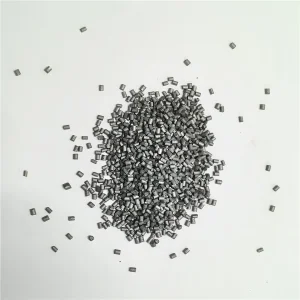
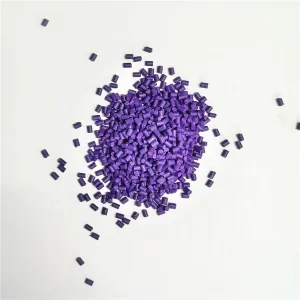
Comparative benchmarks illustrating Jiazhou Masterbatch physical properties optimized for West African tropical extruders compared to standard market alternatives.
| Performance Metric | Jiazhou Tropical Grade Spec | Standard Generic Masterbatch | Industrial Benefit for Nigerian Plants |
|---|---|---|---|
| Carrier Resin Compatibility | 100% Virgin LLDPE / HDPE / PP | Recycled / Off-spec Carrier Resin | Zero Phase Separation Prevents filter mesh clogging. |
| Pigment Content Concentration | Up to 70% Titanium Dioxide / 50% Color | 35% - 45% Pigment Loading | Lower Dosage (1%-4%) Substantial reduction in unit freight cost. |
| Thermal Stability Limit | 260°C – 300°C Continuous | < 220°C Thermal Threshold | No Color Drift Ideal for high-speed injection machines. |
| UV Weathering Rating (ASTM G154) | Grade 7–8 (Lightfastness Standard) | Grade 4–5 Standard | Anti-Yellowing Extended outdoors life under intense solar index. |
| Moisture Content Threshold | < 0.15% Moisture Weight | > 0.50% Moisture Absorption | Pinhole Free Eliminates film bubble rupture on blowers. |
Expert answers addressing customs compliance, shipping lead times, and technical matching for West African procurement teams.
Yes. All shipments sent to Nigeria can be issued with a Certificate of Conformity (CoC) required for Standards Organisation of Nigeria Conformity Assessment Program (SONCAP) documentation. We assist our local importers in Lagos and Kano with smooth documentation processes prior to port arrival at Apapa or Tin Can Island.
Due to our ultra-high pigment concentration, the typical let-down ratio ranges between 1% to 3% for standard packaging film, and 2% to 4% for heavy-duty opaque sachet film or agricultural film. This allows plastic converters to significantly minimize per-ton raw material expenses.
Our masterbatches are packed in multi-layer moisture-proof 25kg heavy-duty PE/PP woven bags with internal vacuum sealing. When stored unopened in ambient warehouse environments in Port Harcourt or Lagos, shelf life exceeds 24 months without moisture absorption or pellet agglomeration.
Absolutely. Our R&D laboratory utilizes Konica Minolta spectrophotometers for precise color analysis. Customers can send physical target plastic samples or standard RAL/Pantone color codes. Color match samples are produced and shipped via express courier within 3 to 5 business days.