Industrial Whitepaper & Global Sourcing Guide: High-Concentration Color & Filler Masterbatches Engineered for Osaka’s Advanced Polymer Manufacturing Ecosystem
Top-tier industrial formulations tailored for Kansai’s high-precision injection molding, film blowing, and pipe extrusion enterprises.
Understanding the commercial dynamics, supply chain requirements, and technical rigor of the Osaka-Kansai industrial cluster.
Osaka serves as the economic engine of Western Japan’s Hanshin Industrial Region. Industrial centers such as Higashiosaka, Sakai, and Ibaraki maintain high concentrations of precision plastic molders, medical-grade film convertors, and automotive component suppliers. The local market demands masterbatch solutions with non-migratory pigments, sub-micron particle dispersion, and strict batch-to-batch color repeatability (CIELAB ΔE < 0.2).
Manufacturers operating in Osaka must strictly comply with Japan’s Chemical Substances Control Law (CSCL), RoHS 2.0 directive, Heavy Metal Free (EN71-3) protocols, and the Japanese Food Sanitation Act (Ministry of Health, Labour and Welfare Bulletin No. 370). Masterbatch additives imported into Osaka must guarantee zero toxic leaching and ultra-low volatile organic compound (VOC) emissions during high-temperature melt processing.
Osaka Port and Kobe Port form the primary maritime gateways for raw material procurement in Western Japan. Global supply chains connecting East China manufacturing hubs like Changzhou directly to Osaka Bay offer sea freight transit times of just 3 to 5 days. This proximity allows Osaka plastic manufacturers to optimize raw material inventory via Just-In-Time (JIT) delivery mechanisms.
Advancing masterbatch technology through nanoscale pigment dispersion, functional carrier engineering, and circular economy integration.
Traditional masterbatches often suffer from pigment agglomeration, causing screen pack clogging in extrusion lines and micro-void defects in thin blown films (<15 microns). Next-generation formulations utilize high-torque continuous twin-screw compounding extruders equipped with specialized mixing element configurations. Pigment particles are milled down to sub-micron dimensions (<0.5μm) and surface-treated with organic dispersants, ensuring uniform light scattering, maximum tinting strength, and defect-free film production.
Osaka’s industrial packaging and outdoor plastic component sectors require masterbatches that resist severe thermal degradation. Modern color formulations incorporate Hindered Amine Light Stabilizers (HALS), primary phenolic antioxidants, and secondary phosphite processing stabilizers. This combined additive system protects polymer chains against thermal-oxidative degradation at processing temperatures up to 260°C while achieving light-fastness ratings of Grade 7–8 on the Blue Wool Scale for long-term outdoor applications.
Aligned with global carbon-neutrality initiatives and Japan’s Plastic Resource Circulation Act, R&D focuses on developing bio-based carrier matrices (PLA, PBAT) and recycled polyethylene (rPE) masterbatches. These eco-friendly colorants maintain identical melt flow index (MFI) characteristics and tinting efficiency as virgin PE carrier masterbatches, allowing Osaka molders to increase post-consumer recycled resin content without sacrificing visual quality or structural integrity.
For critical applications such as electronic device housings, food packaging containers, and automotive interiors, standard masterbatches can suffer from pigment migration or dye bleeding. Advanced non-migration color masterbatches utilize high-molecular-weight polymeric pigments coupled with precise carrier matching (PE, PP, EVA, ABS), preventing chemical leaching, stress cracking, or surface plate-out during continuous mold operations.
Tailored chemical masterbatch formulations optimized for high-speed industrial converting equipment.
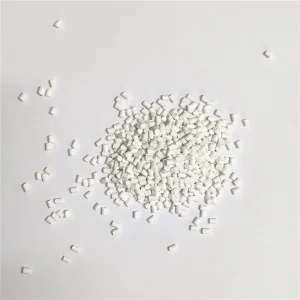
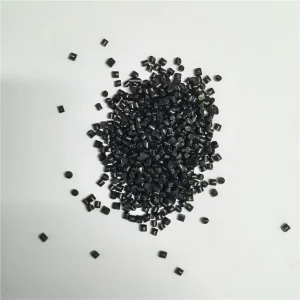
Designed for high-speed multi-layer film blowing lines. Our PE white masterbatch provides exceptional opacity (high TiO2 loading) and surface gloss, while high-concentration black masterbatches provide high opacity and UV absorption for agriculture and courier shipping bags.
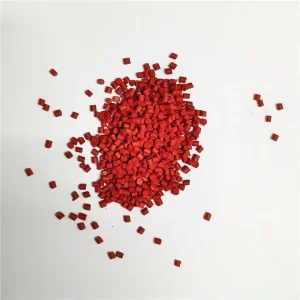
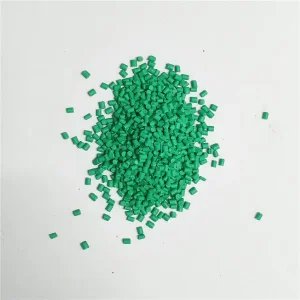
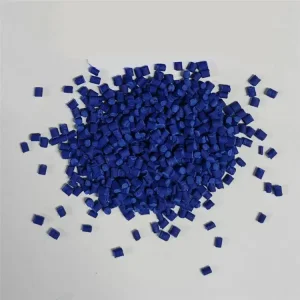
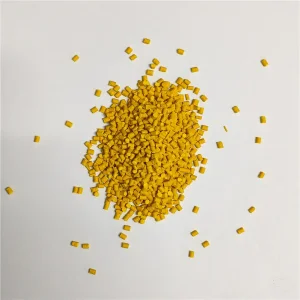
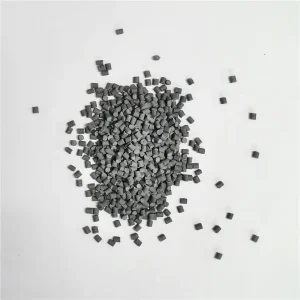
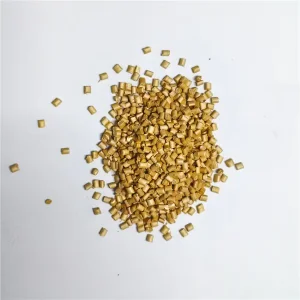
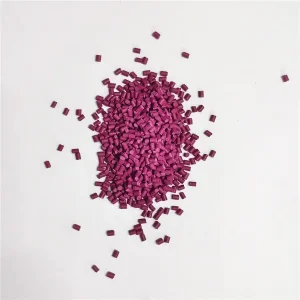
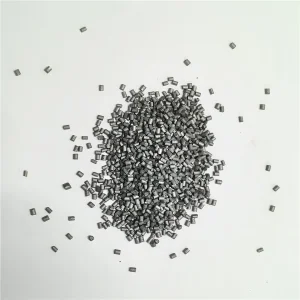
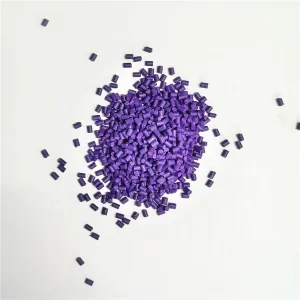
Engineered for complex automotive components, consumer electronics, and household goods. Our color masterbatches (Blue, Red, Yellow, Grey, Gold, Silver) ensure rapid dispersion, dimensional stability, and zero warping in thin-wall molding.
High-concentration black and colored masterbatches tailored for HDPE, LLDPE, and PP pipe extrusion lines (corrugated drainage pipes, conduit pipes, and structural profiles).
Ensuring zero operational risk for Japanese importers and Osaka factory procurement teams.
Every batch produced undergoes rigorous spectroscopic testing, melt flow indexing (MFI), and thermal stability verification. Our manufacturing plant operates under full ISO 9001:2015 Quality Management Systems and ISO 14001:2015 Environmental Management Standards.
We maintain an advanced color-matching laboratory equipped with Datacolor spectrophotometers and benchtop injection molding equipment. Osaka clients can submit physical target samples, Pantone codes, or RAL color references for rapid color formulation.
Leveraging Changzhou Jiazhou Plastic Products' 16-year manufacturing heritage to deliver raw material cost advantages for Kansai businesses.
Located in Changzhou, Jiangsu — a premier chemical manufacturing corridor in East China — our 6,000m² facility features continuous automated gravimetric dosing systems. This Industry 4.0 technology eliminates human weighing errors, maintaining pigment dispersion tolerances down to ±0.05%.
By utilizing high-concentration pigment loading strategies (up to 50% active pigment concentration in carrier resin), molders in Osaka reduce total consumption per ton of polymer processed. Direct factory-direct supply models bypass middleman trading margins, lowering Total Cost of Ownership (TCO).
Maintaining dual-sourcing capabilities with Changzhou Jiazhou mitigates supply disruption risks caused by localized raw material shortages or regional energy grid shifts. Freight logistics are seamlessly linked via Shanghai Port to Osaka and Kobe maritime terminals.
A standardized operational roadmap for industrial buyers and procurement officers in Osaka.
Addressing critical technical, regulatory, and logistics queries from Japanese procurement directors.
Our high-concentration PE color masterbatches (including Black, Red, Blue, Grey, and White series) feature heat resistance engineered up to 260°C. This prevents pigment thermal degradation, discoloration, or polymer matrix degradation during high-speed injection molding and film extrusion cycles.
We formulate carrier resins using premium-grade Low-Density Polyethylene (LDPE) and Linear Low-Density Polyethylene (LLDPE) with high Melt Flow Indexes (MFI). This ensures complete resin compatibility with virgin or recycled HDPE, LLDPE, PP, and EVA base resins commonly utilized across Osaka manufacturing facilities.
Yes. Specialized non-toxic masterbatch series satisfy the requirements of Japan’s Ministry of Health, Labour and Welfare (MHLW) Bulletin No. 370, alongside international standards including EU RoHS 2.0, REACH SVHC, and US FDA 21 CFR regulations.
Production lead time for standard masterbatch orders is 7 to 10 days. Direct sea freight transit from Shanghai or Ningbo Port to Osaka/Kobe Port typically requires only 3 to 5 days, enabling fast door-to-door fulfillment under 15 total days.
Yes. Our R&D lab custom-matches color swatches using spectrophotometers and provides 500g to 1kg sampling batches for trial runs on your local injection or film machinery in Osaka before full scale production.
All original formulations retained with direct technical link capabilities for procurement evaluation.
Connect directly with Changzhou Jiazhou Plastic Products Co., Ltd.’s engineering team. Receive technical datasheets, free sample packs, and factory-direct pricing quotes within 24 hours.