Engineered for maximum dispersion, heat resistance up to 260°C, and prolonged outdoor stabilization under Australian environmental conditions.
The Australian plastics and polymer manufacturing sector operates under uniquely demanding parameters. Characterized by one of the highest solar radiation profiles in the world (with UV indices regularly exceeding 12–14 across Queensland, Western Australia, and the Northern Territory), plastic products deployed in Australia require exceptional thermal and photo-oxidative stabilization.
Whether manufacturing heavy-duty irrigation pipes for agricultural zones along the Murray-Darling Basin, high-density polyethylene (HDPE) geomembranes for Pilbara mining sites, or food-grade flexible packaging aligned with Australian Packaging Covenant Organisation (APCO) targets, Australian plastic convertors cannot afford compromise in raw material compounding.
As an industry-leading global masterbatch supplier and contract manufacturer, our organization delivers high-concentration PE carrier color masterbatches, functional filler additives, and UV-stabilized formulations custom-tailored to solve local operational bottlenecks, cut resin costs, and fulfill strict AS/NZS quality benchmarks.
Quantifiable data demonstrating our manufacturing stability and export scalability for Australian enterprises.
A rigorous examination of carrier matching, dispersion kinetics, and anti-migration chemistry for high-throughput plastics processing.
A critical point of failure in plastic masterbatch application is carrier mismatch. If the carrier resin’s Melt Flow Index (MFI) does not align with the base virgin or recycled polymer (e.g., LLDPE, HDPE, PP), micro-phase separation occurs during extrusion. This causes surface defects, streakiness, and reduced tensile strength in finished goods.
Our PE carrier masterbatches utilize narrow molecular weight distribution (MWD) virgin polyethylenes. This ensures that when introduced at let-down ratios between 1% and 4%, the masterbatch dissolves homogeneously into the polymer melt without dropping the structural integrity or altering die pressure profiles.
Pigment agglomeration directly impairs mechanical strength, opacity, and color fastness. Utilizing continuous co-rotating twin-screw extruders with specialized screw profiles, our masterbatches undergo high shear milling to break organic and inorganic pigment particles down to sub-micron dimensions.
Furthermore, for applications involving plasticized materials or food contact containers, our non-migration additive matrix prevents pigment exudation, blooming, and solvent leaching over prolonged storage periods under Australia's intense seasonal heat cycles.
| Masterbatch Grade | Primary Pigment Type | Pigment Loading (%) | MFI (g/10min @ 190°C) | Max Temp Stability | Primary Australian Application |
|---|---|---|---|---|---|
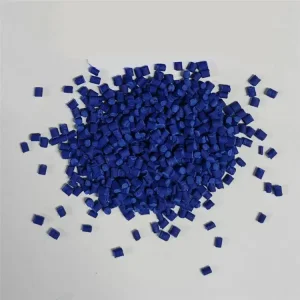
| PE Blue High-Spec | Phthalocyanine Blue BGS | 35% - 45% | 15 - 25 | 280°C | Irrigation Pipe Fittings, Industrial Tanks |
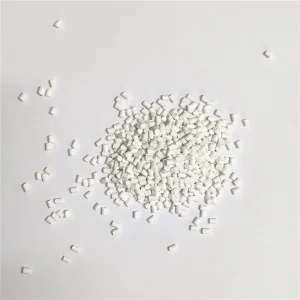
| PE White Ultra-Opacity | Rutile Titanium Dioxide (TiO2) | 50% - 70% | 10 - 20 | 300°C | Silage Wrap, Milk Bottles, Food Packaging |
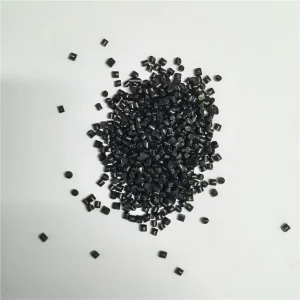
| PE Black Deep-Jet | Furnace Carbon Black (N220) | 40% - 50% | 8 - 18 | 280°C | Mining Geomembranes, Cable Sheathing |
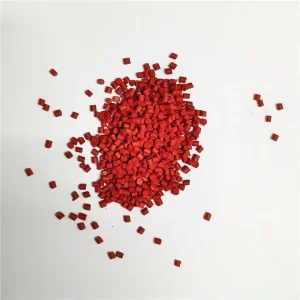
| PE Red High-Vibrancy | Organic Fast Red 48:2 | 30% - 40% | 12 - 22 | 260°C | Safety Cones, Agricultural Tarps, Toys |
| PE Functional Filler | Micronized CaCO3 (1500 Mesh) | 75% - 80% | 5 - 15 | 250°C | Cost Reduction in Blown Bags & Crates |
From Outback mining operations to metropolitan packaging plants, see how our masterbatch formulations solve real-world processing challenges.
Australian farmers demand mulch films and silage wraps that withstand prolonged exposure without tearing or degrading. Our PE White and Black masterbatches incorporate UV-944 and UV-622 Hindered Amine Light Stabilizers (HALS), extending outdoor film service life past 24 months in high-radiation agricultural zones.
Tailings pond liners and heavy slurry pipes used in Pilbara iron ore and gold mines require continuous UV block and environmental stress crack resistance (ESCR). Our Carbon Black PE Masterbatch delivers uniform carbon dispersion (< Grade 1 rating), shielding polymers from structural UV degradation.
In response to Australia's National Packaging Targets, converters are integrating higher ratios of Post-Consumer Recyclate (PCR). Our masterbatches feature custom-compatibilized carrier systems that restore color brilliance and offset the yellowish tint inherent in recycled PE/PP streams.
Talk with our senior engineering specialists. Receive free lab samples and precise Pantone/RAL matching within 3–5 working days.
As global environmental regulations tighten, Australian importers and polymer processing factories face increasing pressure to verify supply chain transparency and non-toxicity. Our manufacturing plant operates under strict ISO 9001:2015 Quality Management and ISO 14001:2015 Environmental Management protocols.
Heavy-Metal-Free Formulations: All pigments used in our Australian product line undergo rigorous testing to ensure zero heavy metal contamination (Lead, Cadmium, Hexavalent Chromium, Mercury), making them fully compliant with AS 2070 (Plastics Materials for Food Contact Use).
Next-Gen Smart Colorants: Our R&D technical roadmap includes the rollout of Near-Infrared (NIR) detectable Black Masterbatches. Standard carbon black absorbs NIR radiation in automated recycling sorting facilities, causing plastic to be sent to landfills. Our NIR-reflecting black masterbatch allows automated optical sorters across Australia to identify and recycle black HDPE and PP containers seamlessly.
X-Rite Ci7800 benchtop spectro measurement guarantees Delta E < 0.5 against client target color space.
Verifies exact pigment loading % and filler concentration to prevent batch-to-batch variation.
Cast film extrusion testing ensures zero pinholes, specks, or agglomerates in blown film grades.
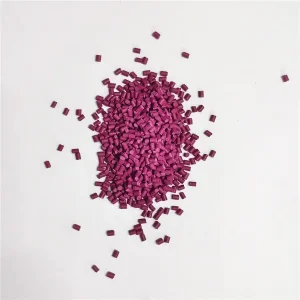
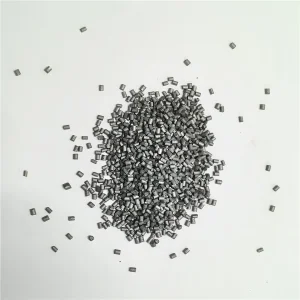
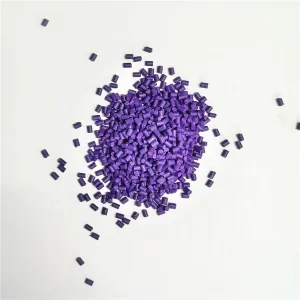
Explore our full range of specialty color concentrates and functional masterbatches engineered for injection molding, extrusion, and blown film machinery.
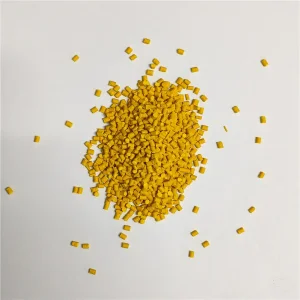
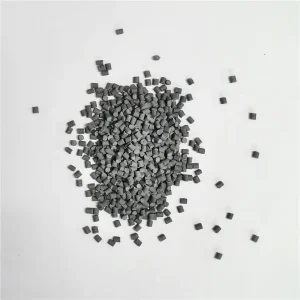
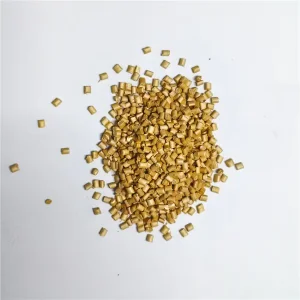
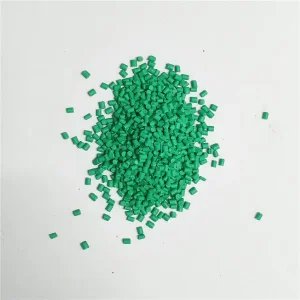
Direct answers to common technical queries from Australian plastic manufacturers and import distributors.
Our outdoor-grade masterbatches (such as Black, White, Green, and Blue PE series) incorporate syringe-matched Hindered Amine Light Stabilizers (HALS) and UV absorbers (such as UV-326 and UV-944). This synergistic additive matrix neutralizes free radicals formed by intense solar radiation, preventing polymer chain scission, discoloration, and embrittlement even under UV Index 14+ conditions in northern Australia.
Due to our high pigment loading technology (up to 50% active pigment content), our standard recommended let-down ratio is between 1% and 3% for standard injection molding and 2% to 4% for blown films and sheet extrusion. Higher LDRs can be adjusted depending on final opacity requirements and wall thickness.
Yes. We manufacture specific food-grade Masterbatch series formulated using heavy-metal-free organic pigments and virgin food-contact approved PE carriers. These comply with AS 2070, US FDA 21 CFR, and EU No 10/2011 regulations for direct contact with food and beverages.
Absolutely. Our state-of-the-art optical spectrophotometer laboratory provides precise custom color development based on Pantone, RAL, or physical plastic samples. We deliver exact custom-matched color samples along with technical data sheets (TDS) within 3 to 5 business days.
Standard production lead time is 10 to 14 days. Ocean freight transport from our facilities to main ports such as Sydney (Port Botany), Melbourne, Brisbane, or Fremantle typically takes 12 to 18 transit days, supported by complete export documentation including Certificate of Analysis (COA) and MSDS.
Elevate your plastic product performance, reduce masterbatch consumption costs, and secure consistent supply chain reliability today.